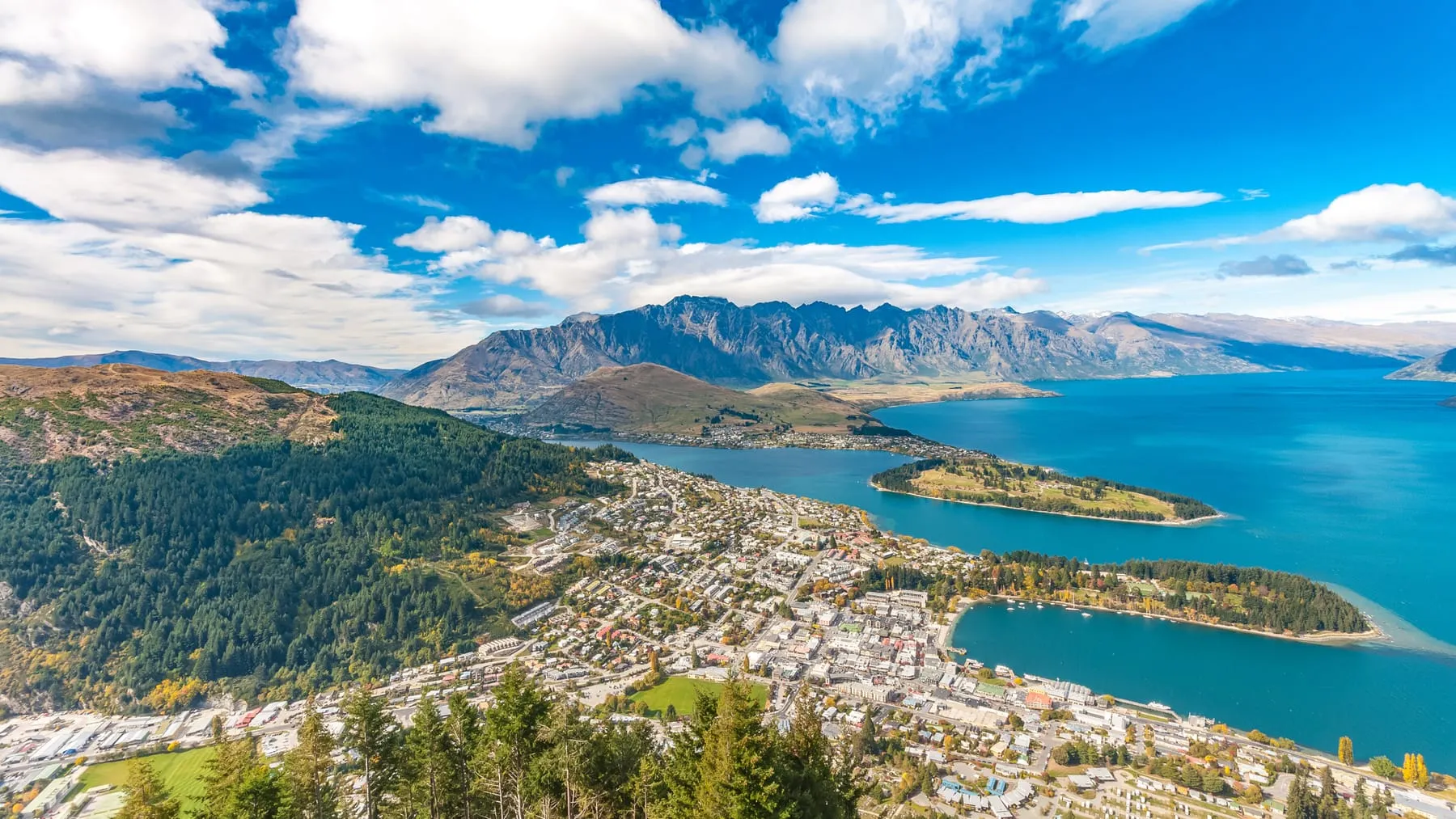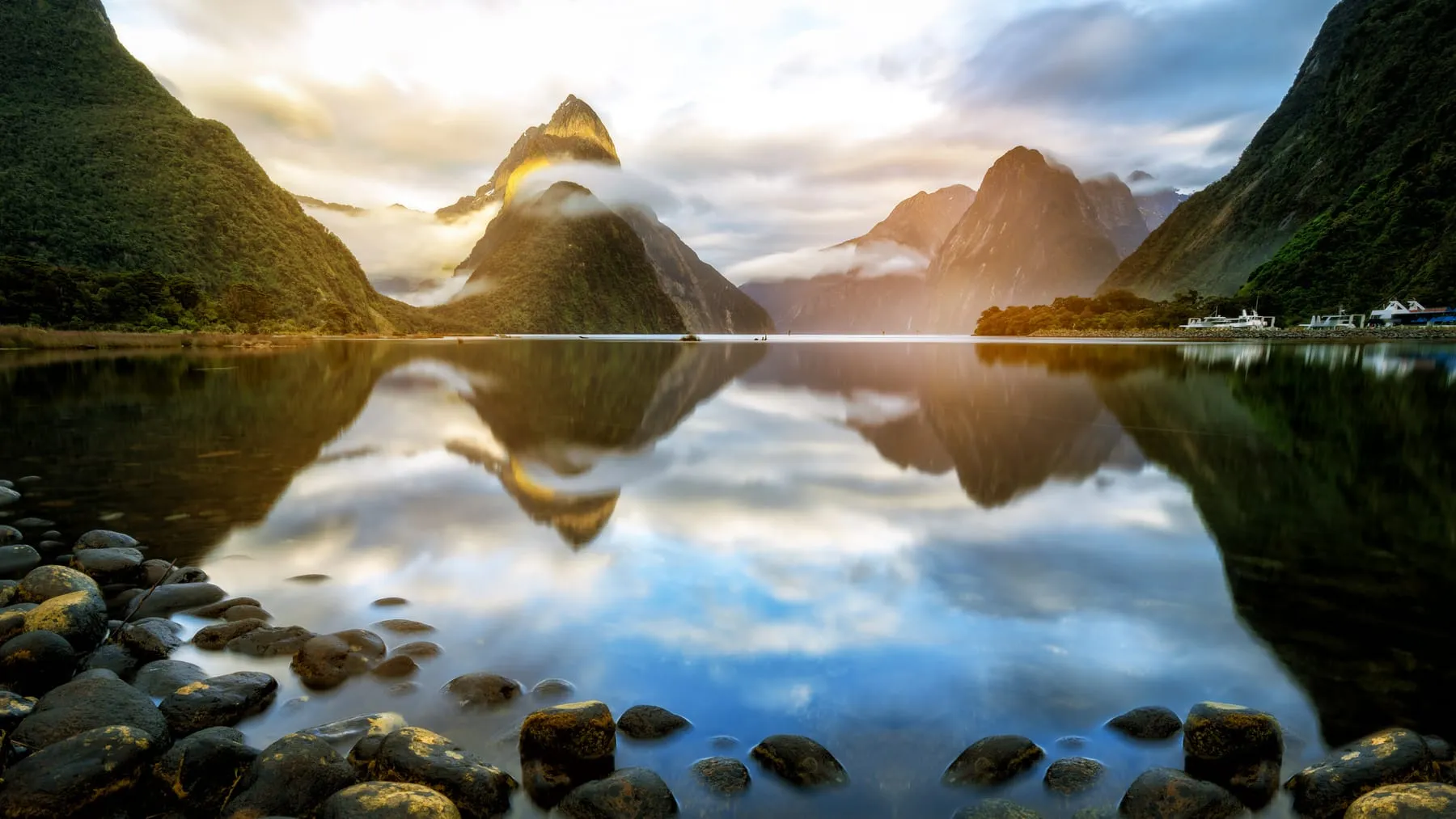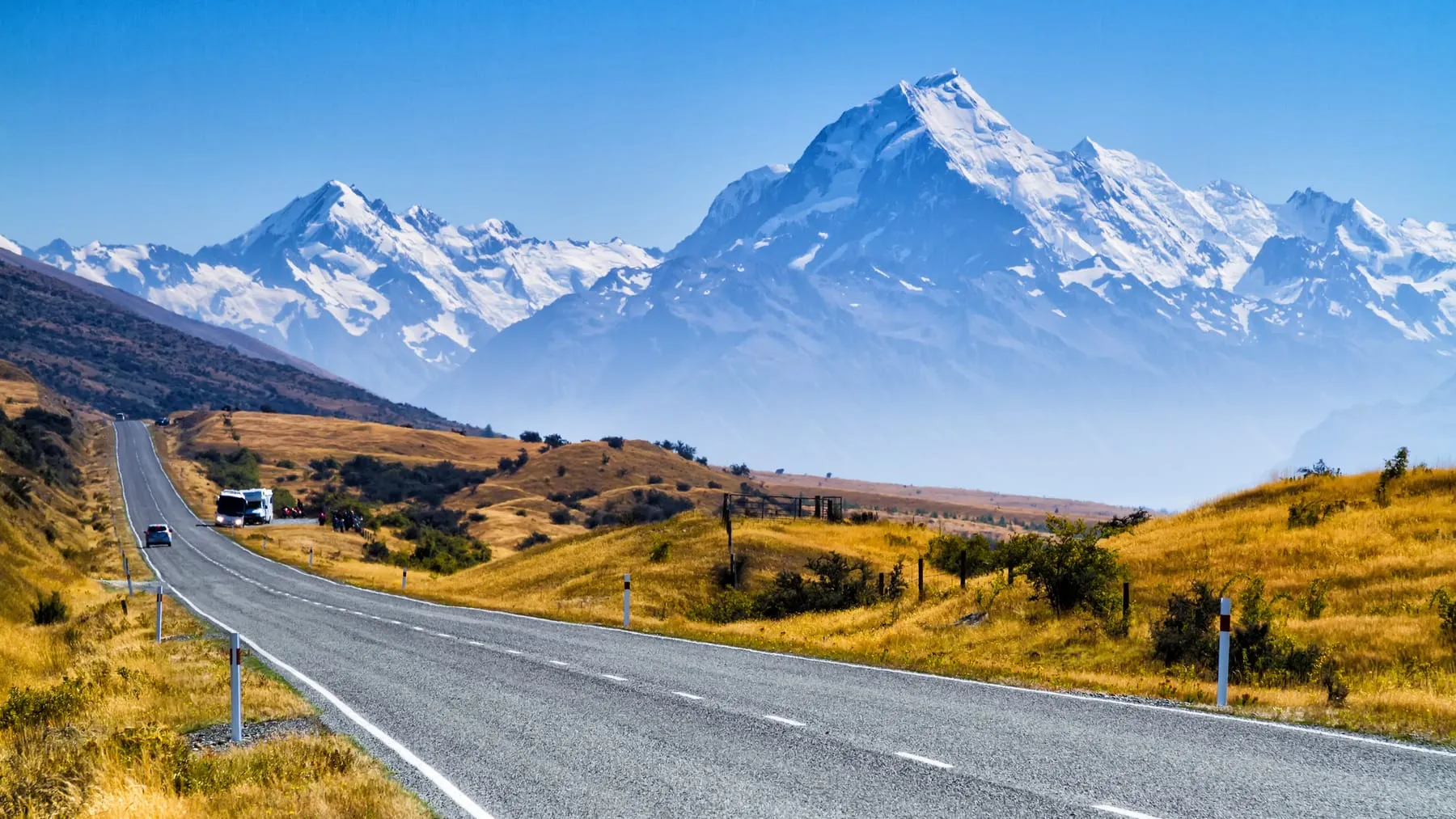
The best New Zealand South Island itinerary for a first trip is a 12-day road trip looping from Christchurch through Lake Tekapo, Aoraki/Mount Cook, Wanaka, Queenstown, Milford Sound and the Franz Josef glaciers. Most driving days run 1 to 3.5 hours. Rent a car rather than a campervan, and book it first: compare Hertz rental cars for a Christchurch Airport pickup.
The loop bases you in Te Anau for Milford Sound, then crosses the Haast Pass to the glaciers and returns over Arthur’s Pass. The Milford Sound day adds a 4-hour round trip on the road. A campervan only makes sense if you’ll camp most nights. Book the car as soon as your flights are set, because it decides every other booking on this trip.
The 12-day South Island route at a glance
Drive times below come from the regional tourism boards for each area and don’t include stops. On New Zealand’s winding roads, real days run longer, so treat them as the minimum.
| Day | Route | Drive time | Highlights |
|---|---|---|---|
| 1 | Arrive in Christchurch | None | Pick up the car, rest after the long flight |
| 2 | Christchurch to Lake Tekapo | About 3 hours | Church of the Good Shepherd, lakeshore, night sky |
| 3 | Tekapo to Aoraki/Mount Cook | 1 hour 15 minutes | Hooker Valley Track (about 3 hours return) |
| 4 | Mount Cook to Wanaka | About 2.5 hours | Lake Pukaki views, Lindis Pass, Wanaka lakefront |
| 5 | Wanaka to Queenstown | About 1 hour (Crown Range) | Crown Range lookout, Arrowtown, Queenstown waterfront |
| 6 | Queenstown | None | Lake cruise, gondola, bungy or a Glenorchy drive |
| 7 | Queenstown to Te Anau | 2 hours (170 km, 105 miles) | Lake Te Anau, early night |
| 8 | Milford Sound day trip | 2 hours each way, plus stops | Milford Road, Homer Tunnel, Milford Sound cruise |
| 9 | Te Anau to Wanaka | About 3.5 hours | Rest afternoon by the lake |
| 10 | Wanaka to Franz Josef | 3 hours 38 minutes (285 km, 177 miles) | Haast Pass, Blue Pools, Fox Glacier area |
| 11 | Franz Josef to Hokitika | 1 hour 43 minutes (135 km, 84 miles) | Glacier valley walk or heli-hike in the morning |
| 12 | Hokitika to Christchurch via Arthur’s Pass | About 3 to 3.5 hours | Alpine pass, Castle Hill, fly home next morning |
The figures for Tekapo and Mount Cook come from the Mackenzie region’s travel guide, and the Wanaka legs from Lake Wānaka Tourism. Fiordland’s tourism board gives Queenstown to Te Anau as 170 km and Te Anau to Milford Sound as 120 km (74.5 miles), about 2 hours each. The West Coast figures are from Glacier Country, which puts Franz Josef to Christchurch at 5 hours (382 km, 237 miles); the final day is shorter because Hokitika sits about 1 hour 43 minutes up that road.
Got 10 days instead? Fly home from Queenstown after Milford Sound and skip the West Coast. You’ll pay a one-way drop fee on the car, but you save three driving days. You’d miss Arthur’s Pass, but the TranzAlpine train from Christchurch to Greymouth crosses it daily, and Great Journeys NZ, which runs it, sells it as a day trip, so a spare day in Christchurch before you pick up the car is enough. Got 14? Add a second night in Queenstown and a night in Wanaka before the Haast Pass, which turns the two longest drives into easy ones.
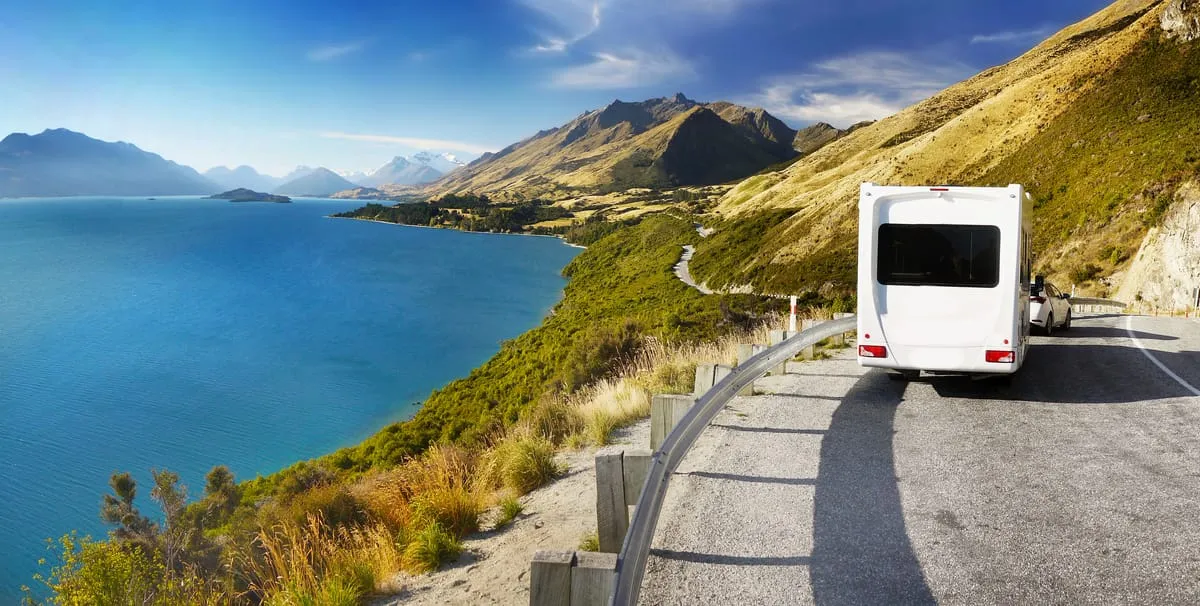
Campervan vs car: which should you rent?
For most Americans on a first trip, a car is the better choice. A campervan only wins if you’ll sleep in it most nights, and even then the rules on where you can park overnight are strict.
| Rental car | Campervan | |
|---|---|---|
| Where you sleep | Motels, hotels, vacation rentals | Holiday parks, DOC campsites, freedom camping if certified |
| Freedom camping on public land | Not allowed | Only if certified self-contained |
| Driving the Crown Range, Haast Pass and Milford Road | Easy | Slower, more tiring, more wind on exposed passes |
| Parking in Queenstown and at trailheads | Easy | Hard at peak times, and some lots limit large vehicles |
| Best for | Couples, families who want a real bed, shoulder seasons | Travelers who’ll camp most nights in summer |
The rule that decides it: under New Zealand’s self-contained vehicle system, freedom camping on public land is limited to certified self-contained vehicles, and to be certified, a vehicle must have a toilet “permanently fixed to and usable within the vehicle,” according to the Plumbers, Gasfitters and Drainlayers Board, which runs the register. Many cheaper campervans don’t qualify, so you’d pay for powered sites at holiday parks every night anyway. Councils and the Department of Conservation (DOC) also set their own rules on where freedom camping is allowed.
If you go the campervan route, the official Drive Safe site recommends the free Campermate app for finding campsites, toilets, supermarkets and gas stations. If you go by car, book a Hertz rental for the whole loop with Christchurch as both the pickup and the return, which avoids the one-way fee.
Driving in New Zealand as an American
Your US license works. Drive Safe, the safety site for visiting drivers, says you can drive in New Zealand on a current, valid license that is in English, and that any conditions on it still apply. You don’t need an International Driving Permit with an English-language US license.
What takes getting used to:
- Keep left. The driver sits on the right, and you’ll shift gears or turn on the wipers with the “wrong” hand for the first day. Drive Safe suggests spending your first night in your arrival city, which is why Day 1 has no drive.
- Times run long. Drive Safe’s planning page warns that winding roads make drives take longer than expected and suggests driving only 1 to 2 hours at a time.
- Fuel gaps. There’s no gas station between Te Anau and Milford Sound, so fill up in Te Anau. Mount Cook Village has a self-service pump that takes credit cards only, according to the Mackenzie tourism board.
- No signal in Fiordland. Fiordland’s tourism board says there is no cell coverage on the Milford Highway. Download offline maps before you leave Te Anau.
- Winter rules. From June to October, the Milford Road can close when avalanche risk is high, and you may need to carry snow chains.
One-lane bridges are common outside the towns. A sign tells you which direction gives way, and a red arrow means you’re the one who waits.
Day by day: the South Island itinerary in detail
Days 1-2: Christchurch to Lake Tekapo
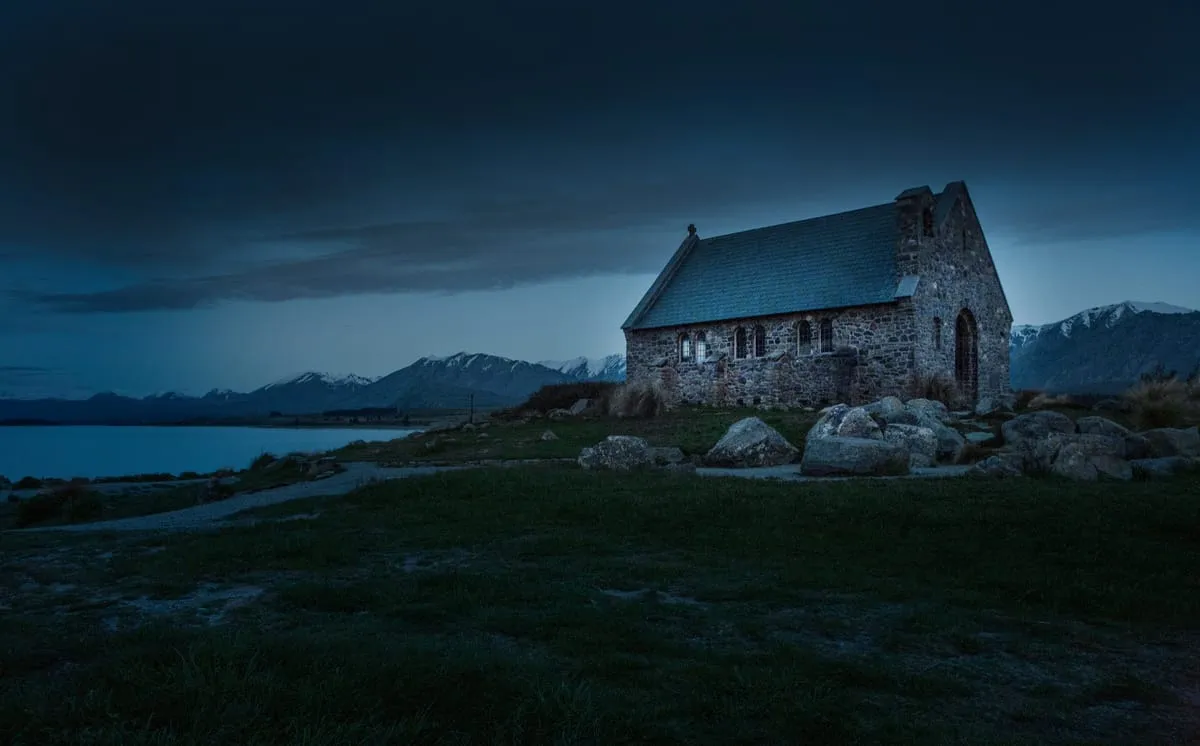
Land, collect the car and sleep in Christchurch. The next morning, drive about 3 hours southwest to Lake Tekapo. The lake’s milky turquoise color comes from fine glacial silt, and the small stone Church of the Good Shepherd on its shore is the classic photo stop. Tekapo sits inside the Aoraki Mackenzie International Dark Sky Reserve, so stay up for the stars on a clear night. For telescopes and a guide who knows the southern sky, book the Mt. John Observatory stargazing experience, which takes you up to the University of Canterbury’s observatory above the lake.
Day 3: Aoraki/Mount Cook and the Hooker Valley Track
Drive 1 hour 15 minutes along Lake Pukaki to Aoraki/Mount Cook Village. The Hooker Valley Track is the reason to come: 5 km (3.1 miles) each way, about 90 minutes in each direction, ending at Hooker Lake under Aoraki/Mount Cook, New Zealand’s highest mountain. DOC’s track page says the walk crosses three swing bridges, including a new 189 m (620 ft) bridge that opened in July 2026 and is now the longest suspension bridge in New Zealand.
Parking at the White Horse Hill trailhead costs NZ$2.50 (about $1.40) per half hour or NZ$25 (about $14) per day, paid by card at the machines, with the first 20 minutes free (prices checked October 2026; NZ$1 = $0.56). Sleep in the village or in Twizel, 45 minutes away.
Days 4-6: Wanaka and Queenstown
The 2.5-hour drive to Wanaka crosses the Lindis Pass, a bare tussock saddle that looks nothing like the lakes on either side. Spend the afternoon on the Wanaka lakefront. On Day 5, take the Crown Range Road to Queenstown, about an hour, and stop at the lookout near the top and in Arrowtown on the way down.
Queenstown is where most people book their activities. Give yourself a full free day for a lake cruise, the gondola, a jet boat, a bungy jump or a drive to Glenorchy at the head of Lake Wakatipu. You can browse things to do in Queenstown on Viator, filter by date, and keep most bookings flexible with free cancellation. Our Queenstown travel tips cover the airport bus, where to stay and which activities to book ahead.
Where to stay: Queenstown and Wanaka have the tightest supply in summer, so book them first. In Queenstown:
- Walk to town: Ramada by Wyndham Queenstown Central is on Frankton Road, about an 8-minute walk from the Queenstown Mall, with studio, one-bedroom and two-bedroom units. Parking is limited, so ask for a space when you book.
- Points and easy parking near the airport: Holiday Inn Queenstown Remarkables Park is in Frankton, a few minutes’ drive from the airport, and earns IHG One Rewards points.
- On the way out of town: Sudima Queenstown Five Mile is also in Frankton, on your side of town for the Day 7 drive to Te Anau.
Families and groups usually want a kitchen and separate bedrooms rather than two hotel rooms: search vacation homes in Queenstown on Vrbo, where you can filter by bedrooms and lake views.
Days 7-8: Te Anau and Milford Sound
Drive 2 hours to Te Anau on Day 7 and go to bed early. Milford Sound is 120 km (74.5 miles) up the Milford Road, about 2 hours without stops, but Fiordland’s tourism board recommends allowing at least 3 to 4 hours so you can stop at Mirror Lakes, the Homer Tunnel and The Chasm. Book a cruise from the wharf at Milford Sound for around midday, and compare the Milford Sound day cruises on Viator before you go: most run 1 hour 40 minutes to 2 hours.
Staying in Te Anau saves you 4 hours of driving on the day compared with a round trip from Queenstown. If you’d rather not drive the Milford Road at all, the premium small-group Milford Sound tour from Queenstown includes the cruise and a picnic lunch, with an option to fly back. Our Milford Sound tours comparison covers every option, including fly-cruise-fly.
Days 9-11: Haast Pass and the glaciers
Day 9 is a recovery day: drive about 3.5 hours back to Wanaka and rest. Day 10 is the longest drive, 3 hours 38 minutes over the Haast Pass to Franz Josef, with short forest walks to the Blue Pools and Fantail Falls on the way. Fox Glacier is 24 minutes south of Franz Josef if you want to see both.
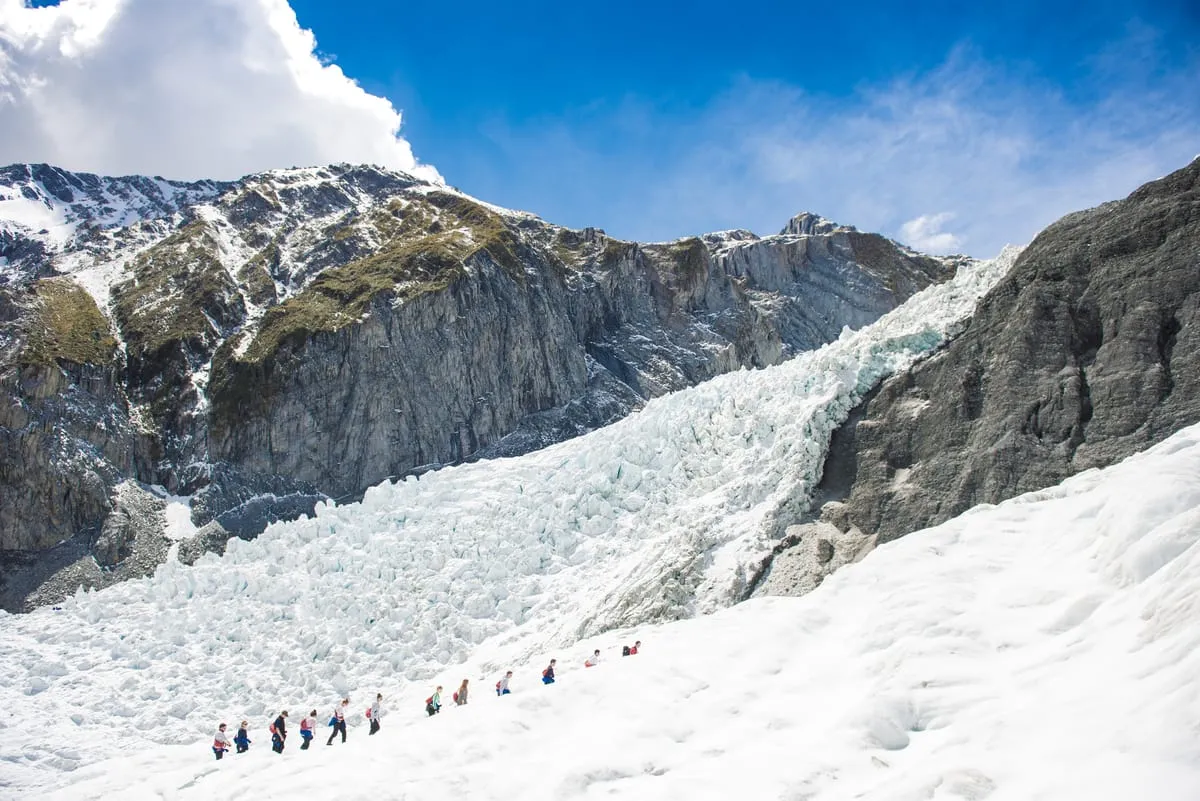
The glaciers have retreated a long way, so the free valley walks now end at viewpoints well below the ice. To stand on the ice itself, operators in Franz Josef run heli-hikes, where a helicopter lands you on the glacier for a guided walk. The Franz Josef Glacier heli-hike pairs the helicopter flight with a small-group guided walk on the ice. These trips are weather-dependent, so plan one for the morning of Day 11 and keep the afternoon free in case it moves. Then drive 1 hour 43 minutes up the coast to Hokitika for the night.
Day 12: Arthur’s Pass and back to Christchurch
The last day crosses the Southern Alps on State Highway 73 through Arthur’s Pass National Park. Watch for kea, the alpine parrots that hang around the lookouts, and stop at the limestone boulders of Castle Hill on the Canterbury side. Return the car in Christchurch and fly home the next morning.
What to book first, and when
This is the booking order we’d use, with the reason each one can’t wait.
- Flights. From the US you’ll connect in Auckland or Australia to reach Christchurch or Queenstown. If you’re booking the long-haul flight and your first and last hotels together, bundle the flight and hotel on Expedia and compare the package price with booking them separately.
- The car. It’s the one booking you can’t improvise on arrival, and every other date depends on where and when you pick it up. Reserve your Hertz car before anything that depends on dates.
- Beds in Queenstown, Wanaka and Te Anau. These fill first in December to March.
- The Milford Sound cruise. Book once your Te Anau night is fixed, for a late-morning or midday departure that gives you time for stops on the drive in.
- Weather-dependent extras like a glacier heli-hike or a scenic flight. Book a flexible slot early in your stay at that stop, so there’s a backup day.
Free things don’t need booking: the Hooker Valley Track, the Tekapo lakeshore, the Haast Pass walks and the glacier valley viewpoints.
Entry rules and costs for US travelers
US citizens don’t need a visa for a vacation, but you must have a New Zealand Electronic Travel Authority (NZeTA) before you fly. Immigration New Zealand’s NZeTA page prices it from NZ$17 in the official app, slightly more on the website, and says to allow up to 72 hours for processing. It’s valid for two years, for stays of up to three months at a time.
On top of that, you pay the International Visitor Conservation and Tourism Levy of NZ$100 (about $56) when you request the NZeTA. Immigration New Zealand’s levy page says it is not refunded, even if your application is declined. Budget about NZ$117 (about $66) per person in the app.
New charges are coming at two stops on this route. The Department of Conservation is planning access charges for international visitors at four sites, including Aoraki/Mount Cook and Milford Sound. A bill to allow them was introduced in May 2026, and DOC expects the rules to be in place for summer 2027/28. No amounts had been set when we checked in October 2026.
Staying connected on the road
On a road trip your phone is the map, the weather forecast and the way to check road closures, and US carriers’ day passes add up over 12 days (Verizon’s TravelPass costs $12 a day per line). A New Zealand eSIM from Airalo is set up before you fly; use code GUIDEZ15 at checkout if you’re new to Airalo, or GUIDEZ10 if you’ve bought from them before. If you stream or hotspot a laptop on long drives, Holafly’s unlimited-data eSIM removes the cap. Our Airalo vs Holafly comparison shows which suits how much data you use. Our Airalo vs local SIM vs roaming comparison runs the numbers.
Remember there’s no coverage on the Milford Road or on stretches of the Haast Pass, so download offline maps for the whole island. For banking and bookings on motel and airport Wi-Fi, a VPN such as Surfshark keeps your connection private.
When is the best time to visit the South Island?
December to March is the main road-trip season, with the longest days and the warmest lakes. It’s also the busiest, so book further ahead. Spring (October and November) and fall (April and May) bring fewer people and cheaper beds, with a higher chance of rain and snow on the passes. In winter, June to October, Queenstown and Wanaka fill with skiers, and the Milford Road can close for avalanche control at short notice, so keep a spare day around Milford Sound.
Adding the North Island
Most US flights land in Auckland, so it’s easy to add a few North Island days before you fly south. The most-booked day trip from Auckland is the Shire from The Lord of the Rings, about 2 hours away; our Hobbiton tour tickets guide compares the tours from Auckland, Matamata and Rotorua. For another long-distance drive on the same scale, our Iceland Ring Road in 10 days uses the same booking order.
Before you book anything else, lock in the car: compare Hertz rental cars for your South Island loop, then fill in beds and the Milford cruise around those dates. For more places to eat, stay and stop along the way, open this New Zealand map on Guidez, which is in Hebrew.