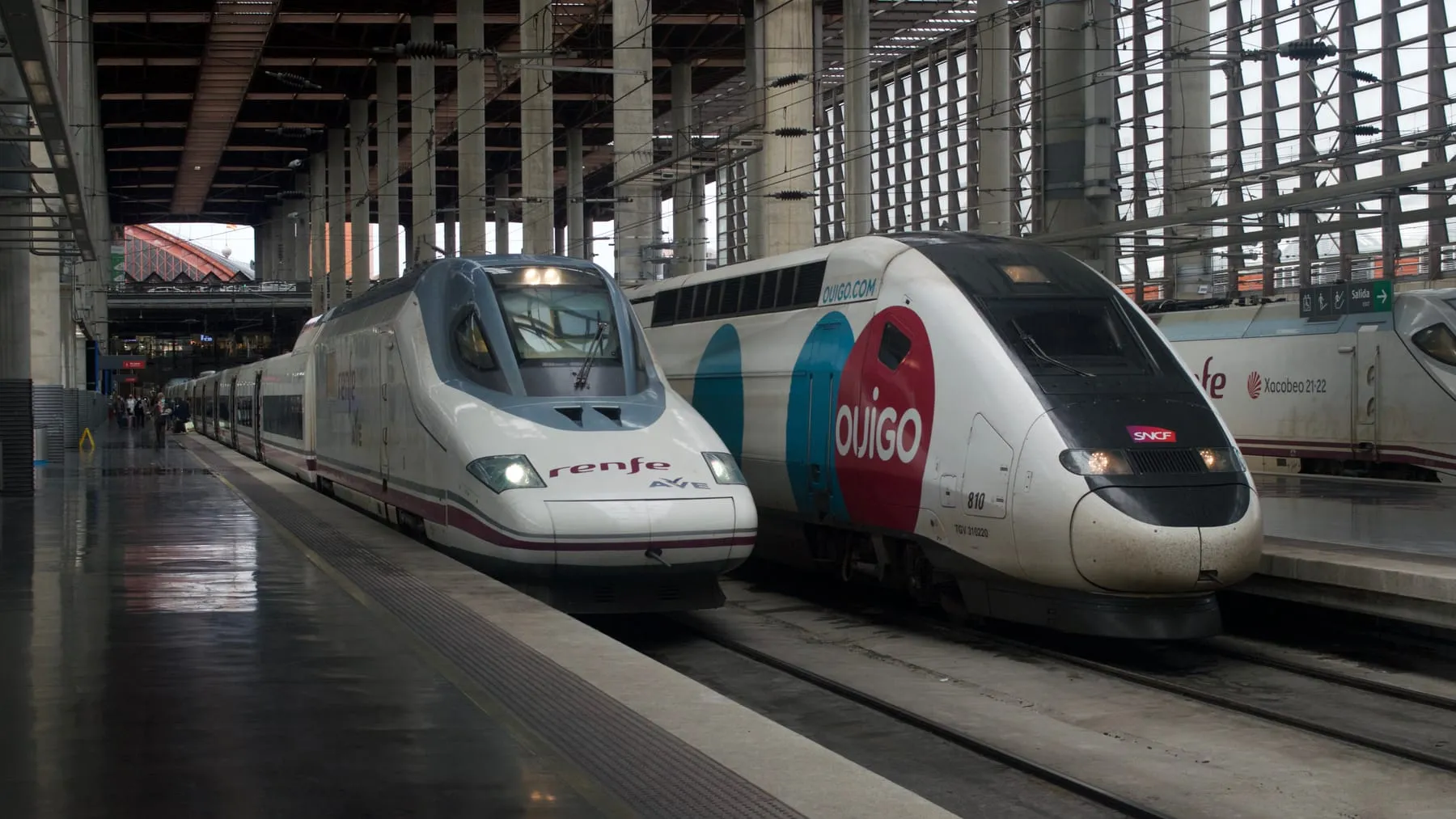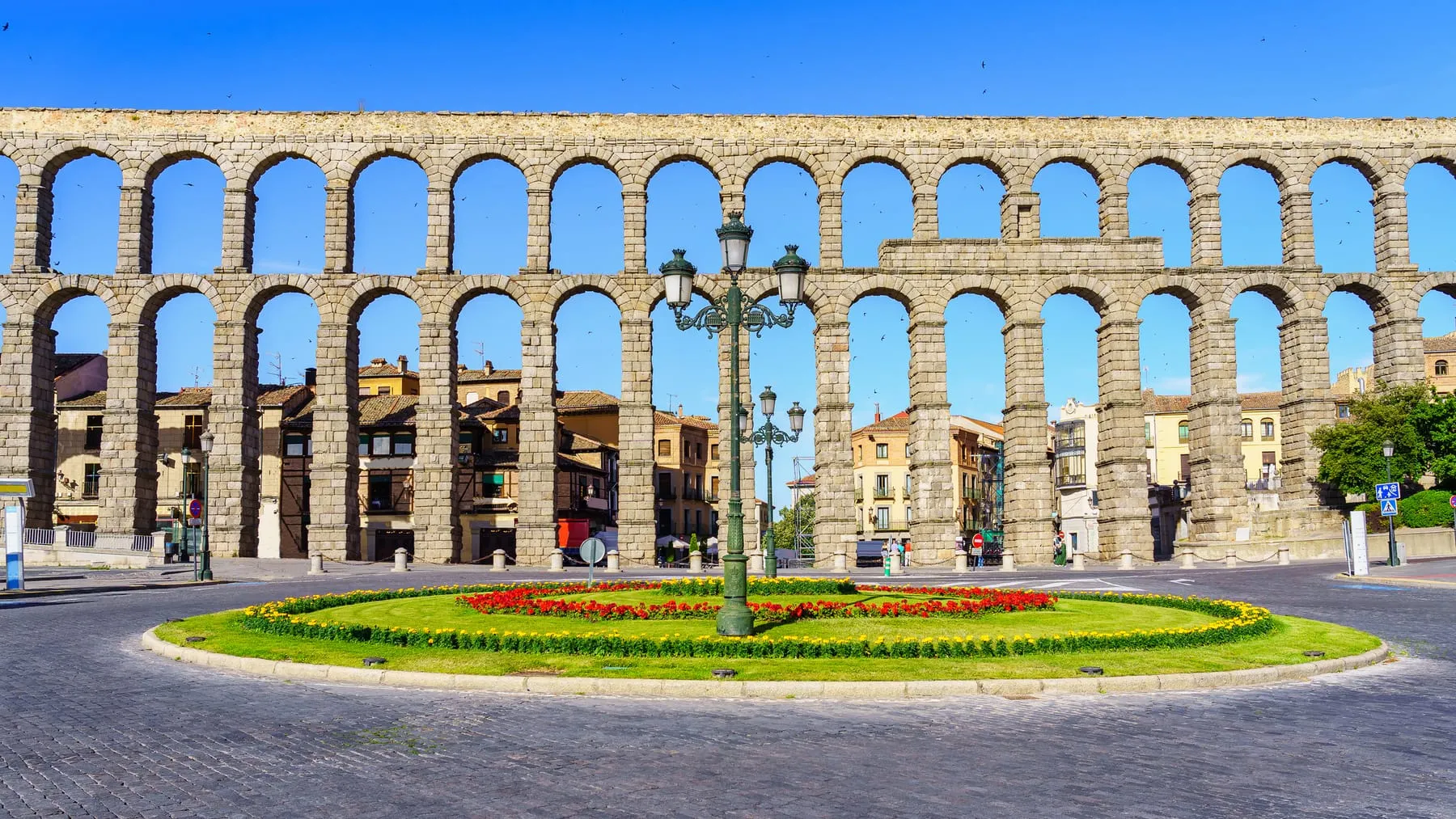
The best day trips from Madrid are Toledo, Segovia, Ávila, El Escorial and Cuenca, all within about an hour or two by train or bus. With one day, go to Toledo: it’s 34 minutes away by high-speed train and has the most to see. To see two cities in one go, our pick is the Ávila and Segovia tour with monument tickets from Madrid.
That tour is the most-reviewed day trip we found on Viator. It covers Ávila’s medieval walls and Segovia’s aqueduct and Alcázar with a guide, the coach and the entries in one booking.
Which day trip from Madrid is best?
Toledo is the best day trip from Madrid for most first-time visitors, and Segovia is the easiest to do on your own by train. Here’s how all five compare at October 2026 prices, with dollar figures at €1 = $1.11.
| Day trip | Time each way | How to get there | Main paid sight | Best for |
|---|---|---|---|---|
| Toledo | 34 minutes | Avant train from Atocha | Cathedral €12 ($13), wristband €14 ($16) | A first day trip, art and history |
| Segovia | Under 30 minutes | Avant train from Chamartín | Alcázar €10 ($11) with tower | Families, Roman and castle sights |
| Ávila | About 1.5 to 2 hours | Regional train or bus | Wall walk about €8 ($9) | Walking the medieval walls |
| El Escorial | About 1 hour | Bus from Moncloa or commuter train | Monastery €14 ($16) | Royal history, a half day |
| Cuenca | About 1 hour | High-speed train | Cathedral and museums | Scenery and the hanging houses |
Our picks
- Best single day trip: Toledo. Our Toledo day trip guide compares the train, the bus and tours, and the Toledo tour from Madrid with the cathedral, a synagogue and Santo Tomé includes all three entries with a guide.
- Best two cities in one day: the Ávila and Segovia tour with tickets to monuments has more Viator reviews than any other day trip we found from Madrid.
- Best if you want three cities: the Segovia, Ávila and Toledo in one day tour is a long day on a coach, but it’s the only practical way to see all three when you have one free day.
- Best on your own: Segovia by Avant train. It’s the shortest train ride on this list, and the aqueduct, cathedral and Alcázar sit along one walkable line through town.
- Best for scenery: Cuenca, with houses hanging over a gorge and rock formations outside town that are easiest to reach on a tour or by car.
Toledo: the best day trip from Madrid
Toledo is the one day trip most visitors should make. The walled city on a hill above the Tagus River was home to Christian, Muslim and Jewish communities for centuries, and you can see all three in one walk: the Gothic cathedral, the Santa María la Blanca synagogue and the Cristo de la Luz mosque, plus El Greco’s The Burial of the Count of Orgaz in the church of Santo Tomé.
Getting there: Renfe’s Avant high-speed trains take about 34 minutes from Madrid’s Atocha station, and every seat must be reserved. Standard one-way fares ran about €13 to €16.50 (about $14 to $18) in October 2026. Alsa buses from Plaza Elíptica are cheaper and take about 50 minutes on the direct service.
What it costs: the cathedral’s basic ticket costs €12 (about $13) and isn’t part of the city’s tourist wristband. The wristband costs €14 (about $16) for seven monuments, including Santo Tomé, Santa María la Blanca and San Juan de los Reyes, against €4 for each single entry, so it pays off from the fourth monument.
Watch out for: Sunday mornings. The cathedral opens for visitors only from 2 pm on Sundays, according to its visiting information.
Our Toledo day trip from Madrid guide has the full train, bus and tour comparison, a one-day route and the cost math.
Segovia: the Roman aqueduct and the Alcázar
Segovia is the easiest day trip from Madrid by train and the best one for families. Its Roman aqueduct, nearly 2,000 years old, crosses the main square in two tiers of granite arches. A short walk through the old town takes you past the Gothic cathedral to the Alcázar, the turreted royal castle at the far end of town.
Getting there: Avant trains from Madrid Chamartín reach Segovia-Guiomar station in under 30 minutes, on the Madrid to Segovia line Renfe runs toward Valladolid. Guiomar is a high-speed station outside town, so take a city bus or a taxi to the aqueduct. Buses from Madrid’s Moncloa interchange take about an hour and drop you closer to the center. Compare Madrid to Segovia trains on Omio and book the return at the same time, since Avant seats are reserved.
What it costs: seeing the aqueduct is free. At the Alcázar, the palace and museum ticket costs €7 (about $8), and €10 (about $11) adds the climb up the Tower of Juan II, according to the castle’s published price list. The Alcázar opens every day from 10 am, closing at 6 pm from November to March and 7:30 pm from April to October, with last entry 30 minutes before closing, according to the Alcázar’s official site. It closes only on December 25. Its free Tuesday-afternoon slot applies to EU citizens only, so it doesn’t help American visitors.
Eat: Segovia is known for roast suckling pig (cochinillo). Book lunch if you want it at a well-known restaurant on a weekend.
Tour or train? Segovia is easy on your own, so a tour only makes sense when it adds a second city. The Ávila and Segovia tour in the next section does that, and the Segovia and Toledo day trip with the Alcázar and cathedral pairs Segovia with Toledo instead.
Ávila: walk the medieval walls
Ávila is the place to walk on top of a medieval wall. Its 12th-century stone walls, about 1.6 miles (2.5 km) around, still enclose the whole old town, and you can climb up and walk long sections of the walkway. The town is also the birthplace of St. Teresa of Ávila, and several convents and churches are dedicated to her.
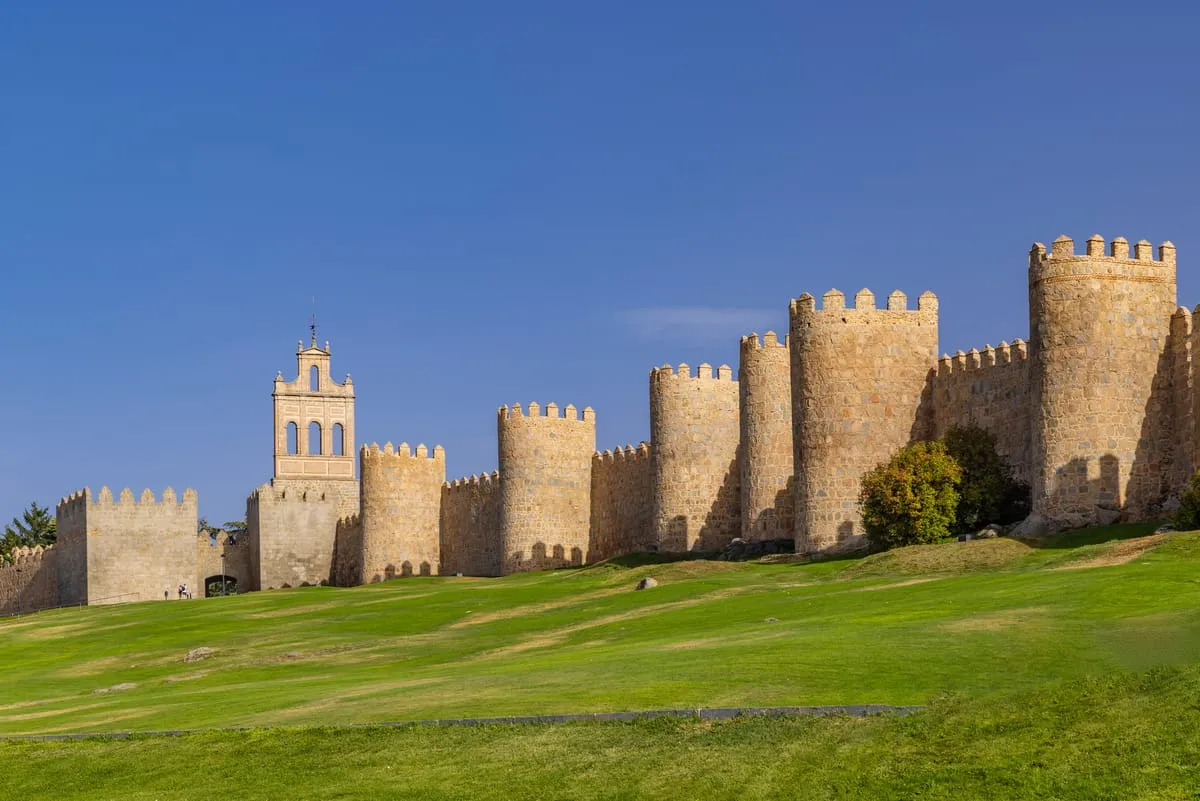
Getting there: regional and long-distance trains from Madrid take about 1.5 to 2 hours, roughly hourly, and buses leave from Madrid’s Estación Sur. Ávila’s station sits east of the old town, a short walk from the Puerta de San Vicente gate. Ávila is far enough that a tour combining it with Segovia makes better use of a single day.
What it costs: the wall walk costs about €8 (about $9) for adults, with a reduced rate of about €5 and free entry for under-12s. From late October to late March it’s open Tuesday to Sunday from 10 am to 6 pm and closed on Mondays; from late March to late October it opens daily from 10 am to 8 pm. The last climb is 45 minutes before closing. These are the rates and hours Ávila’s tourism office published for 2026, as reported by local guides in October; prices can change, so check at the gate.
The tour we’d book: Ávila is the stop that a tour helps most, because the train ride alone eats three or more hours of your day. The Ávila with walls and Segovia with Alcázar tour includes the wall walk and the castle, with an optional lunch, and our top pick above, the Ávila and Segovia tour with tickets to monuments, is the most-reviewed alternative.
El Escorial: Philip II’s monastery-palace
El Escorial is the best half-day trip from Madrid. The Royal Monastery of San Lorenzo de El Escorial, built for King Philip II in the 16th century, combines a monastery, a royal palace, a basilica, a library and the pantheon where most Spanish kings since the 16th century are buried. It sits in the foothills of the Sierra de Guadarrama, about an hour northwest of Madrid.
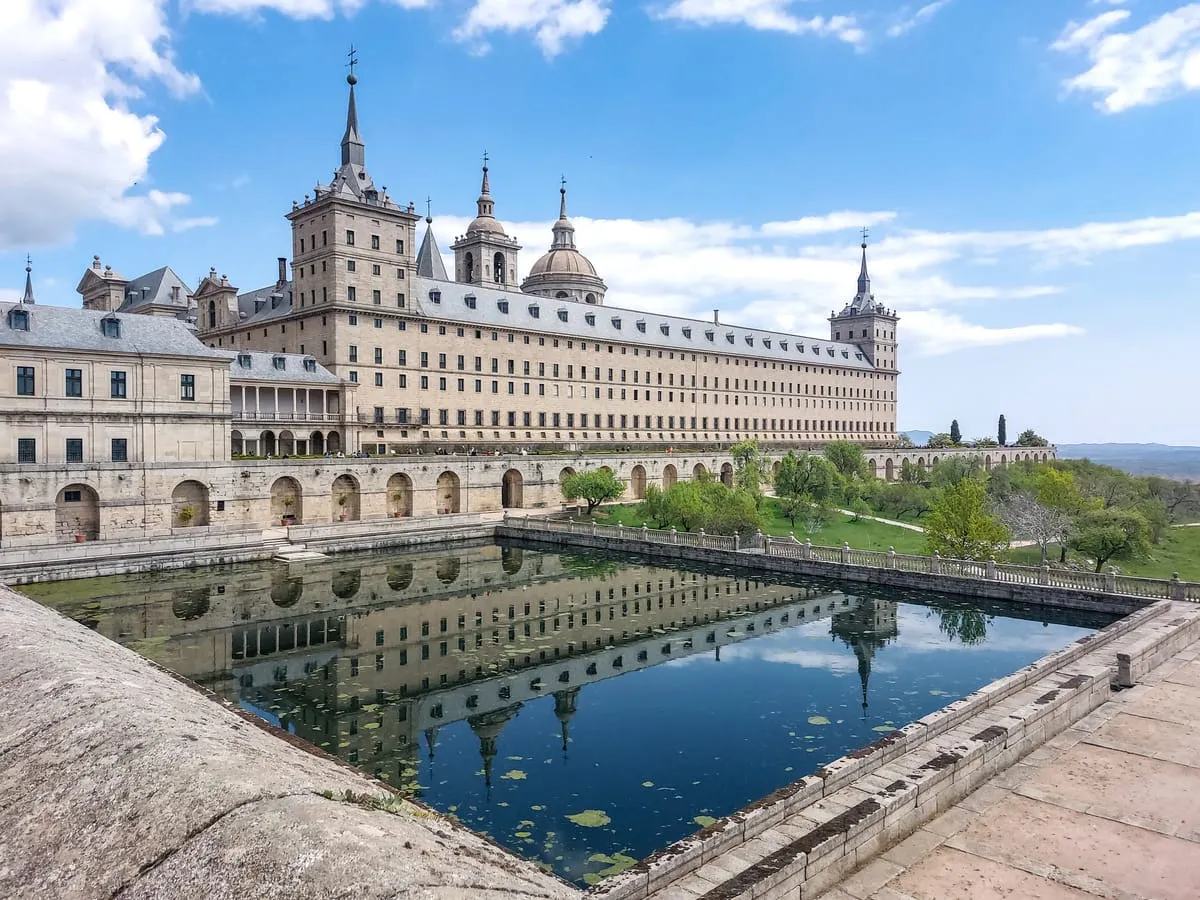
Getting there: buses 661 and 664 leave Madrid’s Moncloa interchange, take about an hour and stop about 10 minutes’ walk from the monastery. Cercanías commuter trains also run to El Escorial in about an hour, but the town’s station is at the bottom of the hill, so add a 15-minute uphill walk or a local bus.
What it costs: a standard monastery ticket costs €14 (about $16), a reduced ticket €7, and a guided visit €22, with an English-language guided tour at 10:45 am Tuesday to Sunday, according to Patrimonio Nacional. The monastery opens Tuesday to Sunday, 10 am to 6 pm from October to March and 10 am to 7 pm from April to September, and closes every Monday. The ticket office stops selling 1 hour 15 minutes before closing. Patrimonio Nacional says buying in advance is essential. Its free Wednesday and Sunday afternoons are for EU and Latin American citizens and residents, so they don’t apply to most American visitors.
Since February 17, 2026, visitors enter through the West Façade and the Patio de Reyes while improvement works are under way, according to Patrimonio Nacional’s ticket page.
Tours: many El Escorial tours also visit the nearby Valley of Cuelgamuros, the Civil War monument formerly called the Valley of the Fallen. Viator lists 30 tours that include El Escorial, from half-day trips to full days that add Segovia or Toledo.
Cuenca: the hanging houses
Cuenca is the day trip for scenery. Its old town sits on a ridge between two river gorges, and its famous hanging houses (casas colgadas) jut out over the Huécar gorge on wooden balconies. One of them holds the Museum of Spanish Abstract Art, founded in 1966 by the artist Fernando Zóbel, whose name the high-speed station now carries.
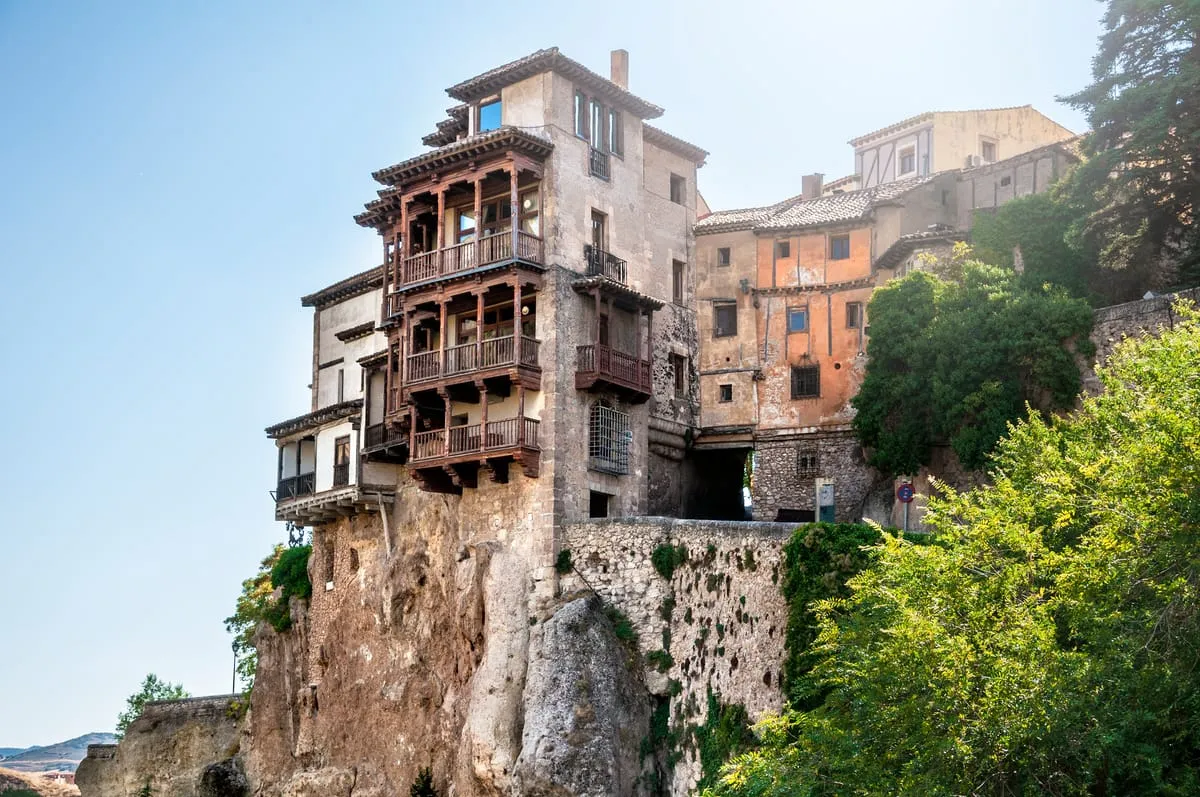
Getting there: high-speed trains take about an hour from Madrid to Cuenca-Fernando Zóbel, with around 20 departures a day. The station is outside town, so take a city bus or a taxi up to the old town. Check Madrid to Cuenca trains on Omio for times on your date.
Tour or car? The Ciudad Encantada (Enchanted City), a park of wind-carved limestone rock formations outside Cuenca, has no train. The Cuenca and Enchanted City day trip from Madrid covers both with transport included. If you’d rather set your own pace, a rental car from Hertz lets you add the Enchanted City and the gorge viewpoints, and Madrid to Cuenca is about a two-hour drive.
Combination tours: two or three cities in one day
Combination tours make sense when you have one free day and want more than one city. They’re long, often 10 hours or more, and you trade depth for range. These are the ones we’d consider, from the most-reviewed on Viator in October 2026:
| Tour | Cities | Best for |
|---|---|---|
| Ávila and Segovia with tickets to monuments (our top pick, above) | Ávila, Segovia | The best two-city day: walls, aqueduct and Alcázar |
| Segovia, Ávila and Toledo in one day | Ávila, Segovia, Toledo | One free day and a long list |
| Toledo and Segovia with lunch and tickets | Toledo, Segovia | The two most famous towns together |
| Segovia and Toledo with the Alcázar and cathedral | Segovia, Toledo | An alternative when the Toledo and Segovia tour is full |
Our rule: one city by train if you have a day for each, a two-city tour if you have one day for two, and the three-city tour only if you’ll never be back. Two days on your own, one in Toledo and one in Segovia, beat any three-city coach day for time inside the sights.
What day of the week is best for a day trip from Madrid?
Tuesday to Saturday is the safest window, because Mondays close El Escorial and, in winter, Ávila’s walls, and Toledo Cathedral opens only in the afternoon on Sundays. Closing days matter more than weather on these trips:
| Day | Toledo | Segovia | Ávila | El Escorial |
|---|---|---|---|---|
| Monday | Cathedral and wristband sites open; state museums usually closed | Alcázar open | Wall walk closed late October to late March | Closed |
| Tuesday to Saturday | All open | All open | Open | Open |
| Sunday | Cathedral from 2 pm only | Alcázar open | Open | Open |
So: El Escorial and Ávila on a Monday are the two plans to avoid, and Toledo works best Tuesday to Saturday. Segovia’s Alcázar is open daily except December 25, which makes Segovia the safest Monday choice.
Closer options: Aranjuez and Alcalá de Henares
Two more towns are easy half days on Madrid’s Cercanías commuter trains, which run from Atocha in under an hour and don’t need a reservation. Aranjuez has a royal palace and riverside gardens, and Alcalá de Henares is the university town where Miguel de Cervantes, author of Don Quixote, was born. Neither has the impact of Toledo or Segovia, so save them for a second visit.
Tips for American travelers
- Book high-speed trains early. Avant and high-speed trains to Toledo, Segovia and Cuenca need a seat reservation, and the cheapest fares go first. Our guide to cheap train tickets in Europe explains when to book.
- Entry rules. US passport holders can visit Spain without a visa for up to 90 days in any 180-day period. The EU’s ETIAS authorization will cost €20 once it starts, but no start date had been announced when we checked in late October 2026, and the EU has promised at least six months’ notice, according to the EU Delegation to the US.
- Free afternoons aren’t for you. The free slots at Segovia’s Alcázar and El Escorial are limited to EU (and, at El Escorial, Latin American) citizens and residents, so plan on paying full price.
- Staying connected. Train tickets, tour vouchers and maps all live on your phone, and Verizon’s TravelPass costs $12 a day per line in Europe. A Spain eSIM from Airalo installs before you fly; use code GUIDEZ15 at checkout if you’re new to Airalo, or GUIDEZ10 if you’ve bought from them before. Our Airalo vs local SIM vs roaming comparison runs the numbers.
Plan your Madrid days around the trips
Day trips work best from a base of at least four nights in Madrid. Our 3-day Madrid itinerary covers the city itself, and our Prado Museum tickets guide explains the free evening hours, so you can keep your full days for trips out of town. Going on to Barcelona after? Compare the options in our Madrid to Barcelona train vs flight guide.
If you’re booking one day trip now, make it the Ávila and Segovia tour with tickets to monuments for two cities in a day, or read our Toledo day trip guide if one city done well is more your style. For more places to eat and stay along the way, browse creator-made travel maps on Guidez.