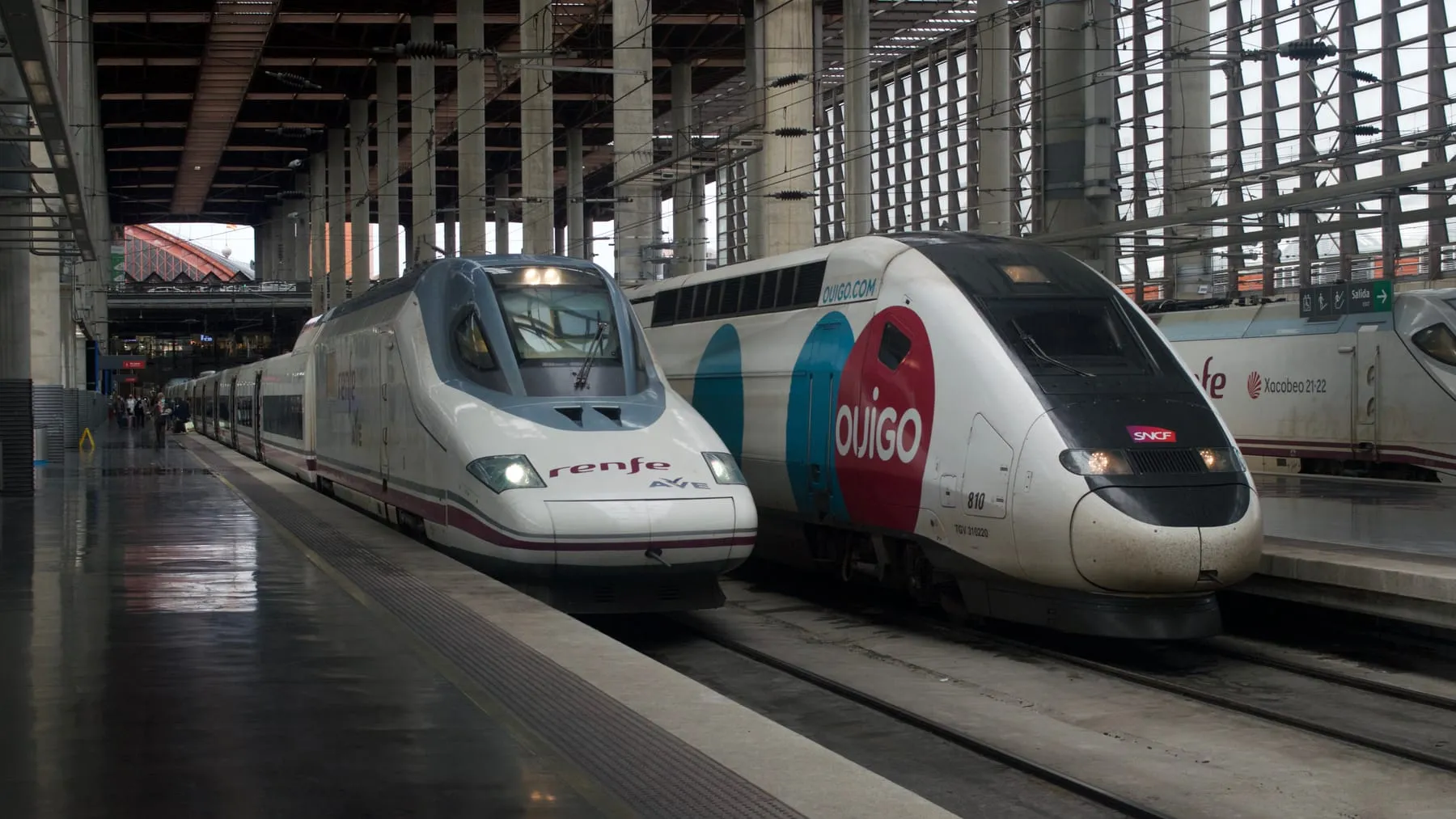
For Madrid to Barcelona, take the train: high-speed trains run from Madrid Puerta de Atocha to Barcelona Sants in about 3 to 3.5 hours, center to center, and get you door to door in about 4 hours by our estimate, as fast as flying. Fares start at €9 (about $10) on Ouigo. Compare AVE, Ouigo and iryo trains from Madrid to Barcelona on Omio for your date.
That ties or beats a 1-hour-20-minute flight once you add the airport runs and security. Three companies compete on the line, so the cheapest one changes from day to day, and a single search shows every operator’s times and prices.
Madrid to Barcelona train vs flight at a glance
Prices are as of October 2026, at €1 = $1.11. Door-to-door times are our own estimate from central Madrid (Sol) to central Barcelona (Passeig de Gràcia), explained in the next section.
| High-speed train | Flight | |
|---|---|---|
| Time in transit | About 3 to 3.5 hours | About 1 hour 15 to 1 hour 25 minutes in the air |
| Door to door, our estimate | About 3 hours 50 minutes to 4 hours 20 minutes | About 3 hours 50 minutes to 4 hours 40 minutes |
| From and to | Madrid Puerta de Atocha to Barcelona Sants, both central | Madrid Barajas (T4 for Iberia) to Barcelona El Prat (T1 for Iberia) |
| Lowest fares | €9 (about $10) on Ouigo; about €17 (about $19) on AVE | Varies by airline and date |
| Arrive before departure | About 30 minutes (Ouigo’s minimum) | About 1 to 1.5 hours for a domestic flight |
| Luggage | Suitcases free on AVE; paid extra on Ouigo and iryo’s cheapest fare | Depends on the fare; basic fares often exclude a checked bag |
| Phone and laptop use | Whole trip; Wi-Fi on Ouigo | Limited |
| Best for | Almost everyone | Same-day connections from long-haul flights |
Our rule: take the train unless you’re landing at Madrid Barajas from the US and flying straight on to Barcelona. In that case a flight on the same ticket keeps you airside and protected if your first flight is late.
Door to door: is the train really faster than flying?
Yes, or at worst it’s a tie, even with the line running slower in 2026. The math, from Puerta del Sol in Madrid to Passeig de Gràcia in Barcelona:
By train (about 3 hours 50 minutes to 4 hours 20 minutes):
- Sol to Atocha station: about 10 minutes by Cercanías commuter train or metro.
- Arrive about 30 minutes early for the X-ray bag check and ticket gates. Ouigo sets 30 minutes as its minimum.
- The train: 3 hours 2 minutes to 3 hours 27 minutes on the Ouigo timetable we checked, which is typical for the route.
- Sants to Passeig de Gràcia: a few minutes by Rodalies commuter train, or about 15 minutes on metro line L3.
By plane (about 3 hours 50 minutes to 4 hours 40 minutes):
- Central Madrid to Barajas T4: the Airport Express bus from Atocha takes about 30 minutes to Terminal 1 and about 10 minutes more to Terminal 4, according to Madrid’s tourism board, and costs €5 (about $6). A taxi is a flat €33 (about $37) from anywhere inside the M-30 ring road, according to Aena’s Madrid-Barajas taxi page.
- Arrive about an hour before a domestic flight, more with a checked bag.
- The flight: about 1 hour 15 to 1 hour 25 minutes gate to gate on the Iberia shuttle.
- Off the plane and out of El Prat: allow 15 to 20 minutes.
- Aerobus to Plaça de Catalunya: about 35 minutes for €7.75 (about $9), and you can book the Aerobus ticket on GetYourGuide before you fly. Our Barcelona airport to city center guide compares the bus, train, metro and taxi.
The flight only wins on paper if you live by the airport, travel with hand luggage only and everything runs on time. The train also gives you three hours of usable time, with room to work or eat and a café car on board.
Why trains are slower in 2026: after the Adamuz high-speed crash in January 2026, Adif, which manages Spain’s tracks, imposed 160 km/h (100 mph) limits on several sections of the Madrid-Barcelona line, where trains normally reach 300 km/h. In February it agreed with Renfe, iryo and Ouigo to keep the limits until at least the end of 2026, adding about 25 minutes, so the fastest trip went from 2 hours 37 minutes to at least 3 hours, Ara reported. Timetables already include the extra time.
AVE vs Ouigo vs iryo: which train should you book?
Three companies run high-speed trains between Madrid and Barcelona, all on the same tracks and between the same two stations. Renfe’s low-cost Avlo brand also used to run here, but Renfe pulled it from the route in September 2025 after finding a crack in the frame of one of its trains, The Local reported, and Renfe has said it will return.
| Renfe AVE | Ouigo | iryo | |
|---|---|---|---|
| Trains a day | 20 or more | About 5 | Several |
| Fares from | About €17 (about $19) in standard | €9 (about $10); low flat fares for children | Varies by date |
| Classes | Standard, Comfort, Premium fare with meal and lounge | One class, with optional XL seats | Inicial, Singular, Infinita, Infinita Bistró |
| Suitcases | Included at no extra cost | Small bag and cabin bag included; larger case extra | Small bags only in Inicial; more on higher fares |
| Food | Café car; meal in Premium | Café car | Trolley; meals in Infinita classes |
| Best for | Most departures, flexible fares, travelers with big bags | The lowest fares with light luggage | Comfort upgrades at a good price |
The figures come from Ouigo’s Madrid-Barcelona page and The Man in Seat 61’s route guide. Ouigo’s schedule we checked had five departures from Madrid, two of them nonstop; others stop at Zaragoza Delicias and Camp de Tarragona.
Which to book:
- Best overall: Renfe’s AVE. It has the most departures, so you can travel when you want, and it doesn’t charge extra for suitcases.
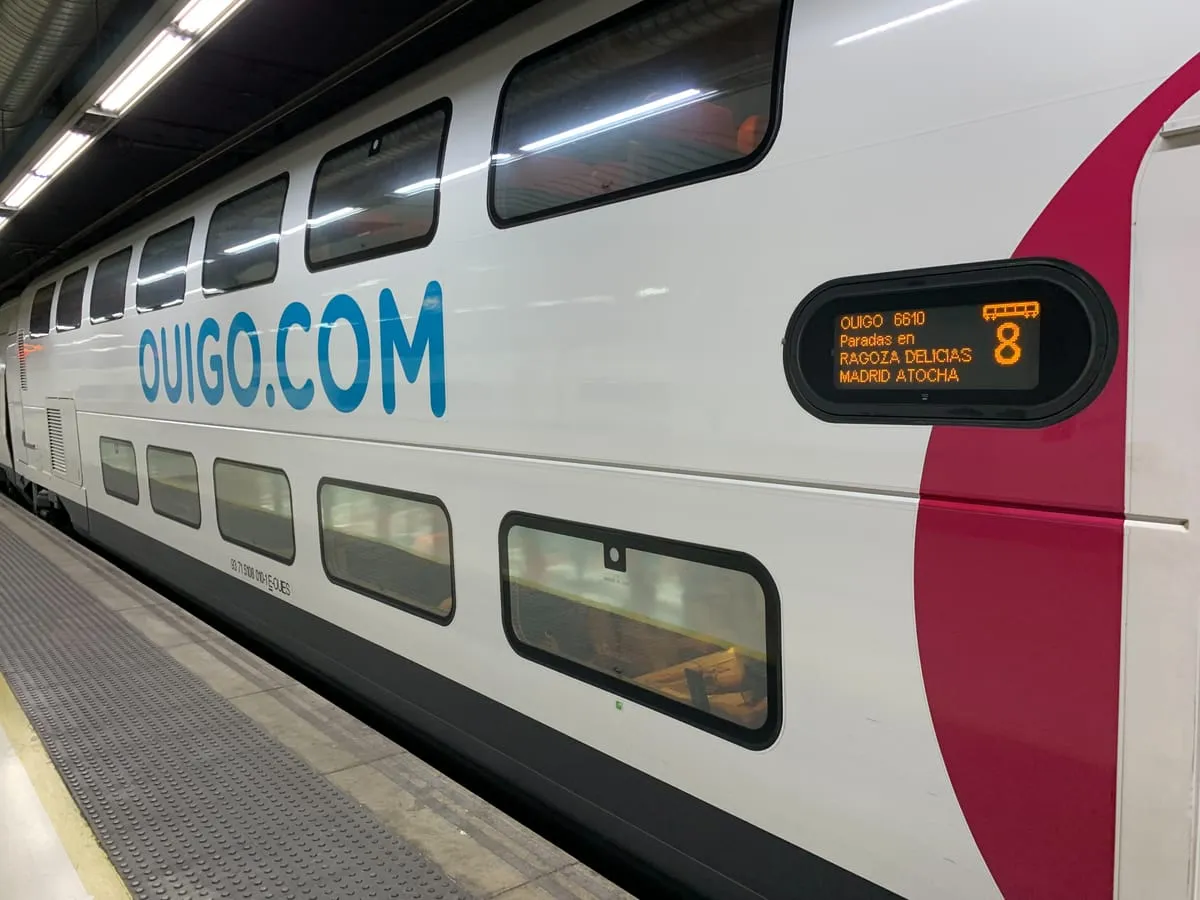
- Cheapest: Ouigo, if you travel light. Its double-deck trains have Wi-Fi and a café car, and the Ouigo Flex option lets you change your time or date up to 30 minutes before departure. Budget about €5 (about $6) for each extra suitcase or backpack, per Seat 61.
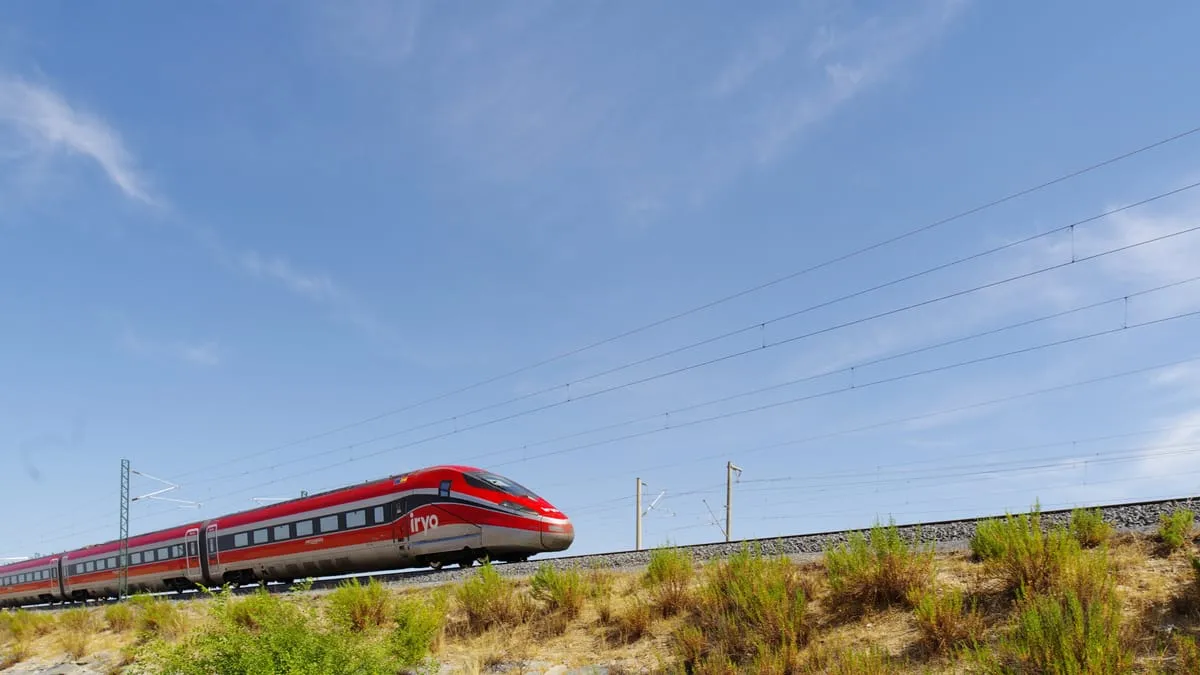
- Best for comfort: iryo’s Infinita fares, which add a generous luggage allowance and more flexible tickets, per Seat 61; Infinita Bistró also includes a light meal and drinks.
Because prices change daily and the cheapest operator varies, the best way to book is to search all three operators on Omio, sort by price or departure time, and book the train that fits, with your ticket on your phone.
How much does the Madrid to Barcelona train cost?
From €9 (about $10) on Ouigo and about €17 (about $19) on the AVE, but those are the lowest prices, on quieter trains booked early. What people actually pay is higher: Spain’s competition authority, the CNMC, reported an average fare of €63 (about $70) between Madrid and Barcelona in the second quarter of 2025, a record 3.9 million passengers that quarter and a 15% price rise over a year, according to its rail statistics release. Prices climbed further after the Avlo trains were withdrawn, when the average fare in the month after September 8, 2025 rose 68% to €130.46, Cadena Ser found, as reported by The Local.
How to pay less:
- Book early. Fares are dynamic: as a train fills up, the price goes up.
- Be flexible on the time. Prices can differ a lot between trains on the same day, so look at the whole day before you pick.
- Compare operators on the same search. On one train the cheapest seat is a Ouigo, on the next it’s an AVE.
- Pack light for Ouigo. The €9 fare covers a small bag and a cabin bag; a big suitcase adds to it.
When you’ve picked your day, check live fares for Madrid to Barcelona on Omio: the earlier you look, the more of the cheap seats are still there.
Madrid and Barcelona stations: where trains leave and arrive
Madrid Puerta de Atocha, officially Madrid Puerta de Atocha - Almudena Grandes, is where AVE, Ouigo and iryo trains to Barcelona leave from. It’s at the south end of the Paseo del Prado, a short walk from the Prado and the Reina Sofía, and one Cercanías stop from Sol. Madrid’s other big station, Chamartín, mainly serves other routes, so check your ticket.
Barcelona Sants is where all three arrive. It’s west of the old town, with metro lines L3 and L5 and Rodalies commuter trains into the center. If you’re staying in the Eixample, the commuter train to Passeig de Gràcia is the quickest way in.
A few things worth knowing:
- Security check. Bags go through a quick X-ray scan and tickets are checked before you reach the platforms.
- Don’t cut it fine. Ouigo asks you to be at the station at least 30 minutes ahead, and the bag check can have a line at busy times on any operator.
- Free commuter ride with Renfe. AVE tickets carry a “Combinado Cercanías” code that you can swap at a commuter-train ticket machine for a free ride to or from the station on the day of travel.
When is flying from Madrid to Barcelona better?
Flying makes sense in two cases:
- You’re connecting from a long-haul flight. If you land at Madrid Barajas from the US and continue to Barcelona the same day, book the onward flight on the same ticket. Iberia’s shuttle leaves from Terminal 4, where its long-haul flights arrive, and a missed connection is the airline’s problem. Taking the train means a trip into the city to Atocha first.
- You’re flying home from Barcelona anyway and find a cheap open-jaw ticket that makes the domestic flight part of it.
Iberia and Air Europa fly between Madrid and Barcelona. Vueling ended its own three daily flights on the route in March 2025 and now sells it through codeshares with Iberia, Ara reported.
Driving is the slowest option: about 385 miles (620 km), roughly six hours on the A-2 motorway without stops. It only pays if you want to stop in Zaragoza or the Aragón countryside along the way, or you’re continuing to the Costa Brava. If that’s your plan, compare Hertz rental cars and read our car rental tips for Europe first.
Tips for the trip
- Stay connected. Your train ticket and maps live on your phone, and US carriers’ day passes, such as Verizon’s TravelPass at $12 a day, add up over a week. A Spain eSIM from Airalo works in both cities and on the train; use code GUIDEZ15 at checkout if you’re new to Airalo, or GUIDEZ10 if you’ve bought from them before.
- Check for disruptions. 2026 has brought breakdowns and delays on Spain’s railways. Check the operator’s app the day before, and keep your booking confirmation handy for changes.
- Plan your first day in Barcelona. Gaudí’s houses are a short ride from Sants: our Casa Batlló vs Casa Milà comparison helps you choose, and the Casa Batlló ticket with audio guide is easy to fit into an arrival afternoon. For the Sagrada Família, book a timed slot or the Sagrada Família guided tour with skip-the-line access well ahead.
Ready to go? Book your Madrid to Barcelona train on Omio, then use our 3-day Barcelona itinerary and where to stay in Barcelona guide for the rest of the trip, and our Montserrat day trip guide if you want a day in the mountains outside Barcelona. If Spain is one stop on a longer rail trip, our cheap train tickets in Europe guide has more fare tricks. With spare days in Madrid before the train, our roundup of the best day trips from Madrid and our Toledo day trip guide cover the easiest escapes from the capital. And for where to eat and shop before you leave Madrid, open Traveliri’s Madrid map on Guidez, which is in Hebrew.