The best Georgia itinerary for 7 days spends four nights in Tbilisi, with day trips to Kazbegi and the Kakheti wine country, then two nights in the west: Kutaisi for caves and canyons, or Batumi for the Black Sea. There are no nonstop flights from the US, so bundling your flight and Tbilisi hotel on Expedia is the simplest way to price the trip.
Tbilisi also works as the base for Mtskheta, the old capital. The plan keeps hotel changes to two and puts the long drives in the hands of tour drivers. Most Americans connect through Istanbul, a Gulf hub or Europe.
Prices below are in Georgian lari (GEL) and were checked in October 2026. The National Bank of Georgia rate on October 30, 2026 was 2.60 GEL to the dollar, so 10 GEL is about $3.85.
Georgia itinerary at a glance
| Day | Base | Plan | Book ahead |
|---|---|---|---|
| 1 | Tbilisi | Arrive, Old Town, Narikala, sulfur bath | Bath time slot |
| 2 | Tbilisi | Morning walking tour, afternoon in Mtskheta | Mtskheta half-day tour |
| 3 | Tbilisi (or Stepantsminda) | Kazbegi and the Georgian Military Road | Kazbegi day tour |
| 4 | Tbilisi (or Sighnaghi) | Kakheti wine day: Sighnaghi, Bodbe, wineries | Kakheti wine tour |
| 5 | Kutaisi or Batumi | Travel west | Train seat for Batumi |
| 6 | Kutaisi or Batumi | Caves and canyons, or the coast | Driver for the caves |
| 7 | Fly home | From Kutaisi, Batumi or back to Tbilisi | Open-jaw flight |
Why this order: Kazbegi goes on day 3, not later, because snow can close the mountain road for a day or more between November and March. If it closes, you swap days 3 and 4 and still fit everything in.
Before you go: entry, insurance and money
- Visa: US citizens can enter Georgia visa-free, according to the Georgian National Tourism Administration.
- Mandatory insurance: since January 1, 2026, every tourist must hold health and accident insurance with at least 30,000 GEL (about $11,600) of cover from arrival to departure, printed or digital, in English or Georgian, according to the Georgian Ministry of Foreign Affairs. Medicare and many US health plans don’t cover you abroad, so buy a travel policy that names Georgia.
- Money: the currency is the lari. Cards work in most of Tbilisi, Kutaisi and Batumi; use a US card with no foreign transaction fee. Carry cash for marshrutkas, village wineries and the 4x4 ride at Kazbegi.
- Mobile data: set up an eSIM before you fly so Bolt and maps work from the arrivals hall. An Airalo eSIM for Georgia costs $15 for 5 GB or $27 for 10 GB over 7 days (October 2026); use code GUIDEZ15 at checkout if you’re new to Airalo, or GUIDEZ10 if you’ve bought from them before.
Days 1 and 2: Tbilisi and Mtskheta
Day 1: Old Town, Narikala and a sulfur bath
From the airport, bus 337 stops outside arrivals and costs 1 GEL with a contactless bank card, per the Tbilisi airport bus page; a Bolt ride is easier with luggage or after dark. Base yourself in Sololaki, the Old Town or Vera so you can walk to the sights.
- Where to stay: Stamba Hotel is a design hotel in a former Soviet publishing house in Vera, near Rustaveli metro.
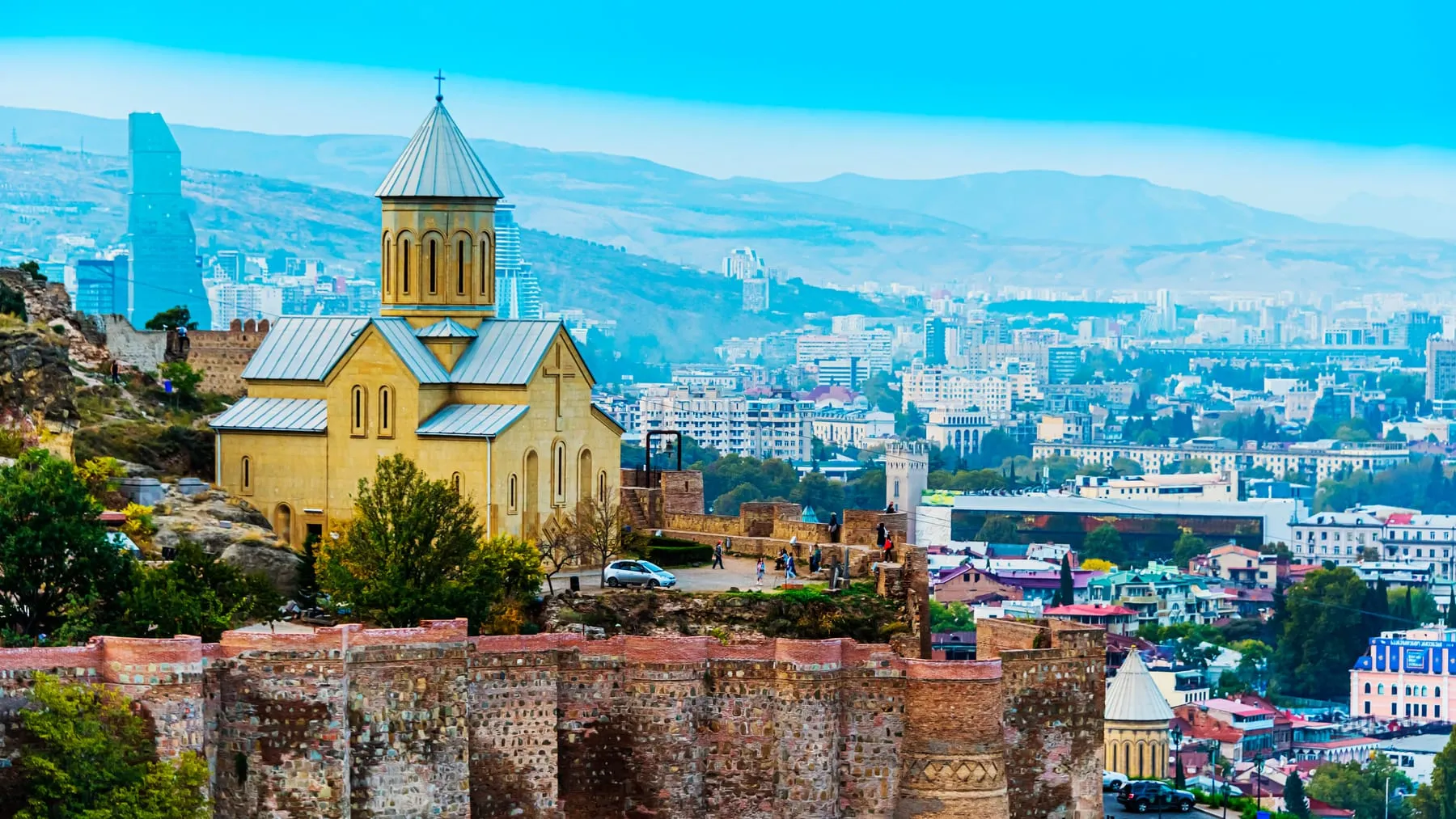
- Afternoon: walk the Old Town up to Narikala Fortress (or take the cable car from Rike Park), follow the ridge to the Mother of Georgia statue and drop down to the waterfall in the Leghvtakhevi gorge.
- Evening: soak in one of the sulfur baths in Abanotubani. Private rooms are rented by the hour and the popular ones fill up in the evening, so book a Tbilisi sulfur bath on Viator before you land.
Day 2: Walking tour and Mtskheta
Spend the morning on foot with a local guide: the Old Tbilisi highlights walking tour with wine tastings covers the Old Town and Narikala and pours Georgian wine along the way, a good warm-up for day 4.
In the afternoon, head 20 km (12 miles) north to Mtskheta, Georgia’s ancient capital, for Svetitskhoveli Cathedral and Jvari Monastery on the hill above the river confluence. Jvari has no regular bus, so the half-day Mtskheta, Jvari and Samtavro tour from Tbilisi is the easy way to see both. On a budget, marshrutkas from Didube to Mtskheta cost 2 GEL and run every 20 to 30 minutes; you’d take a taxi up to Jvari.
For restaurants, wine bars and the rest of the capital, see our Tbilisi travel guide, and open Maya Barkan’s Tbilisi map on Guidez (in Hebrew) on your phone for her pinned cafes and dinner spots.
Day 3: Kazbegi and the Georgian Military Road
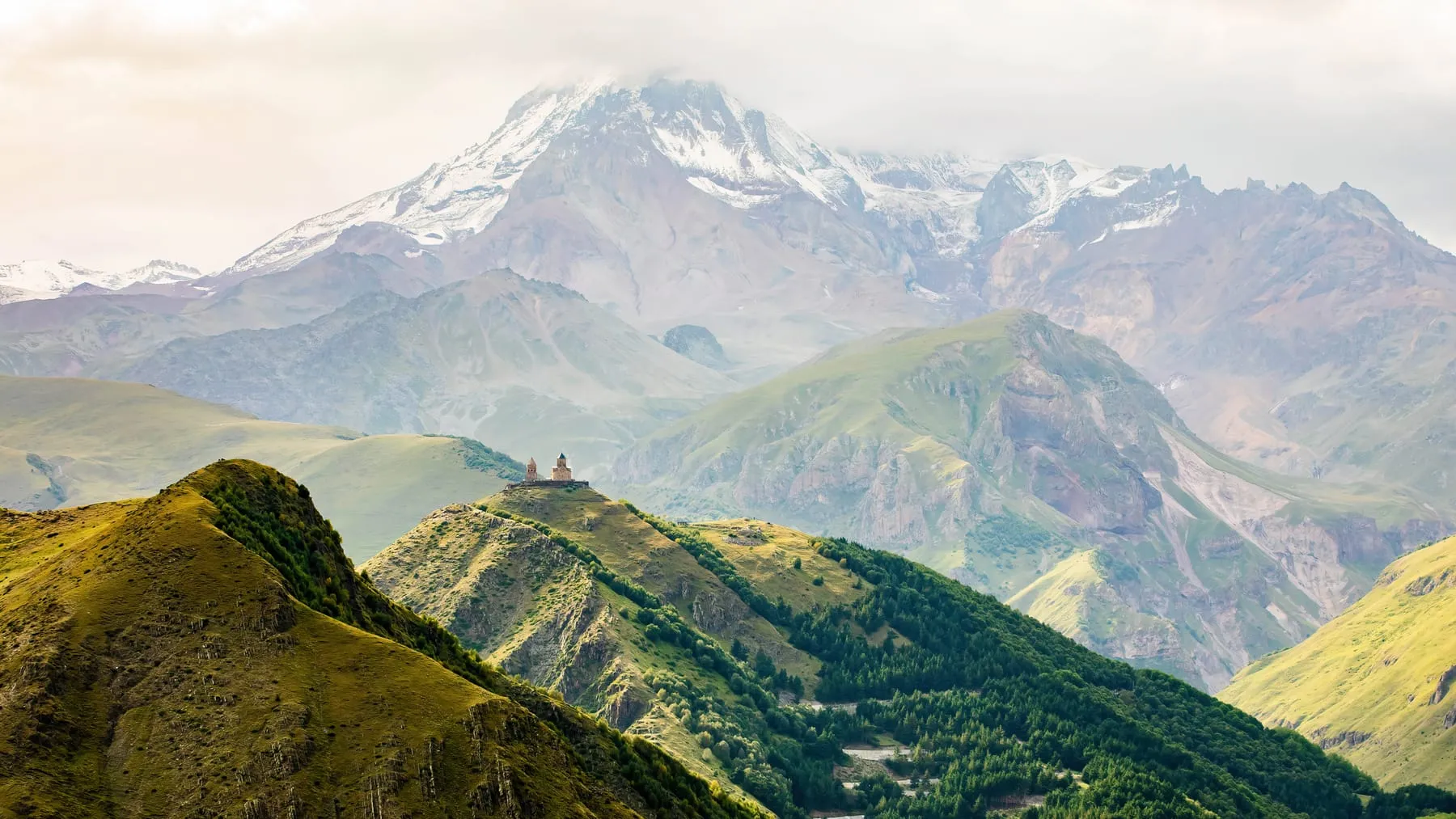
Day 3 is the mountain day. The road north from Tbilisi passes the Zhinvali Reservoir and Ananuri fortress, climbs through the ski resort of Gudauri and over the Jvari Pass, and ends in Stepantsminda, where Gergeti Trinity Church sits on a ridge below Mount Kazbek, 5,054 m (16,581 feet) high. The drive alone is about three hours each way.
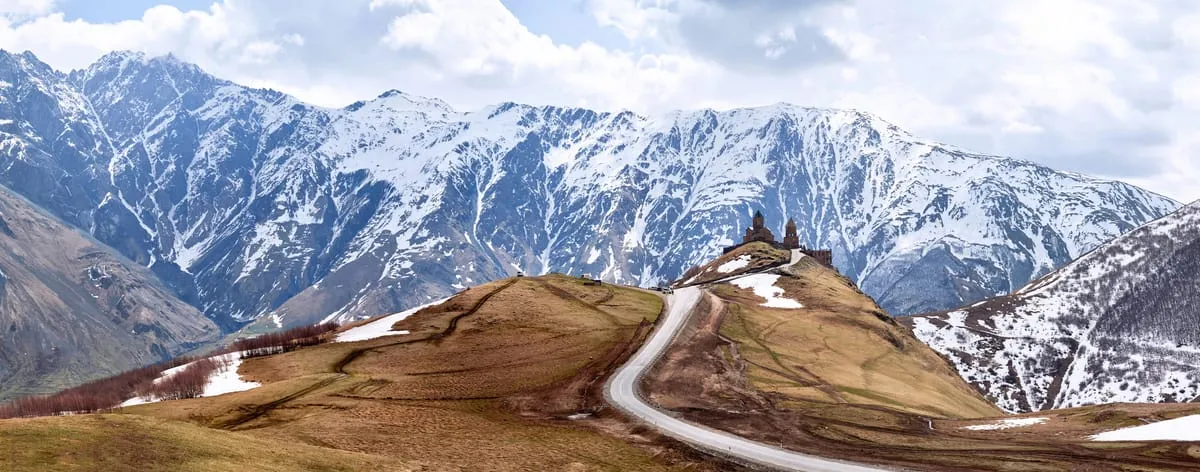
A group tour is the right call for most people: the Day Trip to Kazbegi and Gudauri includes a guide and the stops at Ananuri and Gudauri in about 10.5 hours, with free cancellation up to 24 hours before. The 4x4 up to the church costs about 20 GEL per person extra, in cash. The marshrutka from Didube costs 20 GEL each way but stops nowhere.
Want more time in the mountains? Stay the night in Stepantsminda and come back on day 4 by marshrutka. Rooms Hotel Kazbegi faces Mount Kazbek across the valley. Then do Kakheti on day 5 and shorten the west to one night.
Our Kazbegi tour comparison covers group vs private vs marshrutka, the 4x4 vs the hike, and winter road closures in detail.
Day 4: Kakheti wine country
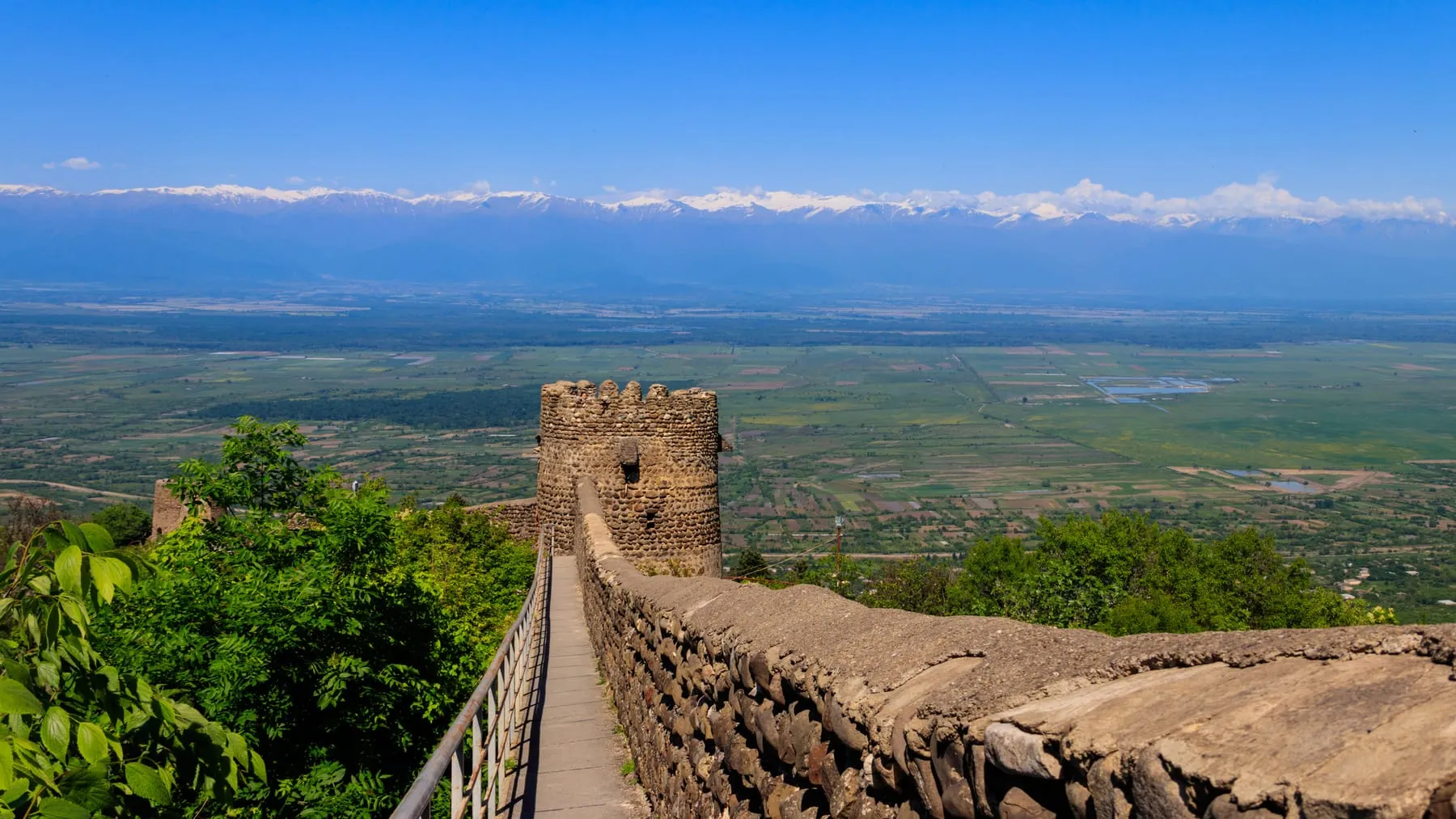
Day 4 heads east to Kakheti, where most Georgian wine is made. A typical day combines Sighnaghi, a hilltop town ringed by an 18th-century wall over the Alazani Valley, Bodbe Monastery, where St. Nino is buried, and tastings at a family cellar and a larger winery. Many cellars still ferment wine in qvevri, clay vessels buried in the ground, a method on UNESCO’s intangible heritage list.
The Day Trip to Kakheti Wine Region Including 9 Wine Tastings is our pick: guide, transport, winery entrance fees and nine tastings in about 10 hours, with lunch optional. Doing it alone, marshrutkas to Sighnaghi cost 15 GEL each way from the Navtlugi terminal next to Samgori metro and take 2 to 2.5 hours, but you’ll need taxis to reach more than one winery.
Slower option: stay in Sighnaghi instead of returning. Kabadoni Boutique Hotel is in the old town, with a spa and indoor pool.
For group vs private tours, Tsinandali, the Khareba wine tunnel and how to bring bottles home, read our Kakheti wine tour comparison.
Days 5 to 7: western Georgia, Kutaisi or Batumi
On day 5, leave Tbilisi for the west. Pick one base:
| Kutaisi | Batumi | |
|---|---|---|
| Why go | Monasteries, Prometheus Cave, Martvili Canyon | Black Sea boulevard, Old Batumi, a beach break |
| Distance from Tbilisi by road | About 3.5 hours | About 5.5 hours |
| Public transport | Marshrutka from Didube, 25 GEL, 4 to 4.5 hours | Stadler train, 35 GEL in second class, about 4 to 5 hours |
| Fly home from | Kutaisi, mainly low-cost flights to Europe | Batumi, including flights to Istanbul |
| Best for | Nature and history | Summer and early fall |
Road times are from the Georgian National Tourism Administration’s Kutaisi and Batumi pages; fares are from Wander-Lush’s Didube station and Batumi transport guides (updated September and August 2026).
Option A: Kutaisi, caves and canyons
Day 5: Tbilisi to Kutaisi. Marshrutkas leave Didube station hourly between 6 am and 7 pm for 25 GEL. In the afternoon, walk up to Bagrati Cathedral, built in 1003 on a hill above the Rioni River, then take a taxi to Gelati Monastery, a UNESCO World Heritage Site a short drive outside town. For both nights, the Best Western Kutaisi City Center puts you in the middle of town with breakfast included.
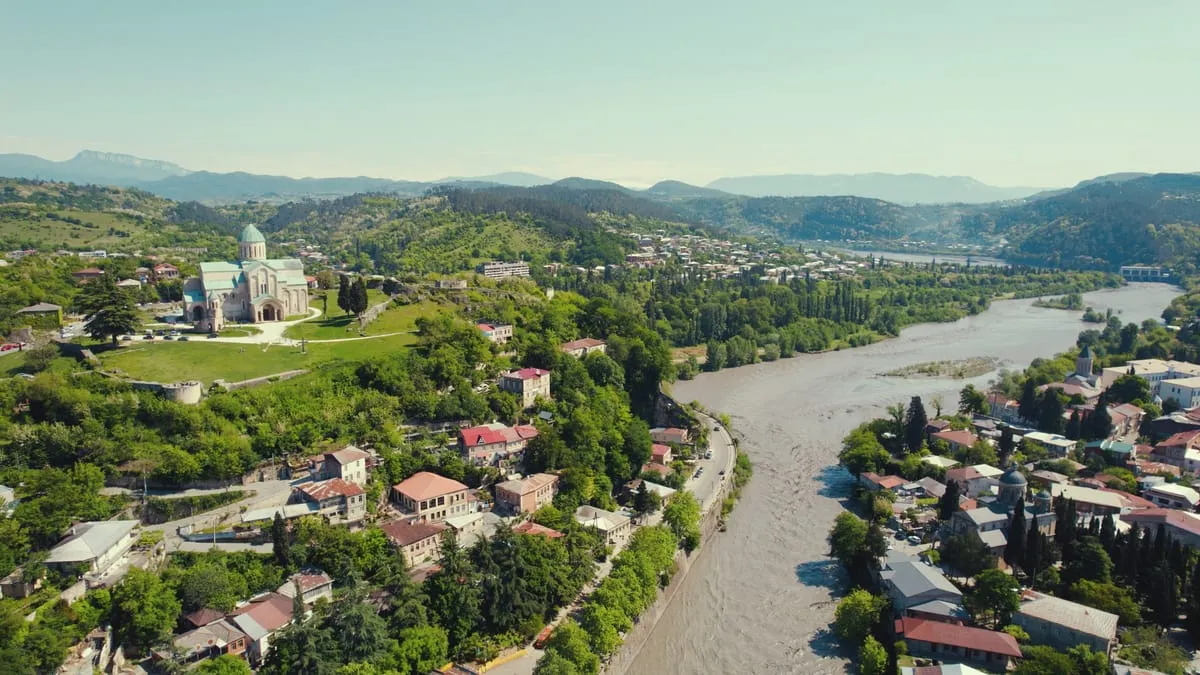
Day 6: Prometheus Cave and Martvili Canyon. These two are the reason to come west, and they’re close enough to combine in one day with a driver.
- Prometheus Cave, near Kumistavi about 40 km (25 miles) from Kutaisi, has a walking route of almost 1.5 km through lit chambers and an optional 380 m boat ride on an underground river, according to the GNTA’s Prometheus Cave page. The Agency of Protected Areas lists foreign adult tickets at 25 GEL, plus 20 GEL for the boat.
- Martvili Canyon has a 700 m round-trip path through forest, with stone steps and viewing platforms, and six-seat rubber boats that run a 300 to 350 m stretch of the river, per the GNTA’s Martvili Canyon page. The Agency of Protected Areas lists 20 GEL for foreign adults and 20 GEL for the boat. Boats don’t run in the rain, and April to November is the main season.
Tickets for both sites are non-refundable at the gate and prices can change, so bring cash. To have the day organized for you, browse day tours across Georgia on Viator and filter for Kutaisi, Prometheus Cave or Martvili.
Day 7: Fly home or head back. Kutaisi’s airport is served mainly by low-cost airlines to Europe, which can make an open-jaw ticket (into Tbilisi, out of Kutaisi) the cheapest way home. Otherwise, the drive back to Tbilisi takes about 3.5 hours.
Option B: Batumi and the Black Sea
Day 5: Tbilisi to Batumi by train. Georgian Railway’s double-decker Stadler trains run at least twice a day, around 8 am and 5 pm, and cost 35 GEL in second class, 75 GEL in first and 125 GEL in business, according to Wander-Lush’s Tbilisi to Batumi guide (updated August 2026). Tickets go on sale 20 days before departure and you need your passport to board, per Georgian Railway. In July and August, seats sell out, so book as soon as sales open. If the train is full, buses take 6 to 7 hours: compare Tbilisi to Batumi buses on Omio.
Day 6: Batumi. Walk the seafront boulevard, see the moving Ali and Nino statues, and wander the lanes of Old Batumi. The GNTA singles out early fall, the “velvet season,” when it’s warm but no longer too hot. The beaches are pebble, so bring water shoes. Stay on or near the Old Boulevard to walk everywhere: Hotel Monarch is there, and Expedia guests rated it 9.4 out of 10 when we checked.
Day 7: Fly home or head back. Batumi’s airport has flights to Istanbul, a common connection for US flights, or take the morning train back to Tbilisi.
How do you get around Georgia?
| Leg | Best option | Cost (October 2026) | Time |
|---|---|---|---|
| Airport to central Tbilisi | Bus 337 or Bolt | 1 GEL by bus | About 45 to 60 minutes by bus |
| Tbilisi to Mtskheta | Half-day tour or marshrutka from Didube | 2 GEL by marshrutka | 25 to 35 minutes |
| Tbilisi to Kazbegi | Group day tour | From around $25 per person | 10 to 14 hours round trip |
| Tbilisi to Sighnaghi (Kakheti) | Group wine tour | From around $20 to $40 per person | About 10 hours round trip |
| Tbilisi to Kutaisi | Marshrutka from Didube | 25 GEL | 4 to 4.5 hours |
| Tbilisi to Batumi | Stadler train | 35 GEL (second class) | About 4 to 5 hours |
Do the math on day trips: doing Kazbegi and Kakheti by marshrutka costs about 70 GEL ($27) per person in fares, versus roughly $65 for the two group tours we recommend. The tours add guides, the stops on the way, winery entrance fees and nine tastings in Kakheti, and you don’t have to find the last van home. For most visitors, that difference of under $40 is worth it.
Driving yourself? Driving in Georgia can be stressful for first-timers, with narrow mountain roads and fast overtaking, so on a one-week trip it’s easier to leave the driving to tour drivers and trains.
When is the best time to visit Georgia?
May, June, September and early October are the best months for this itinerary. The road to Kazbegi is reliably open, the hiking around Gergeti is snow-free from early summer, and Kakheti’s grape harvest runs through September and October. July and August are peak season in the mountains and on the coast, and Tbilisi is hot. From November to March, the Kazbegi road can close for snow and the sea is too cold for Batumi’s beaches, but Tbilisi, Kakheti and Kutaisi’s caves work year-round.
Practical tips for Georgia
- Public Wi-Fi. Hotel and cafe Wi-Fi is everywhere in Tbilisi. If you’ll do banking or bookings on those networks, a VPN such as Surfshark keeps your traffic private. Our guide to public Wi-Fi safety when traveling covers fake hotspots and look-alike login pages.
- Church dress code. Cover shoulders and knees; women are expected to cover their hair. Wraps are usually available at the door.
- Language. Georgian is the official language and uses its own alphabet. Younger people in hospitality usually speak English, and many older people speak Russian.
- Safety. Tbilisi is generally safe, but political demonstrations have taken place on Rustaveli Avenue since late 2024. Check the US State Department’s advice for Georgia before you go, avoid large gatherings, and don’t try to visit the breakaway regions of Abkhazia or South Ossetia.
Book the key pieces first
Book in this order: flights and your Tbilisi hotel (an Expedia flight and hotel bundle keeps them on one booking), then the two day trips, which have free cancellation: the Kazbegi day trip and the 9-tasting Kakheti wine tour. Book the Batumi train seat when sales open 20 days ahead. Then read our Tbilisi travel guide for where to eat on your first night.