The best day trips from Rome are Pompeii, Tivoli, Orvieto, Florence and Ostia Antica, and all five work by train or bus (checked October 2026). With one free day, make it Pompeii: about two hours each way by train, with a €20 (about $22) entry ticket. A tour handles the trains, tickets and guide, and the Pompeii, Amalfi Coast and Positano day trip from Rome is our pick.
It was the most-reviewed option we found on Viator. For an easy half day, Ostia Antica costs a €1.50 transit ticket and half an hour on the train.
Here’s how to do each one yourself, what it costs, and when a tour is the better buy.
Day trips from Rome at a glance
| Day trip | Travel time each way | DIY transport (Oct 2026) | Main ticket | Train or tour? |
|---|---|---|---|---|
| Pompeii | About 2 hours | High-speed train from €19.90 (about $22) + Circumvesuviana about €3.20 | €20 (about $22) | Tour if it’s your first time in Italy; train if you’re comfortable with two connections |
| Tivoli | About 1 hour | Regional bus or train | Separate tickets for each villa | Tour, because the two villas are miles apart |
| Orvieto | About 1 to 1.5 hours | Regional or InterCity train, fixed fare | Cathedral €8 (about $9) | Train; tour only if you add Civita di Bagnoregio or Assisi |
| Florence | About 1.5 hours | High-speed train from €19.90 (about $22) | Uffizi €25 (about $28) on the day | Train, plus a guided Uffizi visit |
| Ostia Antica | About 30 minutes | €1.50 (about $1.70) Rome transit ticket | About €18 (about $20) | A guide on a first visit; the train on your own |
Our picks
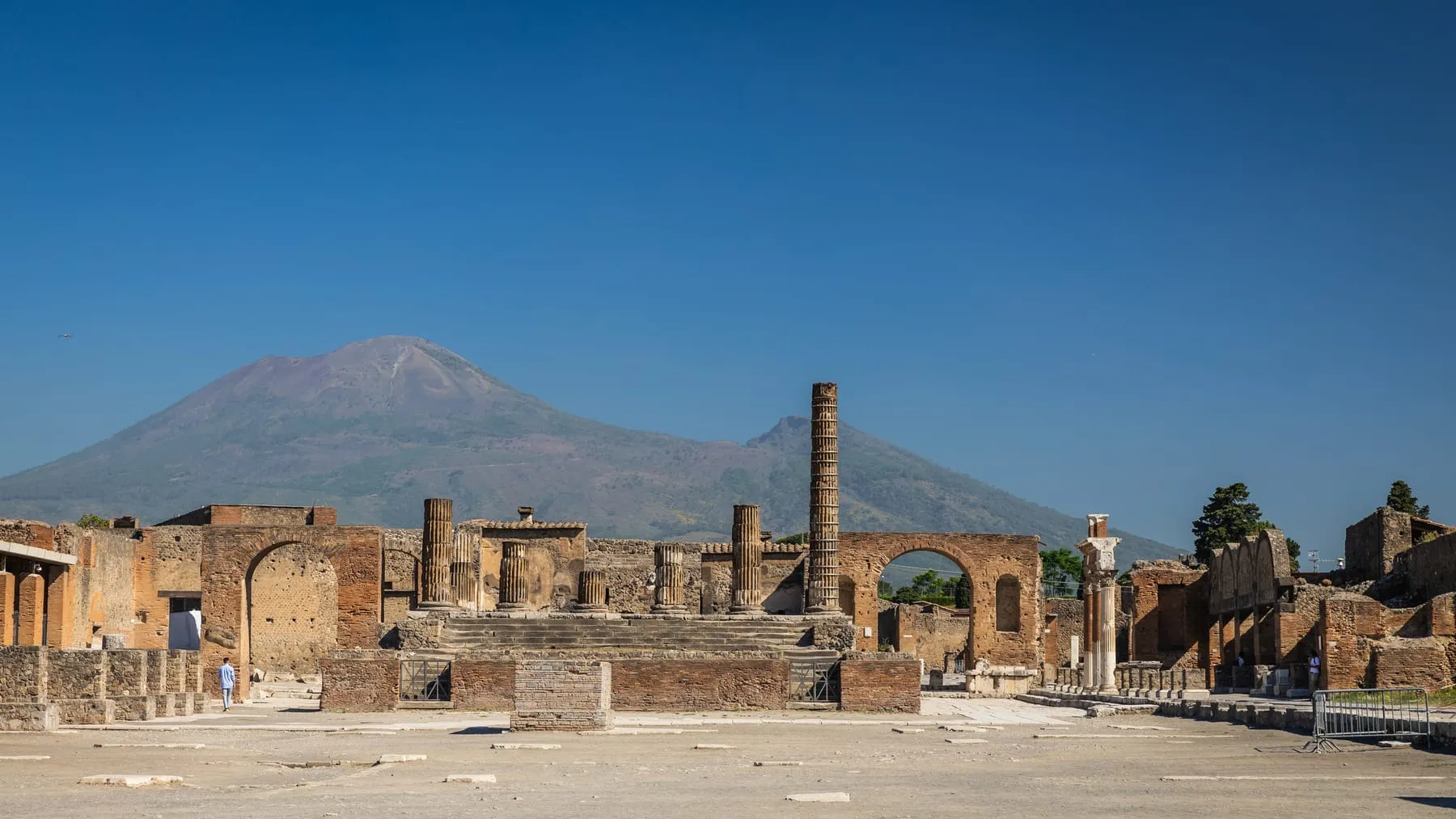
- Best overall: Pompeii. Nothing else within a day of Rome shows you a whole Roman city frozen in AD 79. Go with a guide on a first visit.
- Best on a budget: Ostia Antica. The ruins are extensive, the trip costs €3 round-trip in transit fares, and you’re back in Rome for lunch if you start early.
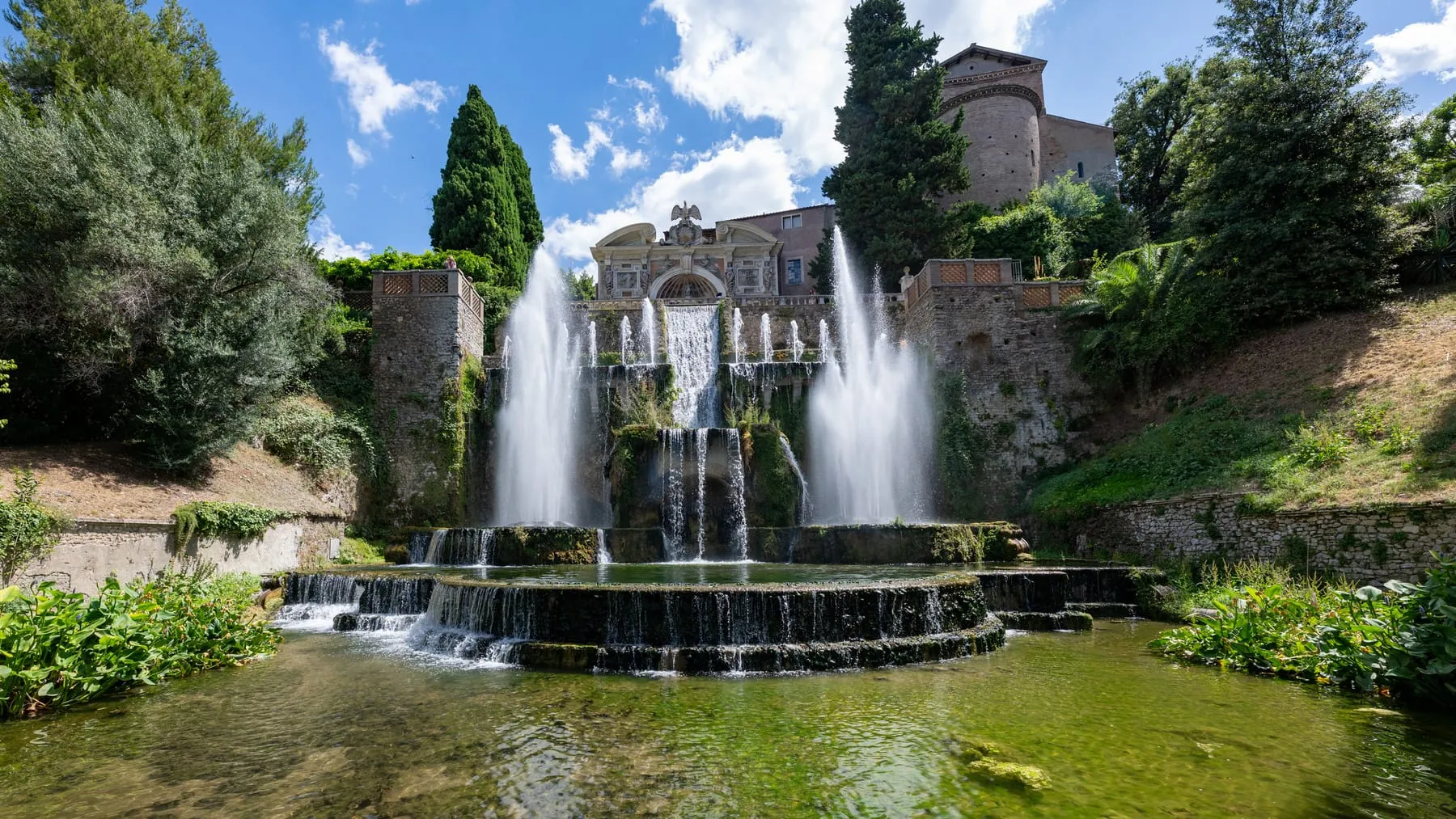
- Best for gardens and a slower day: Tivoli, where Villa d’Este’s fountains run without a single pump.
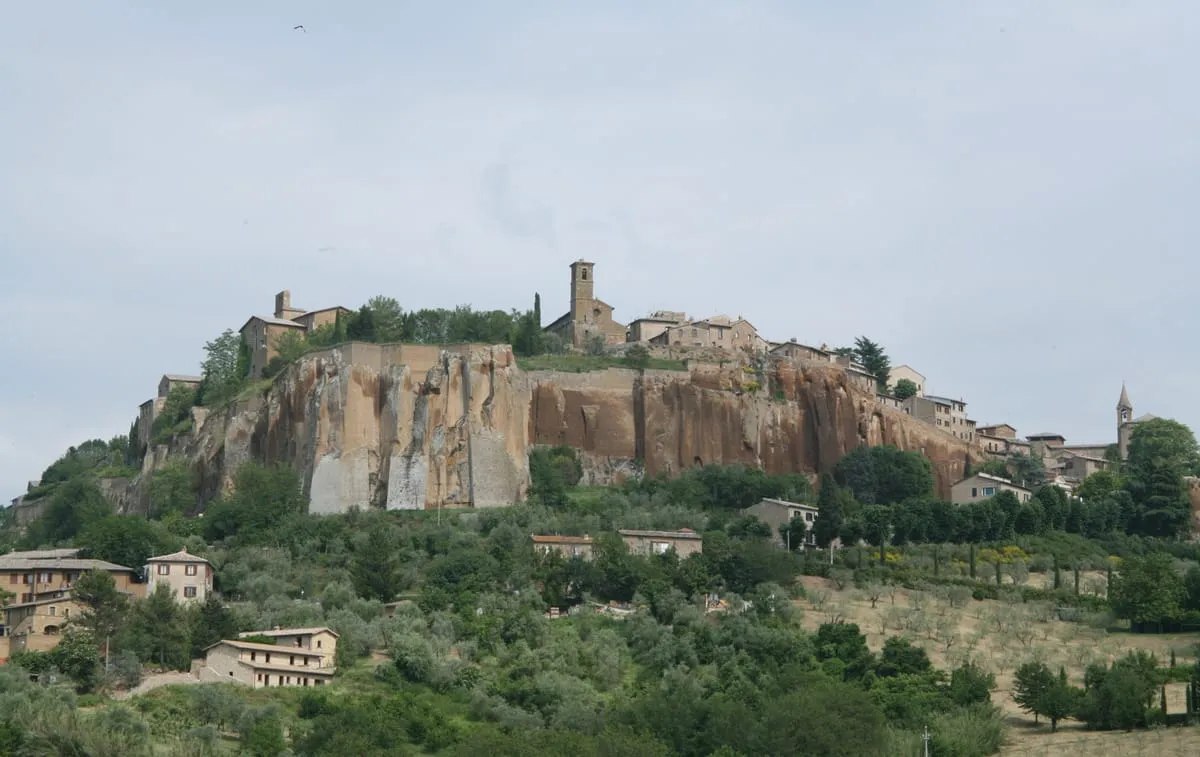
- Best small town: Orvieto, a medieval town on a cliff of volcanic rock with a cathedral facade that alone justifies the train ride.
- Best for art: Florence, if you accept that one day means one museum.
- Best if you have two days spare: split them. Do Pompeii on one and Orvieto or Tivoli on the other, rather than cramming the Amalfi Coast into one very long bus day.
Pompeii: the best day trip from Rome if you only have one
Pompeii is the strongest day trip from Rome, and the one that rewards planning most. The site is huge, the summer sun is fierce, and getting there means two different trains.
By train: take a Frecciarossa or Italo high-speed train from Roma Termini to Napoli Centrale, which takes about 70 minutes with departures roughly every half hour. In Naples, walk to Napoli Garibaldi (in the same station complex) for the Circumvesuviana, a local train that reaches Pompei Scavi - Villa dei Misteri in about 36 minutes, every 30 minutes, for around €3.20. You can tap a contactless card at the gates. These times and fares come from Seat61’s Pompeii day-trip guide. Advance high-speed fares start at €19.90 each way, while a flexible ticket on the day costs about €44, so book the Naples leg as soon as your date is fixed. To see Trenitalia and Italo departures and prices side by side, compare Rome to Naples trains on Omio.
Tickets: since January 12, 2026, a standard Pompeii ticket costs €20 and the Pompeii+ ticket, which adds the suburban villas such as the Villa of the Mysteries, costs €25, according to the park’s official notice. Under-18s enter free, and everyone gets in free on the first Sunday of the month. The €2 rate for ages 18 to 25 applies only to EU citizens.
The math: a DIY day with advance train fares costs about €66 (about $73) per adult: two €19.90 high-speed tickets, two Circumvesuviana rides and the €20 entry. Buy the trains on the day and it rises to about €114 (about $127). That’s before a guide, and Pompeii without one is a maze of similar-looking streets.
Train or tour? Book a tour if it’s your first trip to Italy or you’re traveling with kids. The Pompeii and Naples high-speed train day trip with lunch handles the trains, the transfer from Naples station and a guided visit, then adds a few hours in Naples. If you want the coast too, the Pompeii, Amalfi Coast and Positano tour runs by coach with a guide at the ruins. Go DIY if you’re confident with Italian trains and want a full afternoon in the ruins at your own pace. Our Pompeii day trip from Rome guide compares the tours and walks through the train route.
The seat61 guide reports that the Campania Express, the faster tourist train from Naples to Pompeii, is suspended from October 1, 2026 until further notice. Plan on the regular Circumvesuviana this winter. In winter the site also closes earlier, at about 5 pm, so leave Rome by 8 am.
Tivoli: Villa d’Este and Hadrian’s Villa
Tivoli is about 19 miles (30 km) northeast of Rome and has two UNESCO World Heritage Sites: Villa d’Este, a Renaissance villa famous for its fountains, and Hadrian’s Villa (Villa Adriana), the emperor’s sprawling country retreat.
Villa d’Este was begun in 1560 for Cardinal Ippolito II d’Este. Its terraced garden holds 51 fountains and nymphaeums and 364 water jets, all fed by gravity, without pumps. The Organ Fountain, a water-powered organ restored in 2003, plays daily. Hadrian’s Villa was built from about AD 118 and covers about 200 acres (80 hectares), much of it still unexcavated. Both details come from Wikipedia’s articles on Villa d’Este and Hadrian’s Villa.
By public transport: Cotral’s blue regional buses for Tivoli leave from the terminal outside Ponte Mammolo station on metro line B and stop about 110 yards (100 m) from Villa d’Este’s entrance. Alternatively, take the FL2 regional train from Roma Tiburtina to Tivoli, then local CAT bus 1 or 4 to Piazza Garibaldi in front of the villa. Allow roughly an hour each way.
The catch: Hadrian’s Villa lies on the plain below the town, a separate bus or taxi ride from Villa d’Este. Seeing both by public transport in one day is doable but slow. Each villa sells its own ticket, and a combined VILLAE pass covers both plus the Sanctuary of Hercules Victor. We couldn’t confirm 2026 villa prices from an official source, and resellers quote very different figures, so treat any price you see online with care.
Train or tour? Tour, for most people. The Tivoli full-day trip to Hadrian’s Villa and Villa d’Este is the most-reviewed Tivoli tour we found on Viator, and it takes care of the drive between the two villas, which is the part that costs DIY travelers the most time.
Don’t go to Tivoli on a Monday morning. The Ministry of Culture lists Villa d’Este as opening at 2 pm on Mondays. The fountains look best in the late afternoon light anyway.
Orvieto: a hill town on a cliff
Orvieto sits on top of a flat-topped cliff of volcanic tuff in Umbria, and it’s the easiest small-town day trip from Rome by train. Regional and most InterCity trains on the old Florence-Rome line stop at Orvieto station, about 1 to 1.5 hours from Roma Termini depending on the train. Regional tickets have fixed fares that don’t rise as the day gets closer; check Rome to Orvieto times on Omio and pick a train that gets you there by 10 am.
From the station forecourt, a funicular climbs to Piazza Cahen in the old town in about two minutes, running every 15 minutes or more often when it’s busy. From there it’s a pleasant walk across the old town to the cathedral.
Orvieto Cathedral is the main event. The Opera del Duomo charges €8 (about $9), which includes the Emilio Greco Museum, the underground chambers and an audio guide, or €11 (about $12) with the Claudio Faina Etruscan Museum. Children up to 10 enter free. In November and December the cathedral opens 9:30 am to 5 pm; on Sundays from November to February, visits are limited to 10 to 11 am and 1 to 4:30 pm because of Mass.
Train or tour? Train, unless you want to add a second stop. Two popular add-ons are hard without a car:
- Civita di Bagnoregio, a tiny village reached by a long footbridge. The private Orvieto and Civita di Bagnoregio tour from Rome does both in a day by car, and it’s the top-rated option we found, which matters on a private tour where the driver-guide makes the day.
- Assisi, the hometown of St Francis. The small-group Assisi and Orvieto day tour covers both towns on a shared tour, which is the practical way to see two Umbrian hill towns in one day from Rome.
Florence in a day by high-speed train
Florence is the most ambitious day trip on this list and the most rewarding for art lovers. High-speed Frecciarossa and Italo trains connect Roma Termini with Firenze Santa Maria Novella in about 1.5 hours, and the fastest make it in about 1 hour 20 minutes on the dedicated high-speed line. Both stations are in the city center.
Train fares: advance fares start at €19.90 each way, against a flexible base fare of about €55, per Seat61. Book as early as you can and pick specific trains; our cheap train tickets in Europe guide explains how the saver fares work. The same train search works here: search Rome to Florence trains on Omio and pick an early departure.
The Uffizi: a ticket costs €25 (about $28) on the day or €29 (about $32) booked in advance, and from January 1, 2026, entry from 4 pm costs €16 (about $18), according to the Uffizi’s ticket page. The gallery is closed on Mondays. On a day trip you can’t afford to gamble on same-day availability, so have your Uffizi visit booked before you board.
The math: two advance train tickets plus an advance Uffizi ticket come to about €69 (about $76). With flexible fares, it’s about €139 (about $154).
Train or tour? Train, plus a guide for the museum. The Uffizi small-group tour with an expert guide is booked for a set time, takes you through the highlights with a guide and leaves the afternoon for the Duomo, the Ponte Vecchio and lunch. If you want everything arranged, the small-group Florence day trip from Rome by fast train bundles the train with guided visits to the Uffizi and the Accademia, home of Michelangelo’s David. Spending a night or two in Florence instead? Pisa is an hour away from there by train, as our Pisa day trip from Florence guide explains.
For food and neighborhood picks once you’re there, Traveliri’s Florence map on Guidez is in Hebrew but works fine in Google Maps.
Ostia Antica: ancient Rome without the crowds
Ostia Antica, Rome’s ancient port, is the best-value day trip from the city. The site covers about 370 acres (150 hectares), with a Roman theater, bath complexes with mosaic floors, apartment blocks, taverns and the Piazzale delle Corporazioni, the square of shipping offices.
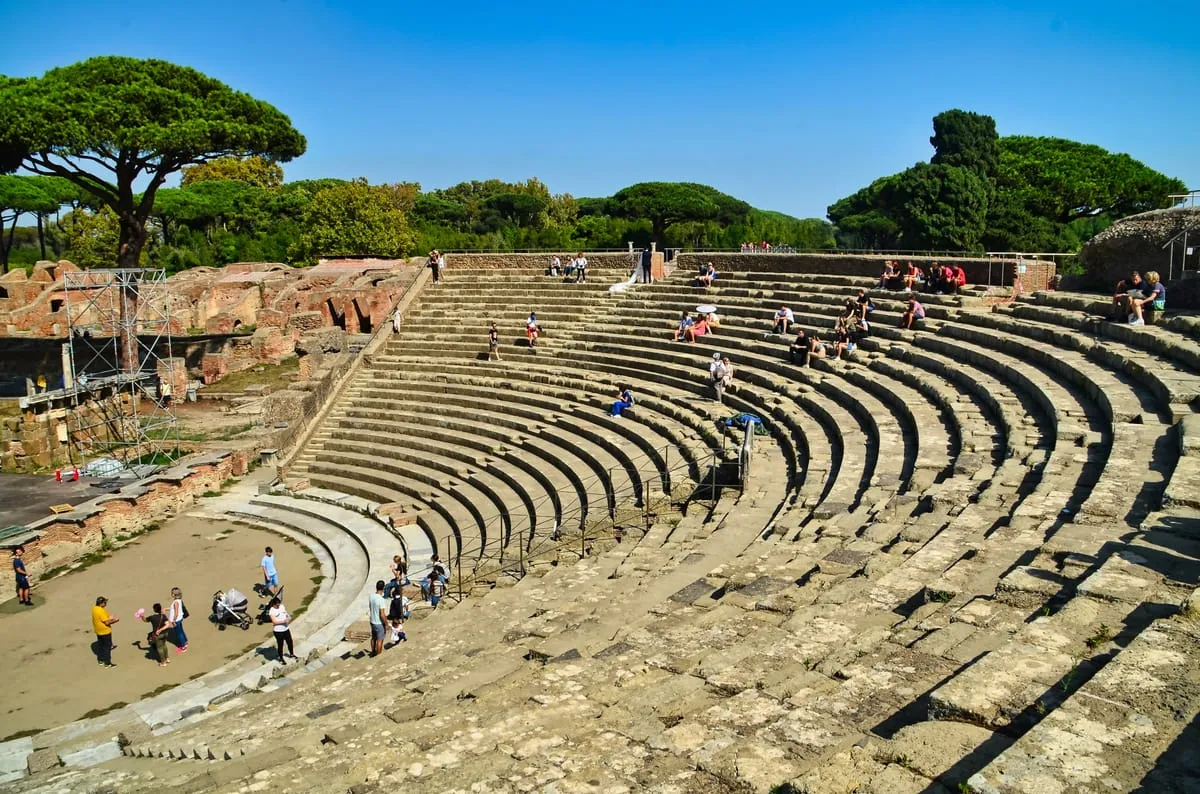
Getting there: take metro line B to Piramide and walk through to Roma Porta San Paolo station for the Roma-Lido railway. Trains run from early morning until about 11:30 pm, up to eight an hour at peak times, and Ostia Antica station is about half an hour down the line. A standard €1.50 Rome BIT ticket, valid 100 minutes, covers the ride; it was the one fare left unchanged in Rome’s 2025 price update, Turismo Roma reported. The ruins are a short walk from Ostia Antica station.
Tickets and hours: a full ticket costs about €18 (about $20), and the site is closed on Mondays. It closes earlier in winter, with last entry in mid-afternoon, so arrive by 10 am from November to February. Like other state sites, it’s free on the first Sunday of the month.
Train or tour? A guide, for most first-time visitors. Ostia has far fewer signs and reconstructions than the Forum, and without someone explaining what you’re looking at, the streets of brick walls start to blur together. The Ostia Antica semi-private day trip by train with a guide meets you in Rome, rides the train with you and includes entry, so you don’t buy tickets on arrival. It’s also an easy one with kids: flat paths, shade under the pines and room to explore. Confident on your own? The train and a ticket at the gate work fine.
The Amalfi Coast: only with a tour
The Amalfi Coast is a long way from Rome for one day: Positano and Amalfi sit beyond Naples and Sorrento on a slow, winding coast road. By public transport you’d spend most of the day in transit. If you’re set on seeing it without staying overnight, take a tour that does the driving. The small-group Amalfi Coast day trip from Rome including Positano is built around the coast itself, while the Pompeii, Amalfi and Positano tour mentioned above trades some coast time for the ruins.
Our honest advice: if the Amalfi Coast matters to you, give it two nights based in Sorrento or Positano instead.
Should you take a train or a tour for a day trip from Rome?
Take the train when the day trip is a single ride, and book a tour when it needs several connections or you’d want a guide anyway. Three rules cover most cases:
- If the trip needs more than one connection, a tour usually pays off. Pompeii (two trains) and Tivoli (two separate sites) are the clearest examples.
- If you’ll want a guide anyway, compare the tour price with DIY plus a local guide. In Florence, train tickets plus a guided Uffizi visit cost less than a full escorted day trip and give you more free time.
- If the trip is a single train ride, go DIY. Ostia Antica and Orvieto are easy alone, with fixed-price tickets you can buy on the day.
To compare every option in one place, browse all day trips from Rome on Viator and filter by duration, group size and price.
Practical tips for day trips from Rome
- Watch out for Mondays. Ostia Antica and the Uffizi close, and Villa d’Este opens only in the afternoon. Pompeii and Orvieto Cathedral stay open, so save Monday for one of those.
- Leave early. On the longer trips, an 8 am train gets you to Florence or Pompeii by mid-morning and gives you a full day before the return.
- Use the right station. High-speed trains for Florence and Naples leave from Termini, with some calling at Tiburtina. Roma-Lido trains for Ostia leave from Porta San Paolo, next to Piramide.
- Keep your phone online. Train tickets, platform changes and your return booking all live on your phone, and US carriers’ day passes add up at $12 a day with Verizon or AT&T. An Airalo eSIM for Italy is set up before you fly; use code GUIDEZ15 at checkout if you’re new to Airalo, or GUIDEZ10 if you’ve bought from them before.
- US cards work. Trenitalia and Italo take US credit cards online and in their apps, and the Circumvesuviana gates accept contactless cards. Use a card without foreign transaction fees.
Plan the rest of your Rome trip
Day trips work best around a solid plan for the city itself. Our 3-day Rome itinerary shows where a day trip fits, and our guide to where to stay in Rome explains why a base near Termini makes early trains easier. Book the city’s timed tickets first, starting with the Vatican Museums and the Colosseum, since those sell out before any day trip does. Flying in on a budget airline? Our Ciampino to Rome city center guide covers the bus, train and taxi options. Not up for a long day out? Our guide to Rome’s catacombs and how to visit them covers a half day along the Appian Way without leaving the city. And if you’re heading north after Rome, the train to La Spezia starts our guide to Cinque Terre without a car, while our Cinque Terre day trip from Florence guide compares the train with a tour if you base yourself in Florence. When you’re ready to pick your day out, the Pompeii, Amalfi Coast and Positano tour is the one to book first if you only have a single free day.