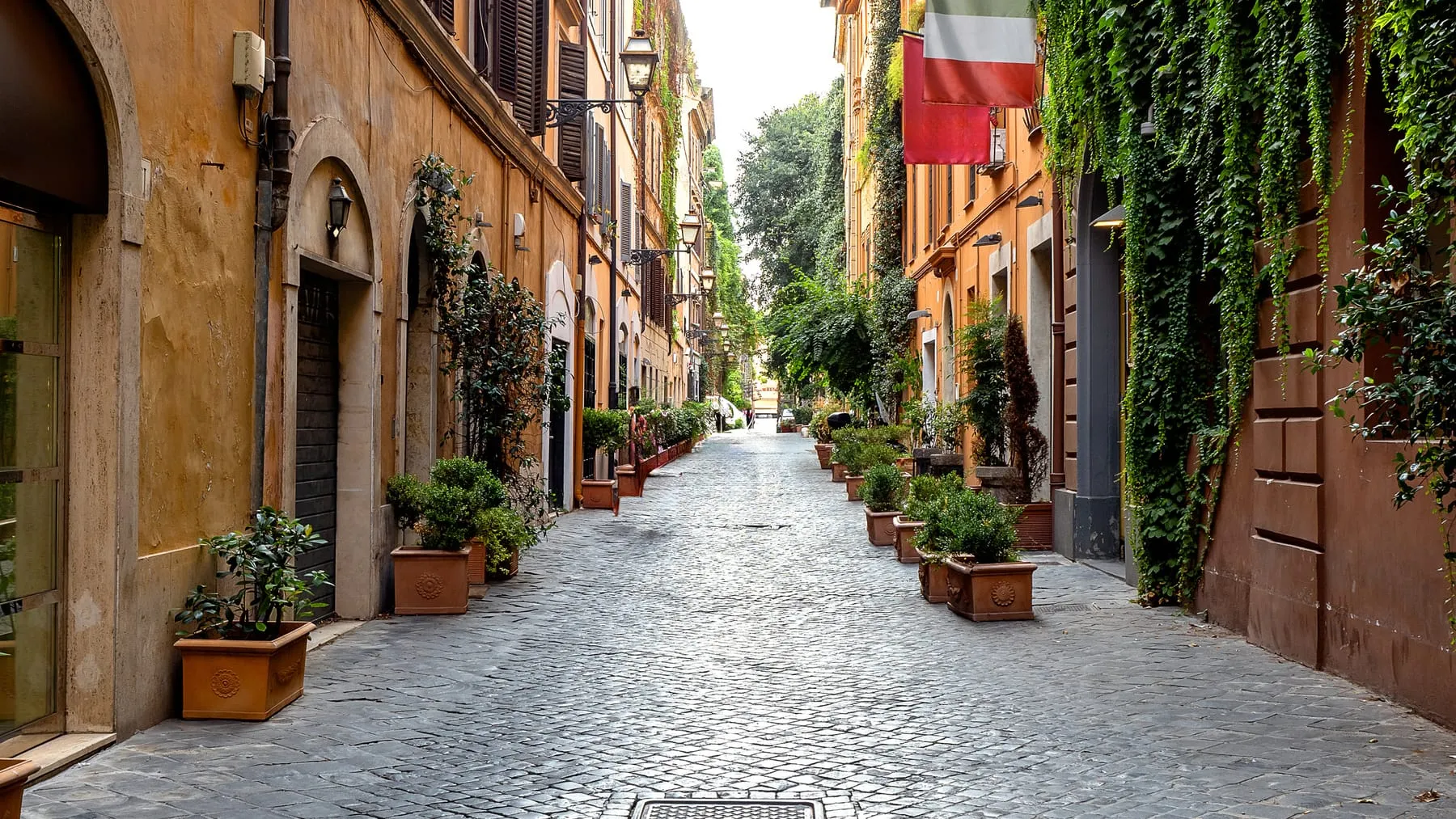
Italy on a budget comes down to five habits: regional trains at fixed fares, high-speed trains booked early, free museum Sundays, eating like Italians, and budgeting for the coperto and city taxes. Trains pay most: Italo’s advance fares started at €14.90 (about $17) from Rome to Florence in October 2026, against about three times that on the day. Compare Rome to Florence trains on Omio.
Omio shows Trenitalia and Italo side by side, so check it as soon as your dates are set. Eating like Italians means coffee standing at the bar, aperitivo, and lunch as the big meal of the day.
Italy on a budget: the hacks at a glance
| Hack | What it saves | Catch |
|---|---|---|
| Book high-speed trains early | Advance fares from €14.90 (about $17) Rome to Florence, against several times that on the day | Cheapest fares can’t be refunded |
| Buy regional trains on the day | Nothing to lose: fares are fixed | Paper tickets must be validated before boarding |
| First Sunday of the month | Free state museums and sites, including the Colosseum and the Uffizi | No booking, long lines |
| Last Sunday at the Vatican | Free entry, normally €20 to €25 | Open 9 am to 2 pm only |
| Coffee standing at the bar | Many cafés charge more for table service | You drink it standing |
| Aperitivo instead of dinner | A drink comes with snacks | Some nights only, or you’ll miss the trattorias |
| Choose the hotel’s star rating carefully | Rome’s city tax drops from €10 to €4 per person per night | Lower stars, fewer frills |
| Sleep in Mestre or stay overnight in Venice | Overnight guests are exempt from Venice’s day-tripper fee | Mestre is a bus or train ride from the lagoon |
Trains: book high-speed early, buy regional on the day
Italy runs two kinds of trains with two pricing systems, and knowing which is which is the single biggest saving on an Italian trip.
High-speed trains (Trenitalia’s Frecciarossa and Italo) link the big cities, Rome, Florence, Venice, Milan, Naples, and price like airlines: a limited number of cheap seats, then higher fares as the train fills. Trenitalia’s cheapest fare, Super Economy, has limited seats at each price level, can’t be changed or refunded, and goes off sale six days before departure, according to Trenitalia’s fare rules. On routes where both companies run, buy whichever is cheaper at the time you want; our Trenitalia vs Italo comparison has the fare types side by side.
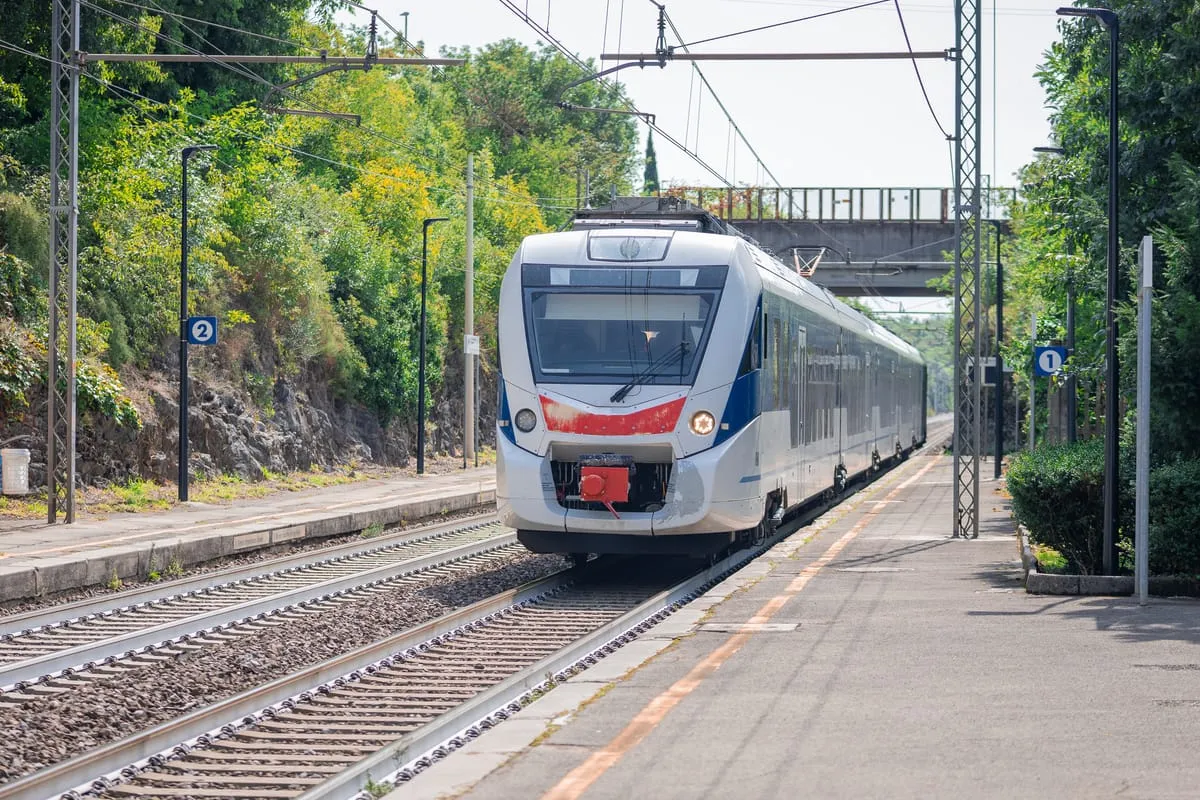
Regional trains (Regionale and Regionale Veloce) serve smaller towns and the short hops between cities, such as Florence to Pisa, Rome to Orvieto and the Cinque Terre line. Their fares are fixed, so a ticket bought on the morning you travel costs the same as one bought a month ahead. From Florence to La Spezia, the gateway to the Cinque Terre, it’s about €15 (about $17) each way, as our Cinque Terre without a car guide explains.
Two rules keep regional tickets from turning into fines:
- Digital regional tickets need no stamping. They’re validated automatically at the departure of the train you chose and stay valid until it arrives, according to Trenitalia’s digital ticket page. You can change the time for free until that train leaves.
- Paper regional tickets must be validated in the machines at the station before departure, and then the trip must be finished within four hours, says Trenitalia’s guide to regional trains. Ride without a valid ticket and you pay the fare plus a fine.
Our rule: book every high-speed leg the day your hotel dates are fixed, and leave regional legs until you travel. To check both kinds of train in one search, compare Italian train times and fares on Omio, which lists regional and high-speed options with their prices. For more cross-border train savings, read our cheap train tickets in Europe hacks.
When are museums free in Italy?
Hundreds of state museums, parks and archaeological sites are free on the first Sunday of every month under the culture ministry’s Domenica al Museo program. That includes the Colosseum, Roman Forum and Palatine in Rome and the Uffizi and the Accademia in Florence.
The catch is that free Sundays can’t be booked at the big sites. The Colosseum hands out free tickets at its ticket office in order of arrival, and the Uffizi switches off reservations, so you wait at the door with everyone else. Use a free Sunday for the second-tier state sites, which have shorter lines, and pay for the headline sights on a weekday instead. Our Colosseum ticket guide and Uffizi and Accademia ticket guide cover the official prices.
If the Colosseum is the one sight you can’t miss, the Colosseum, Roman Forum and Palatine ticket with an audio guide is a budget way to secure a timed entry on a normal day, without paying for a guided tour.
The Vatican is different. The Vatican Museums belong to Vatican City, not Italy, so they skip Domenica al Museo. Instead they’re free on the last Sunday of the month, 9 am to 2 pm, with last entry at 12:30 pm, unless that Sunday is Easter, June 29, or December 25, 26 or 31, according to the Vatican Museums’ opening hours page. A normal adult ticket costs €20 at the door or €25 online, so the free Sunday saves a family of four real money, if you can face the line. Our Vatican Museums ticket guide has the rest.
Under-18s of any nationality enter state museums such as the Uffizi free, so families with teenagers save more than the free Sundays suggest. The cheap rate for 18 to 25-year-olds is only for EU citizens, so American college students pay full price.
Sights that used to be free
Two Roman classics now charge. The Trevi Fountain basin, the area next to the fountain, has cost €2 (about $2.20) since February 2, 2026, every day from 9 am to 10 pm, according to Turismo Roma; children under 5 go free. The Pantheon charges €7 (about $8). Neither is worth skipping, but count them in your daily budget.
Eating in Italy on a budget
Food is where Italy rewards anyone who eats the local way.
Know the coperto before you sit down
Most Italian restaurants add a coperto, a per-person cover charge, usually €2 to €4 (about $2 to $4), and more at fine-dining places or on prime squares, according to The Local Italy. It’s legal as long as it’s shown on the menu or a price board, and it only applies when you sit down: takeout shouldn’t include it.
Lazio, the region that includes Rome, is the exception. A 2006 regional law bans the coperto there, though some Roman restaurants list “pane” (bread) or “servizio” (service) instead. Read the bottom of the menu before you order.
The good news for Americans: tipping isn’t expected in Italy, so the coperto is usually the only extra. On a dinner for two with a €3 coperto, that’s €6 (about $7) in total, less than an 18 percent US tip on almost any meal.
Stand at the bar
An espresso or cappuccino drunk standing at the counter (al banco) often costs less than the same cup brought to a table, especially on famous squares. Prices are on a board behind the bar. Order and pay the way the locals around you do, and drink it there.
Make aperitivo your light dinner
Aperitivo is the early-evening drink, often a spritz or a glass of wine, that comes with snacks, from chips and olives to small sandwiches and plates of pasta salad. In Milan and Turin some bars set out a buffet. Two drinks with a generous spread can replace dinner on a busy sightseeing day. In Venice the local version is cicchetti, small bites eaten standing at a bacaro with a small glass of wine.
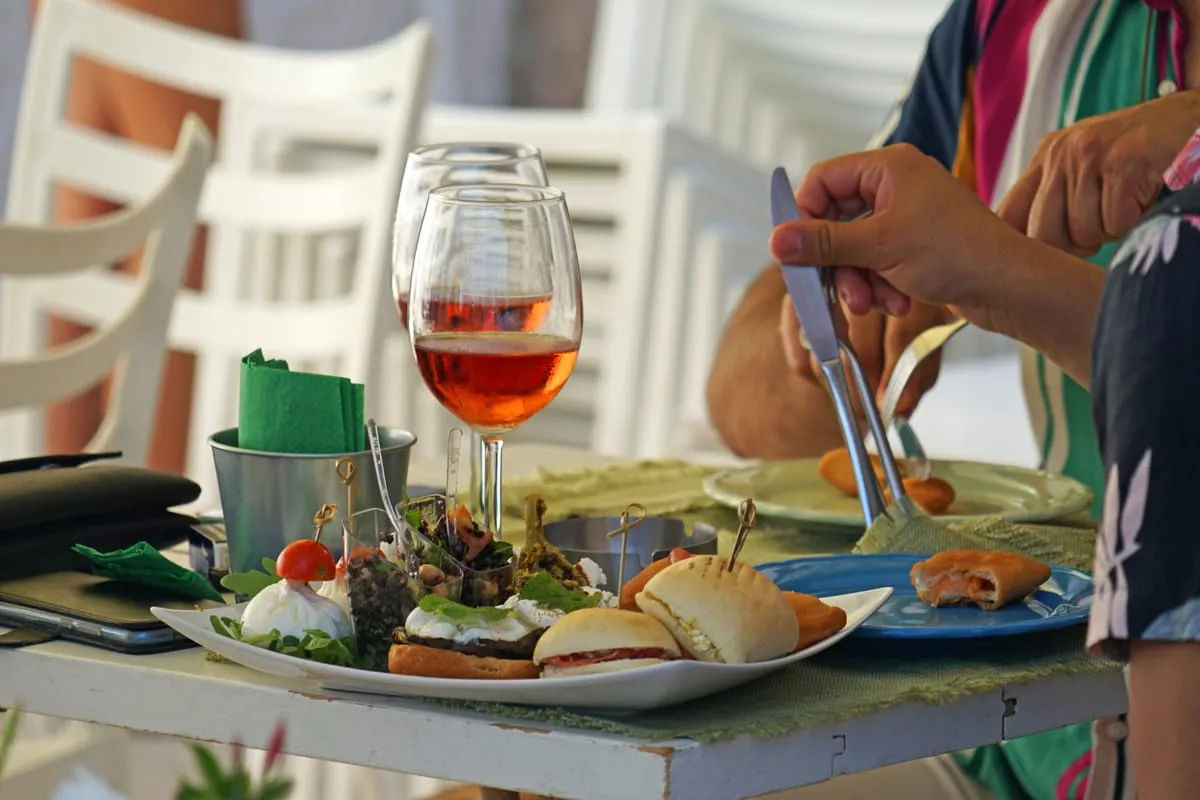
If you’d like a local to choose the bars for your first night, the Venice food, wine and spritz tour visits several bacari and includes a traghetto crossing of the Grand Canal. It isn’t the cheapest dinner, but it teaches you how to order cicchetti for the rest of the trip.
More food savings
- Make lunch the main meal. Many trattorias have lunch menus, and a pizza or plate of pasta at lunch keeps the evening cheap.
- Eat away from the landmarks. Restaurants facing the Pantheon or St. Mark’s Square charge for the view. Walk two streets back.
- Refill your bottle. Rome’s public drinking fountains, the nasoni, run all day across the city center.
- Picnic once in a while. Supermarkets and delis sell bread, cheese, salumi and fruit for a park bench lunch.
City taxes and the Venice access fee
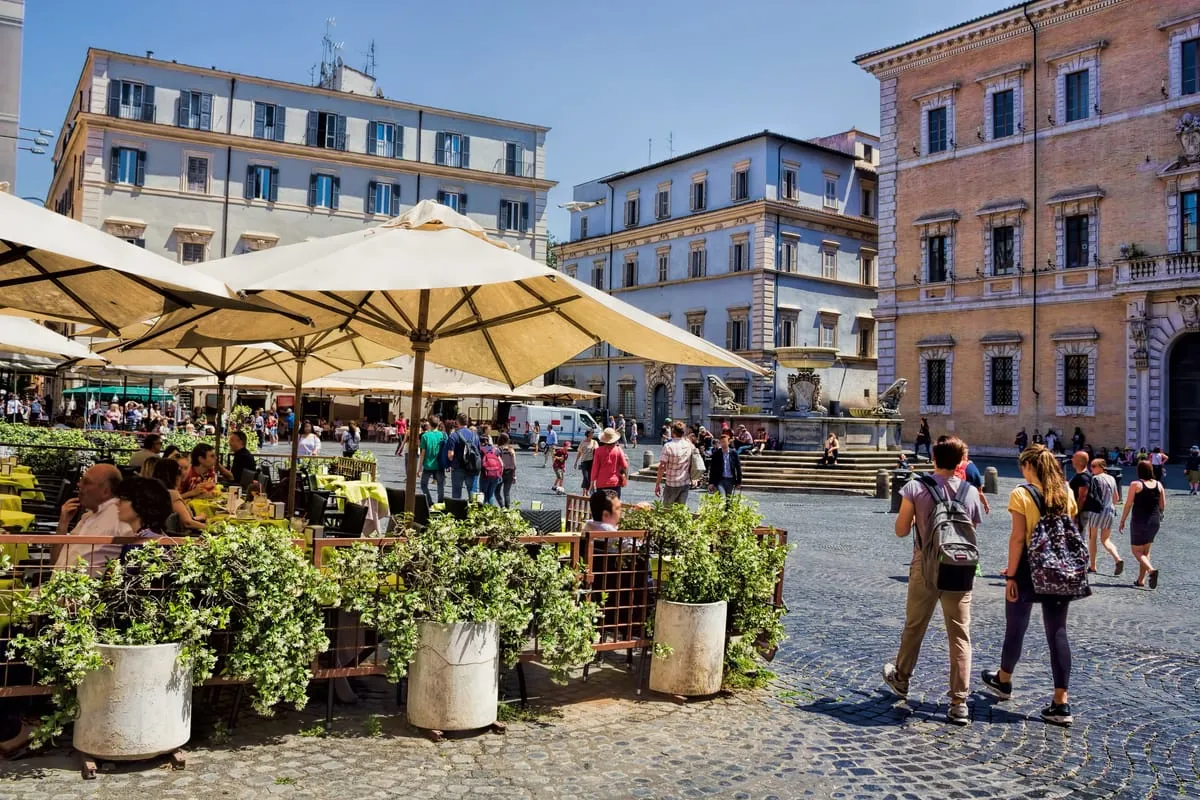
Every big Italian city charges a tourist tax per person per night, paid at the hotel on top of the room rate. Booking sites don’t always include it in the headline price, so add it yourself.
| City | Tax per person per night | Nights charged |
|---|---|---|
| Rome | €4 (1-star) to €10 (5-star); €6 at 3-star hotels and B&Bs, €7.50 at 4-star | Up to 10 |
| Florence | About €3.50 (1-star) to €8 (5-star) | First 7 |
| Venice | Varies by season and hotel category | Charged per night |
Rome’s rates come from Roma Capitale’s city tax table, in force since October 2023. Florence’s are the rates in force since February 2025, as reported in 2026; check your hotel’s confirmation for the exact amount.
The math: a couple spending four nights at a 3-star hotel in Rome pays €6 x 2 people x 4 nights = €48 (about $53) in city tax. At a 5-star hotel it would be €80 (about $89).
Venice’s day-tripper fee is a separate charge for visitors who don’t sleep in the city. In 2026 it applied on 60 days between April 3 and July 26, from 8:30 am to 4 pm, at €5 (about $5.50) if paid at least four days ahead or €10 within three days, according to The Local Italy. Overnight guests in Venice, Mestre or the islands, and children under 14, don’t pay it. If you visit in spring or summer 2027, check whether the city runs it again.
Where to stay for less
The cheapest beds are a short ride from the sights, not in them.
- Rome: around Termini station. The station area has lower prices per star and direct links to the airport train and both metro lines. Generator Rome is a hostel about a 10-minute walk from Termini, with a café and bar on site. Our where to stay in Rome guide compares neighborhoods.
- Venice: Mestre. The mainland side of Venice costs less and is a short bus or train ride from the lagoon. Hilton Honors members can use the Hilton Garden Inn Venice Mestre San Giuliano, where guests mention a bus stop right outside. Staying overnight also exempts you from the day-tripper fee.
- Florence: near Santa Maria Novella station. Arriving by train, you can walk to your hotel and skip a taxi.
Getting from the airport for less
From Rome Fiumicino, the FL1 regional train costs €8 (about $9) against €14 (about $16) for the Leonardo Express, though it doesn’t stop at Termini; see our Fiumicino to Rome city center guide. In Venice, the bus to Piazzale Roma is the cheapest way in, as our Venice airport guide shows.
Once in Venice, skip single water bus tickets if you’ll ride more than twice a day: singles cost €9.50 (about $10.50) for 75 minutes, while passes cost €25 for 24 hours, €35 for 48 hours and €45 for 72 hours (about $28, $39 and $50), according to AVM, Venice’s transit company. Travelers aged 6 to 29 can buy a Rolling Venice card for €6 and then a 72-hour pass for €27 (about $30). And if a gondola is on your list, our Venice gondola price guide shows how a shared Grand Canal gondola ride or a €2 traghetto crossing beats paying for an empty boat.
Skip the Roma Pass unless you’re seeing three or more paid sights outside the Vatican; our Roma Pass vs Omnia Card math shows that pay-as-you-go wins for most 3-day trips.
Money tips for American travelers
- Use a card with no foreign transaction fees. Tap-to-pay works widely, but carry some euros for coffee bars, traghetti and small trattorias.
- Always pay in euros. When a card terminal or ATM offers to charge you in dollars, decline: the conversion rate it offers is usually worse than your bank’s.
- Skip the daily roaming pass. US carriers’ international day passes add up over a two-week trip. An Italy eSIM from Airalo is set up before you fly and covers maps, train apps and digital tickets; use code GUIDEZ15 at checkout if you’re new to Airalo, or GUIDEZ10 if you’ve bought from them before. Our Airalo vs local SIM vs roaming comparison runs the numbers.
- Entry rules. US passport holders don’t need a visa for tourist stays of up to 90 days in 180. ETIAS, the EU’s upcoming €20 (about $22) travel authorization, hadn’t started when we checked in October 2026.
Plan the route, then book the trains
Your next step is the route. Our Italy 2-week itinerary links Rome, Florence, Venice and the coast with the train legs already worked out. Once your dates are fixed, book the high-speed legs on Omio while the advance fares last, and leave the regional hops for the day. For restaurants and places to stay picked by travelers who’ve been there, browse creator-made travel maps on Guidez.


