
In the Japan eSIM vs pocket WiFi choice, get the eSIM for most trips: it costs less per person, works the moment you land and leaves nothing to carry or return. In October 2026 an Airalo eSIM for Japan cost $10 for 5 GB over 7 days, while a Sakura Mobile pocket WiFi rented for ¥9,900 (about $63) a week.
A week of unlimited Airalo data cost $26.50. Use code GUIDEZ15 at checkout if you’re new to Airalo, or GUIDEZ10 if you’ve bought from them before. A pocket WiFi only wins for groups of three or more heavy data users who stay together, or for phones that can’t take an eSIM. All prices below were checked on the providers’ own websites on October 30, 2026. Dollar figures for yen use ¥1,000 = $6.33.
Japan eSIM vs pocket WiFi: the short answer
Here’s how the four ways to stay online in Japan compare for a typical one-week trip.
| eSIM (Airalo) | Pocket WiFi rental | Physical SIM card | US carrier roaming | |
|---|---|---|---|---|
| 7-day cost | $10 (5 GB) to $26.50 (unlimited) per phone | About ¥9,900 ($63) per device, shared | From ¥3,850 ($24) per phone, by plan length | $84 per phone at $12 a day |
| Setup | Install at home, switch on when you land | Pick up at airport or hotel, return by mail | Buy, swap SIM cards, sometimes register | Nothing |
| Carry and charge | Nothing extra | A second device to charge daily | Nothing extra | Nothing extra |
| Shared by a group | Through your phone’s hotspot | Up to 8 devices on one router | Through your phone’s hotspot | Through your phone’s hotspot |
| Best for | Solo travelers, couples, most families | Groups of 3+ heavy users who stay together | Phones without eSIM | Very short trips, or work pays |
Our picks:
- Best overall: an Airalo Japan eSIM sized to your trip. It’s the cheapest option for one or two people and the least hassle for anyone.
- Best for heavy users: Airalo’s unlimited Japan plan, $26.50 for 7 days or $48 for 15 days, for travelers who stream, upload video or work on the road.
- Best for groups of four that move as one: a pocket WiFi, if everyone wants unlimited data. Below that group size, separate eSIMs usually cost less.
- Best if your phone has no eSIM: a physical SIM card or a pocket WiFi. Check whether your phone is eSIM compatible first, because most iPhones from the last several years support eSIM.
How much does each option cost in Japan?
The eSIM is cheapest for one person on any trip length we priced, and the gap grows the longer you stay.
Airalo Japan eSIM prices
Airalo sells its Japan eSIM under the name Moshi Moshi. These were the full prices on Airalo’s Japan page on October 30, 2026, before any discount code.
| Data | 3 days | 5 days | 7 days | 10 days | 15 days | 30 days |
|---|---|---|---|---|---|---|
| 1 GB | $4.00 | |||||
| 3 GB | $7.50 | $8.00 | ||||
| 5 GB | $10.00 | $10.50 | $11.00 | |||
| 10 GB | $17.00 | $17.50 | $18.00 | |||
| 20 GB | $24.00 | $25.00 | ||||
| Unlimited | $11.50 | $17.00 | $26.50 | $34.50 | $48.00 | $69.00 |
Fixed-data plans give you the stated amount for the whole period, not per day. Unlimited plans run at full speed (up to 20 Mbps) for the first 3 GB each day, then drop to 1 Mbps until the 24-hour counter resets. Airalo says 1 Mbps is enough for messages and maps but not for heavy streaming.
The other unlimited eSIM worth pricing is Holafly’s Japan eSIM, at $27.50 for 7 days or $50.50 for 15 days on October 31, 2026, on the KDDI and SoftBank networks. It doesn’t publish a daily full-speed allowance, saying only that a fair-use slowdown lasts no more than a day, and it caps hotspot sharing at 1 GB a day, so it suits one heavy user more than a family sharing a phone. If Japan is one stop of several, our guide to the best eSIM for international travel compares the two in other countries too.
Pocket WiFi rental prices
Rental companies price by the day, and the headline rate usually depends on how long you rent. Two of the big names for visitors:
- Sakura Mobile listed its unlimited pocket WiFi at ¥9,900 (about $63) for 7 days, ¥13,500 (about $85) for 10 days and ¥18,300 (about $116) for 14 days. Its price page doesn’t say whether tax is included.
- Japan Wireless advertised its unlimited pocket WiFi “from US $4.8/day”, with up to 8 devices connected and a free power bank. Its live prices only appear once you enter your dates.
Budget extra for optional damage and loss protection. Without it, Japan Wireless charges ¥40,000 (about $253) if you lose the router and SIM card.
Physical SIM card prices
Sakura Mobile’s travel SIM card started at ¥3,850 (about $24) including tax, and its travel eSIM at ¥1,375 (about $9). Both list “unlimited” plans with a daily fair-use limit: after 3 GB in a day, speed drops. We list them for completeness. For an American with a recent phone, a separate SIM card mostly adds a step.
What a 7-day and 14-day trip costs
| Option | 7 days | 14 to 15 days |
|---|---|---|
| Airalo 5 GB | $10.00 | $10.50 (15 days) |
| Airalo 10 GB | $17.00 | $17.50 (15 days) |
| Airalo 20 GB | $24.00 (15 days) | |
| Airalo unlimited | $26.50 | $48.00 (15 days) |
| Sakura Mobile pocket WiFi | ¥9,900 (about $63) | ¥18,300 (about $116) |
| Verizon TravelPass | $84 | $168 |
| AT&T International Day Pass | $84 | $168 |
For one traveler, even Airalo’s unlimited plan costs well under half of a pocket WiFi rental. If you’re new to Airalo, buy your Japan eSIM with code GUIDEZ15 at checkout, or GUIDEZ10 if you’ve bought from them before.
When does a pocket WiFi beat an eSIM? The group math
A pocket WiFi is one price for the whole group, so it gets cheaper per person as more people share it. Here’s a 7-day trip, comparing one eSIM per person with one shared Sakura Mobile router at ¥9,900 (about $63).
| Travelers | 5 GB eSIM each | 10 GB eSIM each | Unlimited eSIM each | One pocket WiFi |
|---|---|---|---|---|
| 1 | $10 | $17 | $26.50 | $63 |
| 2 | $20 | $34 | $53 | $63 |
| 3 | $30 | $51 | $79.50 | $63 |
| 4 | $40 | $68 | $106 | $63 |
The rule: if each person can live with 5 to 10 GB for the week, separate eSIMs win at every group size up to four. A pocket WiFi only comes out ahead when three or more people all want unlimited data. If Japan Wireless’s “from $4.80 a day” rate applies to your dates, that’s about $34 for a week, which narrows the gap further for groups.
The catch is that a pocket WiFi only works within Wi-Fi range of the device. If your group splits up for an afternoon, whoever doesn’t carry the router is offline. Families with teenagers who wander off, or couples who sightsee separately, lose most of the savings in that moment.
There’s a cheaper middle way for families who do stick together: put one parent on a bigger eSIM plan and share it over the phone’s personal hotspot. Airalo’s help center says hotspot works if your device and the network support it. On the unlimited plans, everything shared counts toward the same 3 GB a day at full speed, so this suits maps and messaging for the kids more than four people streaming at once.

How hard is each one to set up?
An eSIM takes about five minutes at home; a pocket WiFi takes a counter visit at each end of your trip.
Setting up an Airalo eSIM for Japan
- Check your phone. On an iPhone you need an iPhone XS, XS Max, XR or later, according to Apple’s eSIM page. The phone also can’t be locked to your carrier: go to Settings > General > About and look for “No SIM Restrictions” next to Carrier Lock. Most recent Android flagships support eSIM too; check your model’s settings for an eSIM or “Add eSIM” option.
- Buy the plan before you fly and install it while you’re on reliable home Wi-Fi. Apple’s travel eSIM guide notes that your iPhone must be connected to Wi-Fi to set one up.
- Don’t worry about the clock. The Japan eSIM’s validity starts when it first connects to a mobile network in Japan, not when you install it.
- When you land, switch the eSIM line on, turn data roaming on for that line (Airalo’s Japan eSIM requires it) and choose it as your cellular data line.
- Turn data roaming off on your US line. Otherwise a single background app refresh can trigger a $12 day pass. Leave the line itself on if you want texts such as bank codes.
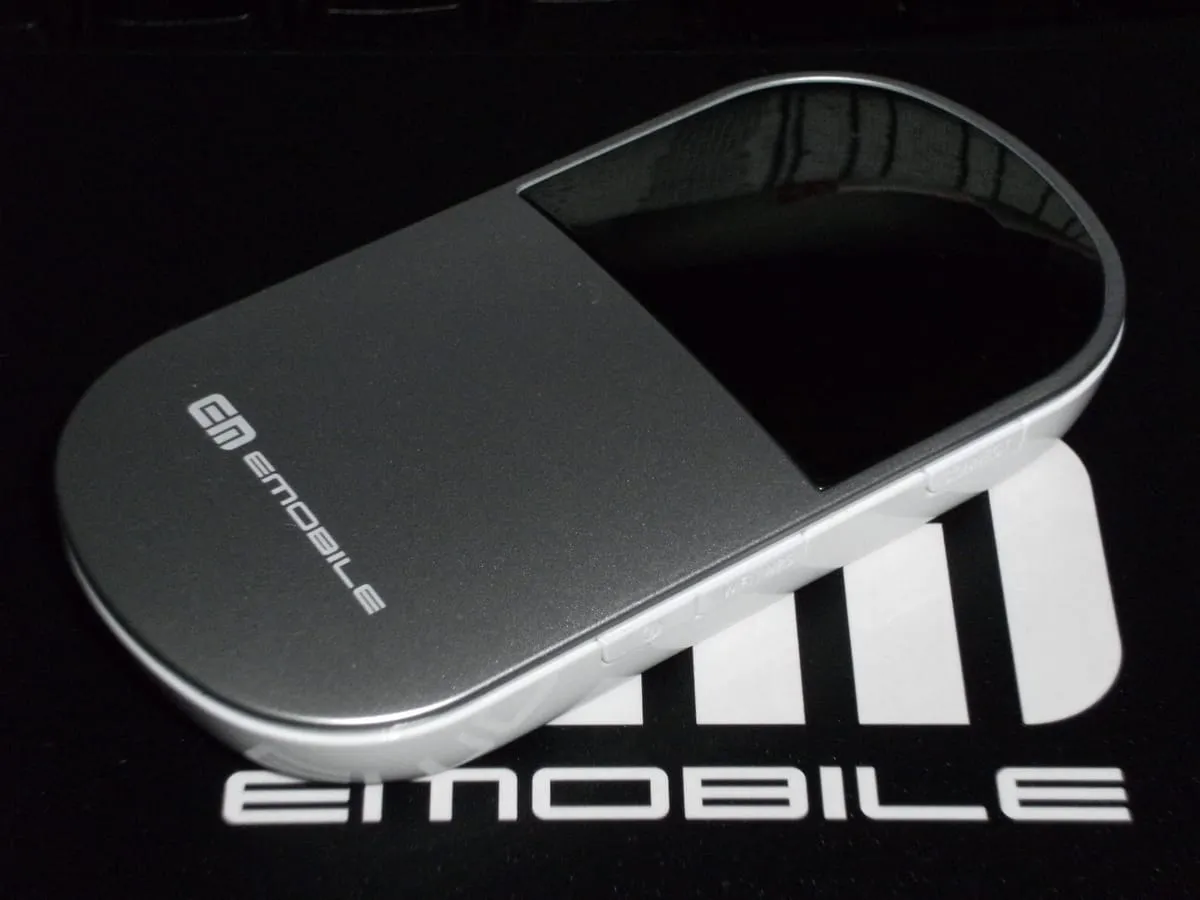
Picking up and returning a pocket WiFi
Most rental companies let you collect the router at an airport counter or have it delivered to your hotel. At Haneda’s international Terminal 3, the airport’s directory lists rental counters in the 2nd-floor arrival lobby open from about 6:00 or 6:30 to 23:00, plus a 24-hour automated rental service outside one of them. Narita’s list of rental and SIM locations shows 33 counters and SIM vending machines from eight companies, and most counters close at 21:00. Land after that and you may be without data until the morning, which never happens with an eSIM.
Returning is usually by mail: Japan Wireless includes a prepaid envelope that you drop in any postbox in Japan, and charges a fee for late returns. In between, you carry the router everywhere. Japan Wireless quotes 8 to 10 hours of battery, so plan to charge it every night and keep the included power bank in your day bag.
Coverage and speed: which works better around Japan?
Both options use Japan’s big mobile networks, so coverage is good in cities, on trains and in most places tourists go.
Airalo’s Japan eSIM connects to the SoftBank and KDDI networks with 5G where available, and Airalo says it covers all of Japan, including Okinawa and Hokkaido. If one network is weak, your phone can use the other.
Pocket WiFi routers run on whichever network the rental company uses, and speeds vary by device and by how many people are connected. The router adds a Wi-Fi hop between your phone and the network, and its battery sets the limit on your day.
The practical difference is battery. With an eSIM, your phone is the only device you need to keep charged. With a pocket WiFi, a flat router at 6 pm in Kyoto means everyone in your group loses maps at the same time.
Either way, you’ll likely lean on hotel Wi-Fi in the evenings. If you use it, or airport Wi-Fi, for banking or bookings, a VPN such as Surfshark encrypts your connection on the shared network.
Pros and cons of a pocket WiFi
What works well
- One price for a group of up to 8 devices on Japan Wireless’s router.
- Works with any phone, including older or carrier-locked models, and with laptops and tablets that have no cellular modem.
- Unlimited data as advertised: neither Japan Wireless nor Sakura Mobile states a daily fair-use limit for its rental router.
What to watch
- One more thing to carry, charge and keep safe, with a ¥40,000 (about $253) loss fee at Japan Wireless if you skip protection.
- Pickup and return logistics, including counter hours at the airport and a mailing deadline at the end.
- Your group must stay together to share the connection.
- Higher cost for one or two people than an eSIM of the same length.
What about US phone plans in Japan?
Roaming on your US plan is the easiest option and the most expensive one. Verizon’s TravelPass and AT&T’s International Day Pass both cost $12 a day per line, and AT&T charges $6 for each extra line used on the same day. A week in Japan costs $84 per phone, or $168 for two weeks, against $26.50 and $48 for Airalo’s unlimited plans of similar length.
If you’re on T-Mobile, check your plan before you buy anything: many T-Mobile plans include some data in Japan at no extra charge, though usually not at full speed. Roaming does make sense for a one- or two-day business trip, or when your employer pays.
Which should you get for your Japan trip?
Decide in this order:
- Does your phone support eSIM and is it free of carrier locks? If yes, start with an eSIM. If no, choose a pocket WiFi for a group or a physical SIM card for one person.
- How much data do you really use? Check your phone’s cellular data screen at home. Most travelers who use maps, train apps, messaging and photo uploads fit in 5 to 10 GB a week. Heavy video users should take unlimited.
- How many of you, and will you split up? Groups of three or more who all want unlimited data and never separate are the one case where a pocket WiFi saves money.
- When do you land? Late arrivals at Narita, where most counters close at 21:00, are a strong reason to have data from the moment you switch your phone on.
For almost everyone that adds up to the same answer: get the Airalo Japan eSIM in the size you need, install it the night before you fly and use code GUIDEZ15 (new customers) or GUIDEZ10 (returning customers) at checkout. Our Airalo vs local SIM vs roaming comparison runs the same numbers for Italy and Thailand if Japan is one stop of several.
After you land
Your first use for that data is the ride into the city. Our Narita and Haneda transfer guide compares the Skyliner, the Narita Express, the Keikyu Line and the Monorail with October 2026 fares. Landing late with a family and bags, when the airport counters are already closed? A private arrival transfer from Narita or a Haneda private transfer to central Tokyo fixes the price before you fly.
For the first days in Tokyo, a 24, 48 or 72-hour Tokyo Subway Ticket covers the metro lines you’ll navigate with that data, and our 3-day Tokyo itinerary shows where to use it. If your route goes on to Kyoto, Osaka and beyond, read whether the Japan Rail Pass is worth it before you buy the 7, 14 or 21-day Japan Rail Pass, and plan the whole route with our 2-week Japan itinerary and 2-day Osaka itinerary. For places to eat and stay along the way, browse creator-made travel maps on Guidez.