The best Japan itinerary for 2 weeks, on a first trip, is Tokyo (5 nights), Hakone (1), Kyoto (4), Hiroshima (1) and Osaka (2), flying into Tokyo and home from Osaka. The route follows the bullet-train line west, and its three long shinkansen legs cost ¥34,590 (about $219) in single tickets, so skip the Japan Rail Pass and buy one-way Sanyo shinkansen e-tickets for the Hiroshima and Osaka legs.
That order means you never backtrack. The 14-day pass costs ¥80,000, and even a 7-day pass only breaks even if you ride back to Tokyo at the end, so spend the difference on a night in a Hakone hot-spring hotel. Fares and prices below were checked in October 2026, with dollars at ¥1,000 = $6.33.
The 2-week Japan itinerary at a glance
| Day | Base | Plan | Getting there |
|---|---|---|---|
| 1 | Tokyo | Land, check in, Shibuya at night | Train or bus from Haneda or Narita |
| 2 | Tokyo | Asakusa, Ueno, Akihabara | Subway |
| 3 | Tokyo | Meiji Jingu, Harajuku, Shibuya, Shinjuku food tour | Subway and JR |
| 4 | Tokyo | Tsukiji outer market, Ginza, Odaiba or a museum day | Subway |
| 5 | Tokyo | Day trip: Kamakura, Nikko or the snow monkeys | JR or a tour |
| 6 | Hakone | Romancecar from Shinjuku, Hakone loop, onsen night | Odakyu Romancecar |
| 7 | Kyoto | Shinkansen west, Gion and Pontocho at night | Hikari from Odawara |
| 8 | Kyoto | Fushimi Inari at dawn, Kiyomizu-dera, Higashiyama | Train and walking |
| 9 | Kyoto | Arashiyama bamboo grove, Kinkaku-ji | JR and bus |
| 10 | Kyoto | Day trip to Nara | JR Nara Line |
| 11 | Hiroshima | Peace Memorial Park and Museum | Shinkansen |
| 12 | Osaka | Miyajima in the morning, Dotonbori at night | JR ferry, then shinkansen |
| 13 | Osaka | Osaka Castle, Kuromon Market, food tour | Subway |
| 14 | Home | Fly home from Kansai airport | Airport train |
Two rules shape this route. Keep the long rides to four (Tokyo to Hakone, Hakone to Kyoto, Kyoto to Hiroshima, Hiroshima to Osaka), and sleep in each place at least two nights except Hakone and Hiroshima, which work as one-night stops. If you’d rather not change hotels for those two, see the variations at the end.
Is the Japan Rail Pass worth it for 2 weeks?
No, not for this route. The long shinkansen rides add up to ¥34,590 in single tickets, less than half the ¥80,000 a 14-day Japan Rail Pass costs on JR’s own site. Here are the legs, priced with smartEX, JR’s online booking service, for a reserved ordinary seat in regular season:
| Leg | Day | Fastest train | Single ticket | On Hikari or Sakura |
|---|---|---|---|---|
| Odawara → Kyoto | 7 | Hikari | ¥12,100 ($77) | ¥12,100 |
| Kyoto → Hiroshima | 11 | Nozomi | ¥11,740 ($74) | ¥11,100 ($70) |
| Hiroshima → Shin-Osaka | 12 | Nozomi | ¥10,750 ($68) | ¥10,220 ($65) |
| Total, flying home from Osaka | ¥34,590 ($219) | ¥33,420 ($212) | ||
| Shin-Osaka → Tokyo, only if you fly home from Tokyo | 13 or 14 | Nozomi | ¥14,520 ($92) | ¥14,200 ($90) |
| Total, flying home from Tokyo | ¥49,110 ($311) | ¥47,620 ($301) |
Seasons move these by a few hundred yen: smartEX takes ¥200 off in off-peak periods and adds ¥200 to ¥800 in peak ones. The Nara and Miyajima side trips add a few local JR rides, each leg well under ¥1,000.
When does a 7-day pass make sense?
A 7-day pass costs ¥50,000 (about $317). Start it on day 7, the day you leave Hakone, and it covers days 7 to 13: Odawara to Kyoto, Nara, Hiroshima, the JR ferry to Miyajima and the ride to Osaka. The pass only covers Hikari, Sakura and Kodama trains, so the fair comparison is the right-hand column:
- Flying home from Osaka: the pass covers about ¥33,420 of shinkansen plus a few thousand yen of local rides. Single tickets win by more than ¥10,000 (about $65). Don’t buy it.
- Riding back to Tokyo on day 13: the covered rides come to ¥47,620 plus the Nara and Miyajima trips, which puts you right around ¥50,000. It’s a wash on price, so decide on convenience: the pass means no ticket machines, but you give up the Nozomi or pay ¥4,960 to ¥6,500 extra per ride for a pass-holder Nozomi ticket.
If your plan changes and you add a long ride, such as Hiroshima to Fukuoka and back to Tokyo, run the numbers again in our Japan Rail Pass break-even guide. For a week that does tip in the pass’s favor, you can order the 7-day Japan Rail Pass on GetYourGuide before you fly.
The pass also skips the two rides most visitors take first: Tokyo’s subways and the private Odakyu line to Hakone. Neither changes the math above, because this route puts both outside the 7 days.
Days 1 to 5: Tokyo
Give Tokyo five nights: one for jet lag, three for the city and one for a day trip. Stay near a Yamanote Line station such as Shinjuku or Shibuya, so every neighborhood is one ride away. The Hotel Gracery Shinjuku is in Kabukicho, a short walk from Shinjuku Station, which is also where the Romancecar to Hakone leaves on day 6.
Most of Tokyo’s sights sit on the subway, which no JR pass covers, so a 24, 48 or 72-hour Tokyo Subway Ticket is the easy way to ride all day on Tokyo Metro and Toei lines without topping up a card. Our Narita and Haneda to central Tokyo guide covers day 1’s ride in, and Haneda is the closer airport if fares are similar.
Day 1: arrive. Nonstop flights from the US take roughly 10 to 14 hours, and Japan is 14 hours ahead of New York and 17 ahead of Los Angeles in winter (13 and 16 in summer). Keep the first evening simple: dinner near the hotel and a walk across Shibuya Crossing. Our 3 days in Tokyo itinerary goes deeper on each neighborhood and what to book there.
Day 2: east Tokyo. Start at Senso-ji in Asakusa before the tour groups, walk the Nakamise shopping street, then take the subway to Ueno Park and its museums. Finish in Akihabara for electronics and arcades.
Day 3: west Tokyo. Meiji Jingu’s forest shrine in the morning, Harajuku and Omotesando for shopping, Shibuya in the afternoon. In the evening, the Shinjuku food tour through Kabukicho and Golden Gai takes you into the tiny bars and yakitori alleys that are hard to walk into on a first night in Japan.
Day 4: food and the bay. The Tsukiji outer market for a sushi breakfast, Ginza for department-store food halls, then Odaiba on the bay or a museum afternoon.
Day 5: a day trip. Kamakura’s Great Buddha and seaside temples are about an hour away on JR. In winter, the snow monkeys of Nagano make a long but memorable day out; see our best places to travel in January for that trip.
Day 6: Hakone and a night in a hot-spring hotel
Hakone is the classic stop between Tokyo and Kyoto: hot springs, a mountain loop of trains and cable cars, and, on a clear day, Mount Fuji across Lake Ashi. It runs on the private Odakyu group, not JR, so the Japan Rail Pass doesn’t help here.
The Hakone Freepass from Shinjuku costs ¥7,100 (about $45) for 2 days and covers the Odakyu train from Shinjuku plus the Hakone Tozan train, cable car, ropeway, Lake Ashi sightseeing cruise and local buses. The Romancecar limited express from Shinjuku to Hakone-Yumoto costs ¥1,200 (about $8) extra each way.
Here’s a small piece of math in your favor: even though you won’t use the pass’s return half to Shinjuku, the Shinjuku version plus the Romancecar (¥8,300) costs less than a shinkansen from Tokyo to Odawara (¥3,610) plus the ¥6,000 Odawara-only pass (¥9,610 together).
The Hakone loop: Tozan train up to Gora, cable car to Sounzan, ropeway over the steaming vents of Owakudani, and the boat across Lake Ashi to the red torii of Hakone Shrine. Allow most of the day, and send your big suitcase ahead to Kyoto with your hotel’s luggage-forwarding service (takkyubin) so you travel with a day bag.
Where to stay: a ryokan with dinner and breakfast included is the Hakone experience. If you’d rather use Hyatt points, the Hyatt Regency Hakone Resort and Spa is in Gora, at the top of the Tozan train line. Bathing etiquette is strict in Japan’s onsen: wash and rinse fully at the seated showers before you get in, the same shower-first rule Iceland’s lagoons follow (see our Blue Lagoon vs Sky Lagoon comparison). Some public baths still turn away guests with visible tattoos, so check before you go or book a room with a private bath.
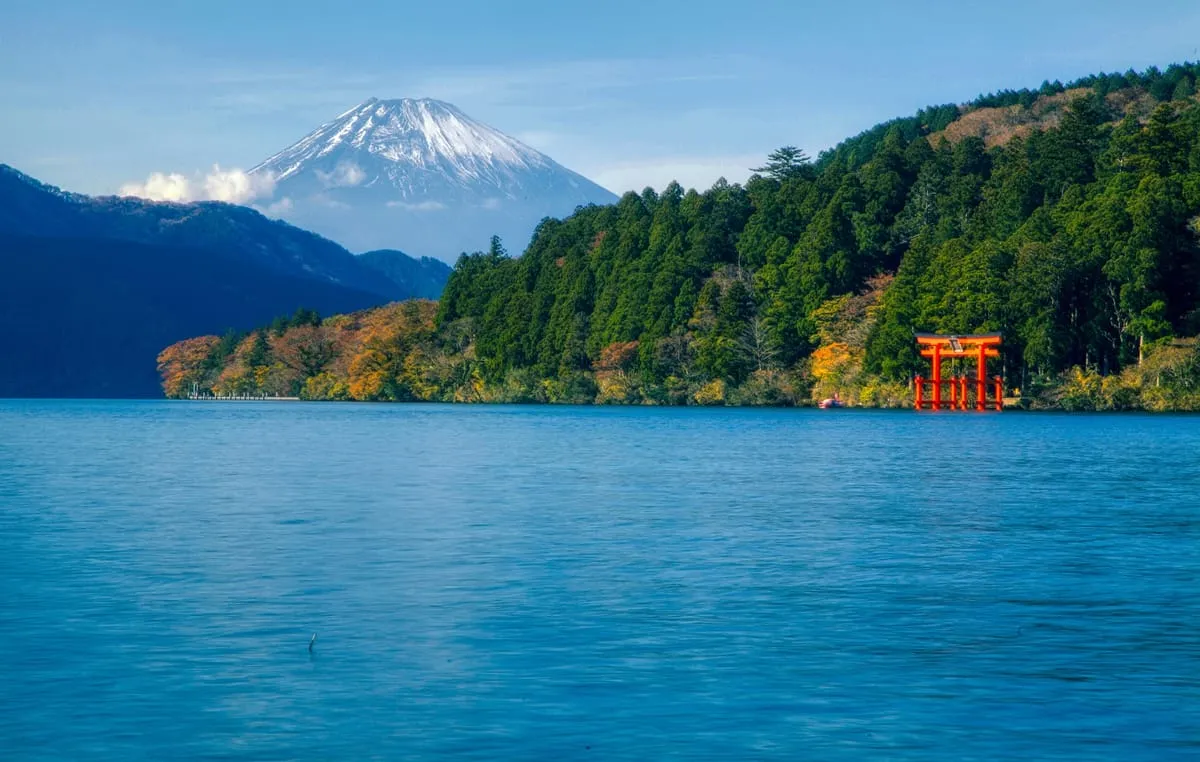
Short on time? Skip the overnight and see Fuji and Hakone on a day trip from Tokyo instead, then go straight to Kyoto on day 6. You’ll lose the onsen night but gain a day in Kyoto.
Days 7 to 10: Kyoto and Nara
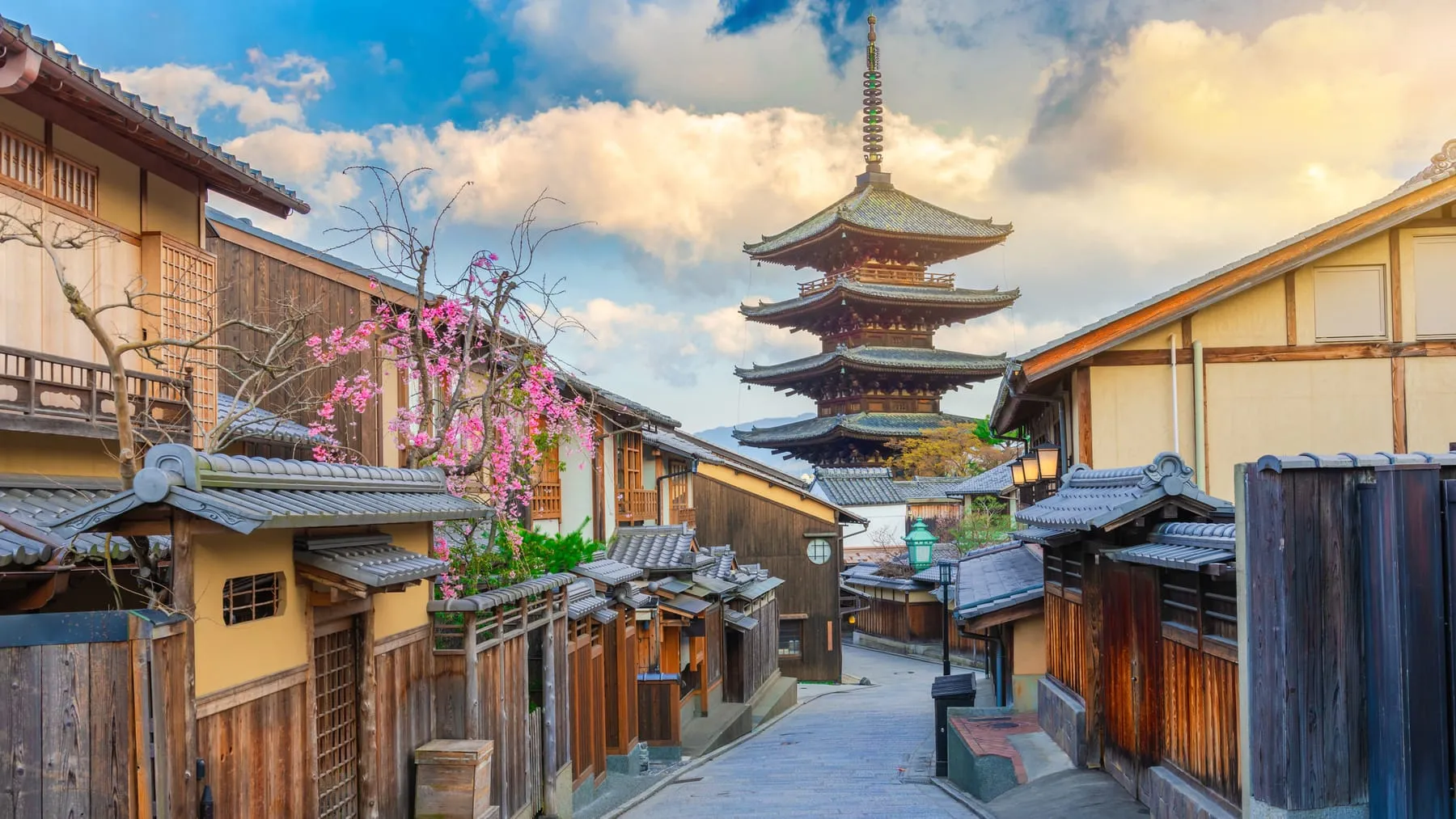
Day 7: Hakone to Kyoto. Take the Tozan train down to Odawara (covered by the Freepass) and the Hikari to Kyoto, about two hours, for ¥12,100. Spend the late afternoon in Gion and eat in Pontocho alley.
Where to stay in Kyoto: four nights in one place means no packing until day 11. The Hyatt Regency Kyoto is in Higashiyama, within walking distance of Sanjusangen-do and a short ride from Gion and Kyoto Station.
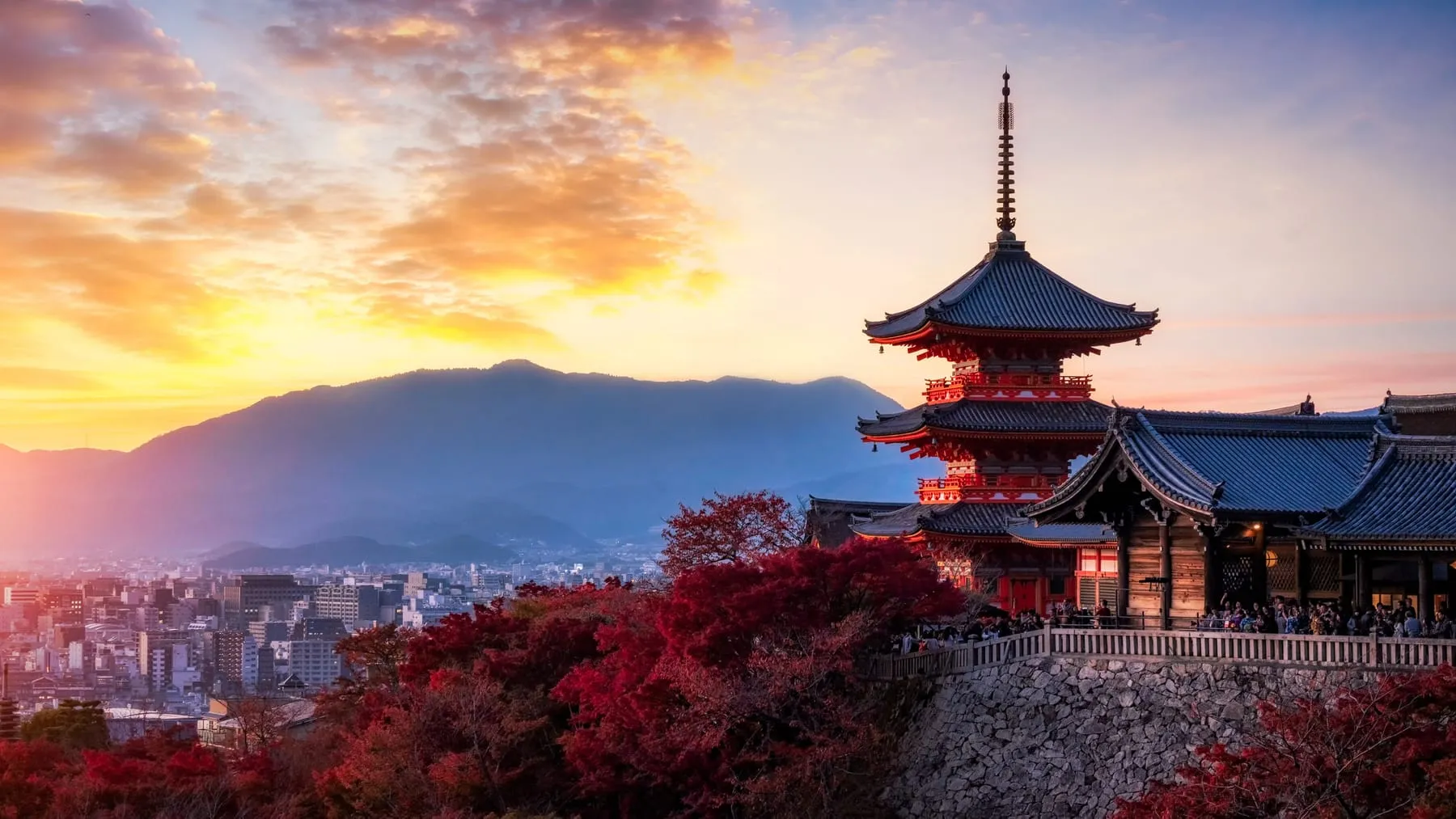
Day 8: Fushimi Inari and Higashiyama. Kyoto rewards early starts more than any city in Japan. Fushimi Inari has no admission fee, and its tunnels of torii gates climb Inariyama, a 233-meter (764-foot) hill; by mid-morning the lower paths are packed. The Kyoto early morning small-group tour has several early start times, including a route built around Fushimi Inari before the crowds arrive. Afterward, Kiyomizu-dera opens from 6 am, and the lanes of Sannen-zaka and Ninen-zaka lead down toward Gion.
Day 9: Arashiyama and Kinkaku-ji. Reach the Arashiyama bamboo grove by 8 am, then walk through Tenryu-ji’s garden. In the afternoon, cross town to Kinkaku-ji, the Golden Pavilion, which opens 9 am to 5 pm.
Day 10: Nara. Nara is under an hour from Kyoto on the JR Nara Line. Its deer roam free in Nara Park, and Todai-ji’s Great Buddha Hall opened 7:30 am to 5:30 pm when we checked. The Nara early morning tour from Kyoto or Osaka gets you to Nara Park early, ahead of the day-trippers.
Days 11 and 12: Hiroshima and Miyajima
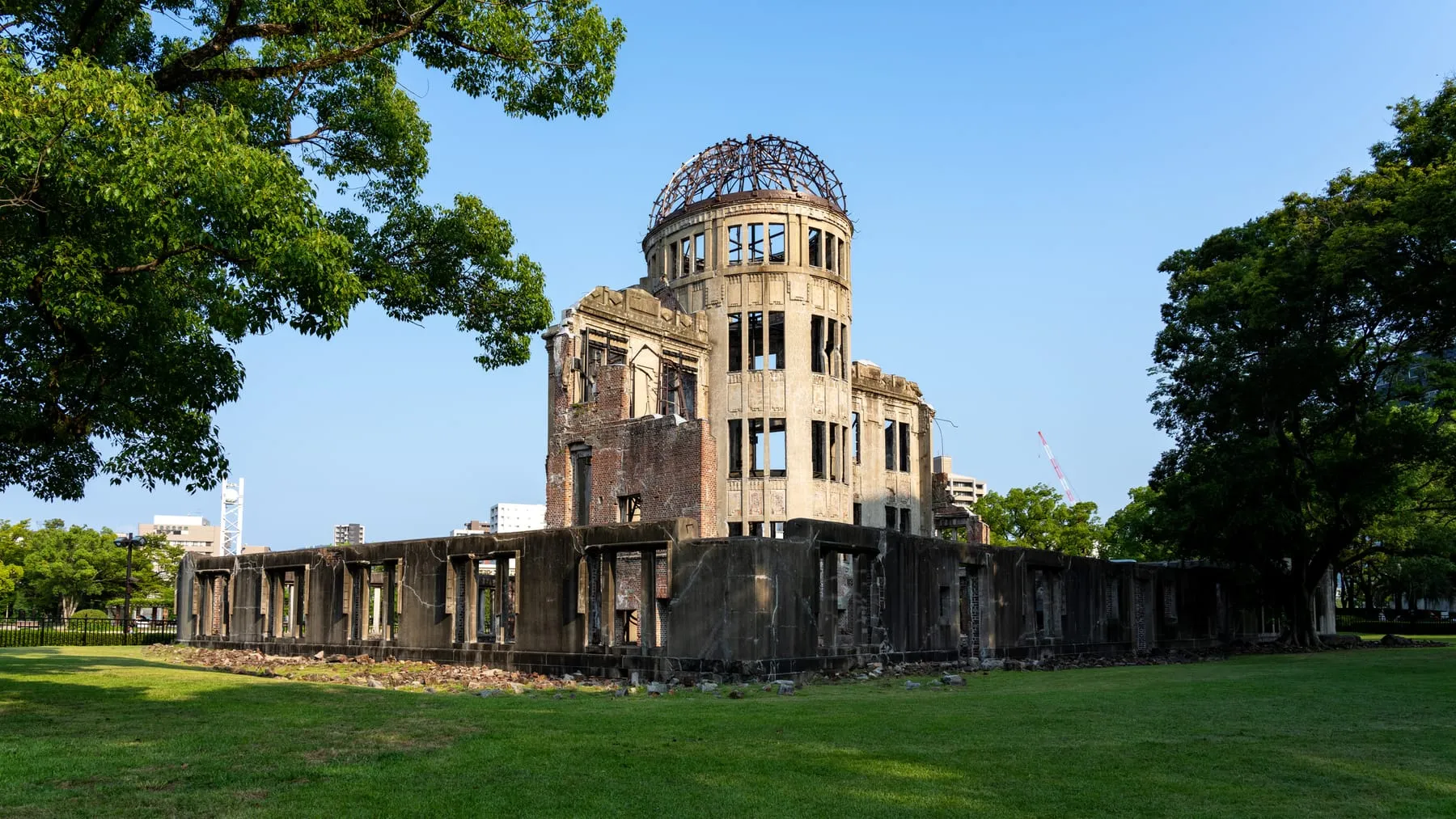
Day 11: Hiroshima. Take the shinkansen from Kyoto (Nozomi ¥11,740) and spend the afternoon at the Peace Memorial Park and Museum. The Atomic Bomb Dome, the ruin left standing after August 6, 1945, is a short walk from the museum. Eat okonomiyaki, the city’s layered savory pancake, for dinner. Our Hiroshima and Miyajima guide covers museum reservations, the boat to Miyajima and the tide.
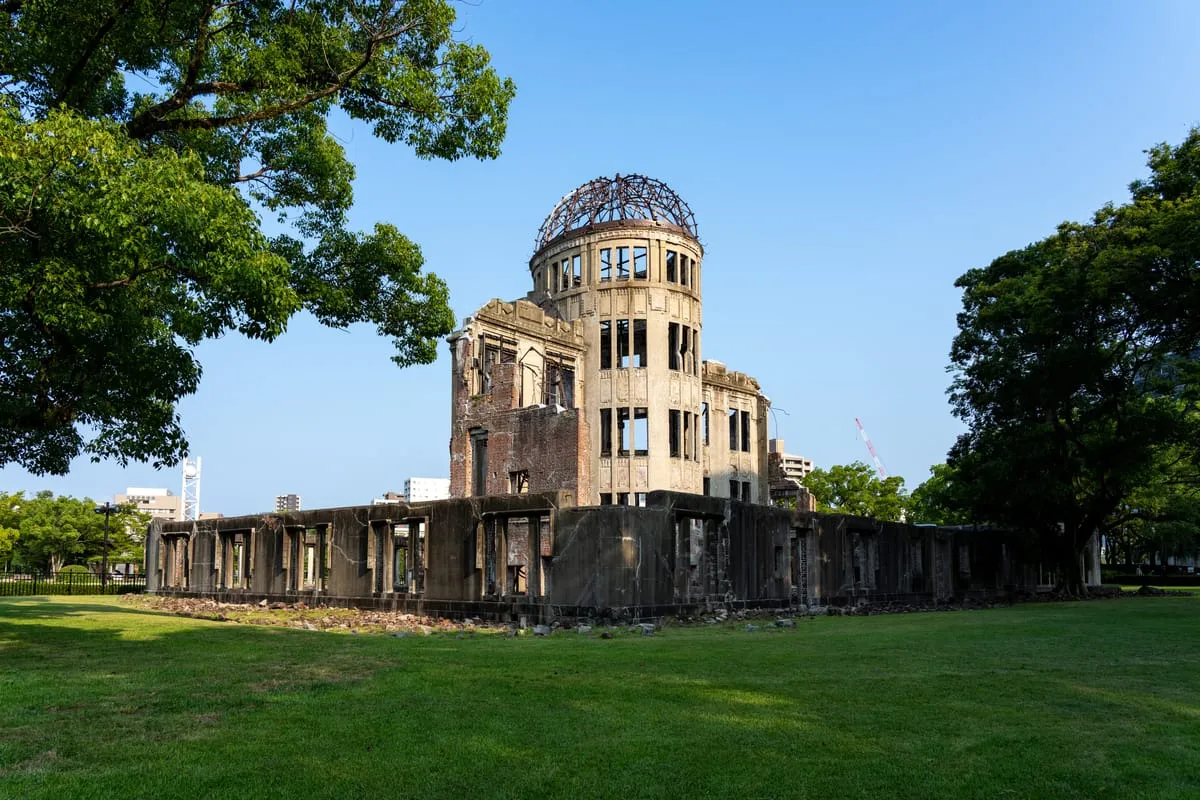
Where to stay: the Sheraton Grand Hiroshima Hotel is connected to Hiroshima Station, which makes a one-night stop with luggage easy, and it earns Marriott Bonvoy points.
Day 12: Miyajima, then Osaka. Take JR to Miyajimaguchi and the JR ferry to the island; both are covered by the Japan Rail Pass if you have one. Miyajima charges a ¥100 visitor tax. Itsukushima Shrine, with its torii standing in the sea at high tide, costs ¥300 (about $2) and opens from 6:30 am, according to the shrine’s admission page. Check the tide table: the gate looks like it floats only when the water is high. If you’d rather have a guide handle the ferry and the timing, the guided Hiroshima and Miyajima tour includes the shrine admission and the ferry. Take the shinkansen to Shin-Osaka in the afternoon.
Days 12 to 14: Osaka
Osaka is Japan’s food city, and two nights here end the trip on a high. Stay near Namba so Dotonbori’s neon canal is a walk from the hotel: the Cross Hotel Osaka is steps from the canal.
Evening of day 12: Dotonbori. Takoyaki, kushikatsu and the Glico running-man sign. It’s at its best after dark.
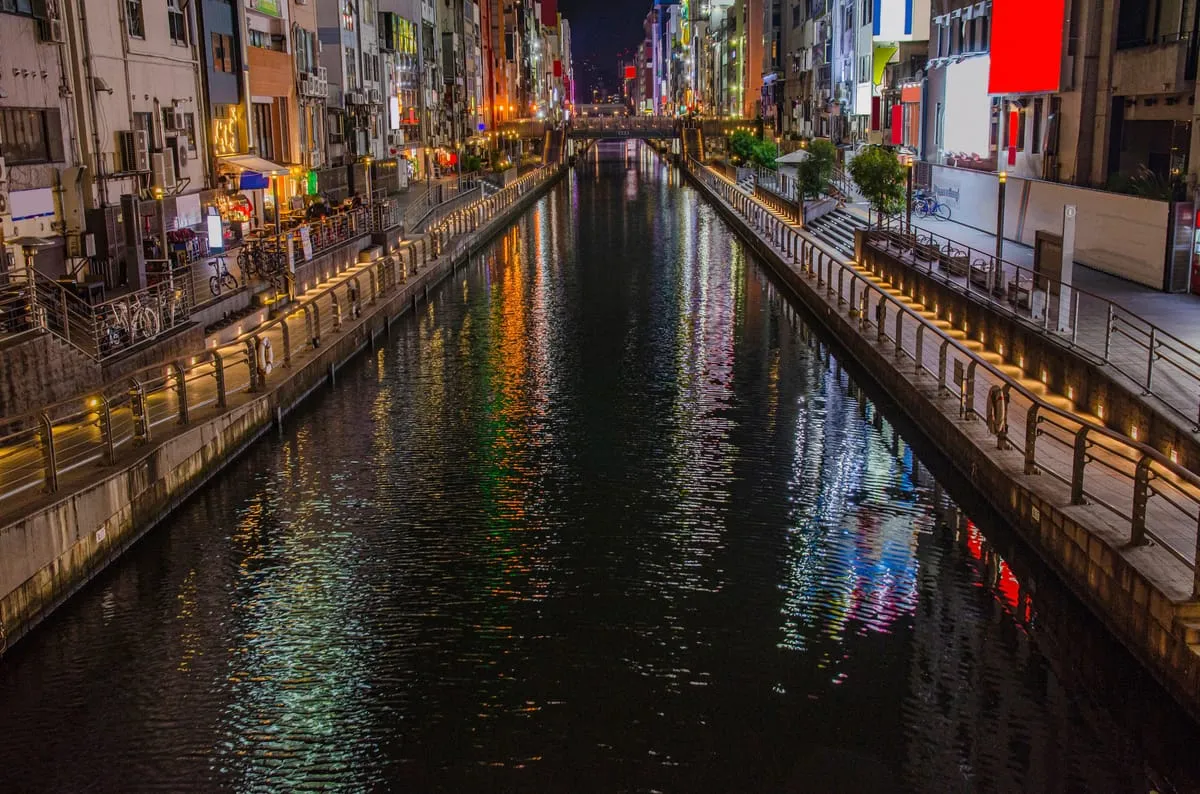
Day 13: Osaka Castle and Kuromon Market. The castle in the morning, Kuromon Market for lunch, and Shinsekai’s retro streets in the afternoon. For the last night, the Osaka backstreet foodie tour works through the alleys of Namba and Dotonbori with a local guide and finishes near the canal. Theme-park fans can swap the day for Universal Studios Japan (our Universal Studios Japan tickets guide explains dated prices and the Express Pass), and our 2 days in Osaka guide has the full plan for both options.
Day 14: fly home. Trains run from Namba and Osaka to Kansai International Airport. If your flight leaves from Tokyo instead, ride the Nozomi back on the evening of day 13 (¥14,520, about 2.5 hours) and stay near your airport.
Should you fly into Tokyo and out of Osaka?
Yes, if the fare is close. An open-jaw ticket (into Haneda or Narita, home from Kansai) saves the 2.5-hour ride back to Tokyo and ¥14,520 (about $92) for the Nozomi, and it frees up the evening of day 13 in Osaka. Search it as a multi-city trip. If it costs more than about $90 extra per person, the round trip to Tokyo plus a final Nozomi ride is cheaper, though you give up half a day to the ride.
What to know before you go
- Entry for US citizens: no visa is needed for tourist stays of up to 90 days, according to Japan’s Ministry of Foreign Affairs and the Japan National Tourism Organization. You can fill in your immigration and customs details in advance on Visit Japan Web to get QR codes for arrival.
- Money: cards work in hotels, department stores and chain restaurants, but carry cash for small restaurants, temples and shrines. On an iPhone, a Suica or PASMO card in Apple Wallet pays for trains, buses and convenience stores.
- Tipping: don’t. It isn’t customary in Japan.
- Luggage: shinkansen have limited space for big suitcases, so pack light or forward bags between hotels.
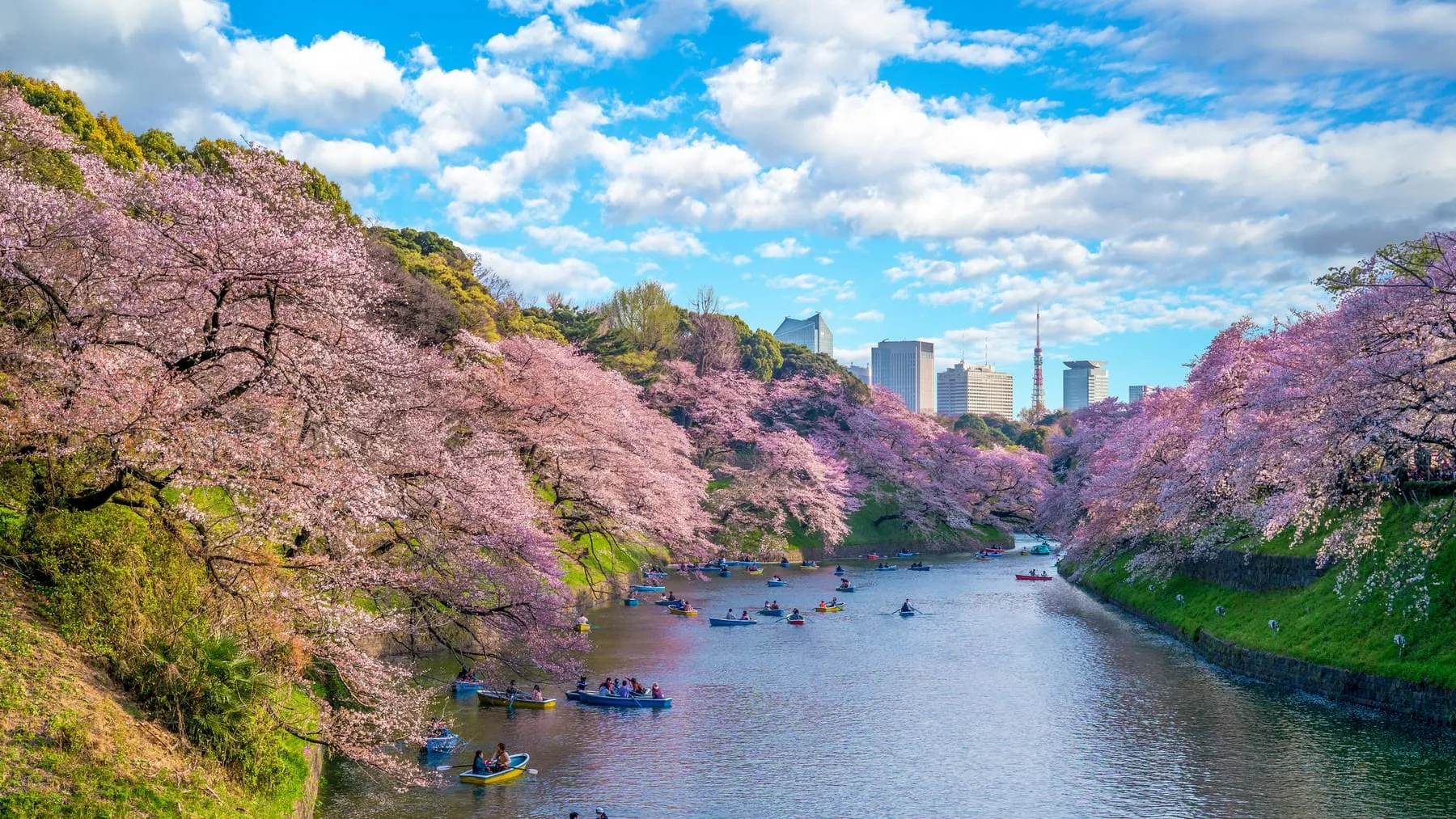
- When to go: late March to early April for cherry blossoms and November for fall leaves, both busy. Our 2027 cherry blossom guide has average bloom dates for every city on this route. Avoid Golden Week (late April to early May), mid-August and New Year, when trains and hotels fill with Japanese holiday travelers.
- Mobile data: you’ll use Google Maps, train apps and translation every day. Verizon and AT&T charge $12 a day for roaming, while an Airalo eSIM for Japan installs before you fly; use code GUIDEZ15 at checkout if you’re new to Airalo, or GUIDEZ10 if you’ve bought from them before. Our Japan eSIM vs pocket Wi-Fi comparison covers the rental routers too, and our guide to the best eSIM for international travel compares Airalo with Holafly and eSIMx.
Variations on the route
- Less moving around: skip Hakone, add a night in Kyoto, and do Hiroshima and Miyajima as a long day trip from Osaka. You’ll change hotels three times instead of five.
- More time in the countryside: swap Tokyo’s day 4 for a second Hakone night, or replace Hiroshima with Kanazawa, a garden and samurai-district town on the Sea of Japan coast.
- A longer trip: add Fukuoka after Hiroshima. Once you ride from Fukuoka back to Tokyo inside one week, a 7-day pass starts to pay; our Japan Rail Pass guide has the numbers.
- Add Taiwan: Taipei is a short flight from Kansai airport, and our 3 days in Taipei itinerary turns the end of the trip into a second country, with a day trip to Jiufen and Shifen for the mountain towns.
For restaurants, hotels and the long train legs strung together on one map, open the 3.5-week Japan route map on Guidez, which is in Hebrew. Then book the first long ride: the one-way shinkansen e-tickets for Kyoto, Hiroshima and Osaka, and the Kyoto early morning tour for your first full day in Kyoto, since its earliest slots go first.