A Hiroshima day trip from Osaka or Kyoto is easy by bullet train: the Nozomi reaches Hiroshima in about 1 hour 20 to 1 hour 30 minutes from Shin-Osaka, and a round trip costs ¥21,500 (about $136) (checked October 2026). The cheaper way is JR West’s Kansai-Hiroshima Area Pass, ¥17,000 (about $108) for five days, which covers the Nozomi, the train to Miyajima and the JR ferry.
That ¥21,500 is the smartEX fare for single tickets, so the pass pays for itself in one day. If you’d rather not plan anything, book the guided Hiroshima and Miyajima bus tour with round-trip shinkansen tickets from Shin-Osaka or Kyoto, which handles the trains, the ferry and the timing. Prices below are in yen with dollars at ¥1,000 = $6.33, checked in October 2026.
How to get from Osaka or Kyoto to Hiroshima
Take the Sanyo shinkansen (bullet train) to Hiroshima Station. From Osaka you board at Shin-Osaka; from Kyoto, trains run straight through to Hiroshima. These are the regular-season smartEX fares for a reserved seat in an ordinary car, from JR’s smartEX fare table:
| Route | Time on the fastest train | Nozomi one way | Hikari or Sakura one way | Round trip on Nozomi |
|---|---|---|---|---|
| Shin-Osaka to Hiroshima | About 1 hr 20 to 1 hr 30 min | ¥10,750 ($68) | ¥10,220 ($65) | ¥21,500 ($136) |
| Kyoto to Hiroshima | About 1 hr 40 min | ¥11,740 ($74) | ¥11,100 ($70) | ¥23,480 ($149) |
smartEX adds ¥200 per ride from Shin-Osaka (¥400 from Kyoto, where the trip crosses from the Tokaido to the Sanyo line) in peak season, more in super-peak, and takes the same amount off in off-peak periods. Children pay about half.
If you’re only doing one leg, for example riding on from Hiroshima to Fukuoka or back to Osaka a day later, a one-way Sanyo shinkansen e-ticket on GetYourGuide saves you working out the ticket machines.
Is the Kansai-Hiroshima Area Pass worth it for a day trip?
Yes, from Osaka or Kyoto it pays for itself in a single day. The pass costs ¥17,000 (about $108) for adults and ¥8,500 for children 6 to 11, and gives five consecutive days on JR West, according to JR West’s pass page. It covers reserved seats on the Sanyo shinkansen between Shin-Osaka and Hiroshima, including the fastest Nozomi and Mizuho trains, according to japan-guide.com’s pass page, plus JR local trains such as the line to Miyajimaguchi and the JR ferry to Miyajima. That’s the big difference from the national Japan Rail Pass, which excludes the Nozomi.
Here’s the math for one adult on a day trip from Osaka:
| Ride | Single tickets | With the pass |
|---|---|---|
| Shin-Osaka to Hiroshima and back, Nozomi | ¥21,500 | Covered |
| Hiroshima to Miyajimaguchi and back, JR train | ¥840 | Covered |
| JR ferry to Miyajima and back | ¥360 | Covered |
| Total | ¥22,700 ($144) | ¥17,000 ($108) |
That’s ¥5,700 (about $36) saved in one day, and the pass still has four days left for JR rides around Kansai, such as Nara or the Haruka express to Kansai Airport. From Kyoto the saving grows to about ¥7,700, because single tickets cost more. One catch: the pass doesn’t cover the Tokaido shinkansen, so from Kyoto you ride a JR Special Rapid train to Shin-Osaka first, which takes a little longer than the bullet train.
Rules to know before you buy:
- Who can use it: holders of a foreign passport who entered Japan with “Temporary Visitor” status. US citizens visiting as tourists get that status on arrival.
- Not covered: the Tokaido shinkansen (Kyoto or Shin-Osaka to Tokyo), Hiroshima to Hakata, Green Car seats and the ¥100 Miyajima visitor tax.
- Collecting it: a pass bought from a travel agency outside Japan comes as an exchange order or e-ticket that you swap for the pass in Japan, with your passport, within 3 months.
The pass is the best deal for most people doing this trip on their own: buy the Kansai-Hiroshima Area Pass on Viator before you fly, then start it on your Hiroshima day and use the other four days for Kansai.
Already holding a national 7-day Japan Rail Pass? It covers this trip on Hikari and Sakura trains, the JR line to Miyajimaguchi and the JR ferry, but not the Nozomi. Our Japan Rail Pass break-even guide shows when it pays off.
A Hiroshima and Miyajima day trip, hour by hour
Start early. A day from Osaka is 11 to 12 hours door to door, and both halves of the day reward an early arrival.
| Time | Plan |
|---|---|
| 7:00 to 7:30 am | Nozomi from Shin-Osaka (or Kyoto) to Hiroshima |
| 9:00 am | Streetcar from Hiroshima Station to Genbaku Dome-mae, about 25 minutes |
| 9:30 am to 12 pm | Peace Memorial Park and the Peace Memorial Museum |
| 12 to 1 pm | Lunch: Hiroshima-style okonomiyaki |
| 1:30 pm | Boat from the Peace Park to Miyajima, or train and ferry |
| 2:30 to 5 pm | Itsukushima Shrine, the floating torii gate, Omotesando shopping street |
| 5 to 6:30 pm | Ferry and train back to Hiroshima Station, shinkansen home |
In late fall and winter, Itsukushima Shrine closes at 5 or 5:30 pm, so keep the afternoon moving. From Kyoto, add about 20 minutes at each end.
Visiting the Peace Memorial Park and Museum
The Peace Memorial Park sits at the center of the area destroyed by the atomic bomb on August 6, 1945, and the Peace Memorial Museum tells what happened to the city and its people. It’s a place of remembrance first. Visitors walk quietly, and many leave paper cranes at the Children’s Peace Monument.
Museum admission and hours. Entry costs ¥200 (about $1) for adults, ¥100 for high school students and is free for younger visitors; visitors 65 and older pay ¥100 with a passport. The museum opens at 7:30 am every day and closes at 7 pm from March to July and September to November, 8 pm in August and 6 pm from December to February, according to its hours and admission page. It closes on December 30 and 31 and for a few days in mid-February; the next closure is February 15 to 20, 2027.
Reservations. Entry between 7:30 and 8:30 am and during the last evening hour (5:30 to 6:30 pm in fall) needs an online reservation. Outside those hours you can buy tickets on site, but the museum recommends web tickets because same-day lines can be long, warns that they can sell out, and may restrict entry when it’s crowded. Guided tours that include the museum take care of this for you.
Audio guide. The museum rents audio guides for ¥500 (about $3) in 15 languages including English, and the tour runs about 70 minutes, according to its guide services page. Free tours by volunteer guides also cover the exhibits and the park.
What to expect. The exhibition includes photographs, personal belongings and testimony from survivors. Some images are graphic, so with younger children, decide in advance which rooms to skip. Allow 1.5 to 2 hours.
Rules worth knowing. Large bags aren’t allowed in the museum; use the coin lockers on the first floor of the East Building. Personal photos without flash are allowed, but tripods and selfie sticks aren’t, and the museum asks visitors to keep phone shutter sounds and calls out of the exhibition rooms.
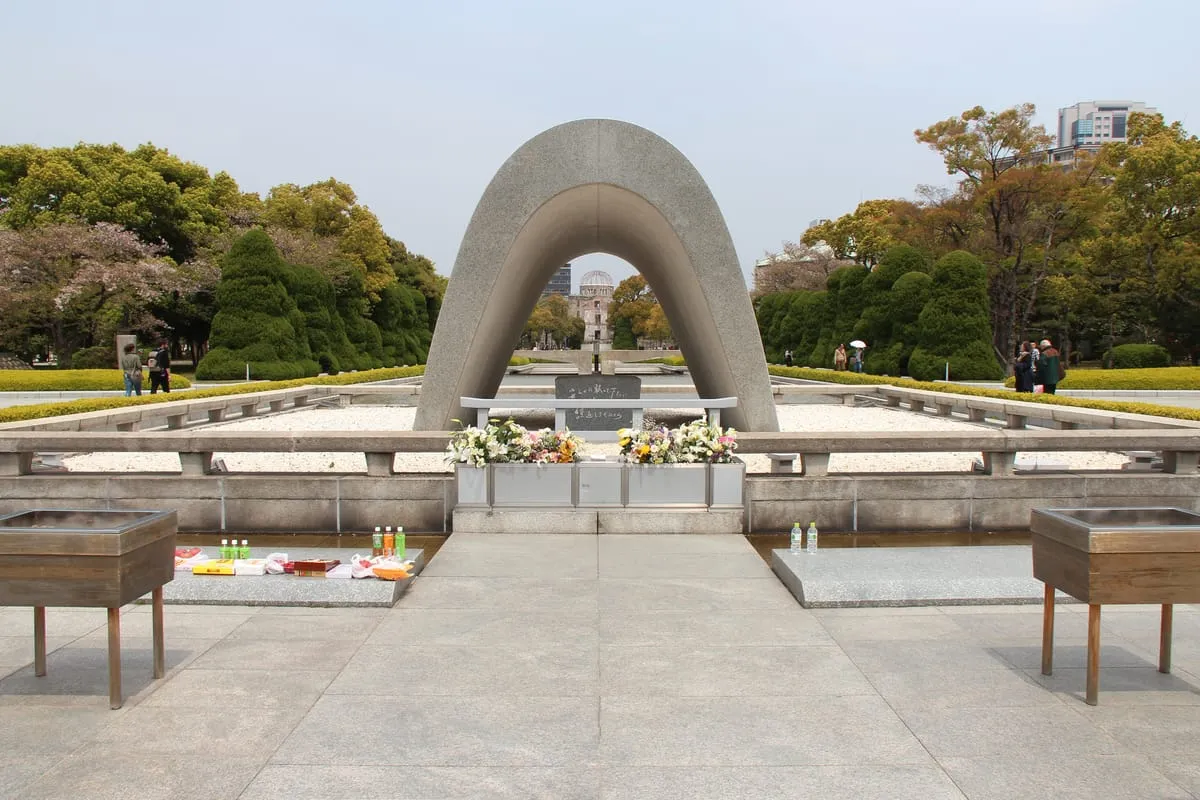
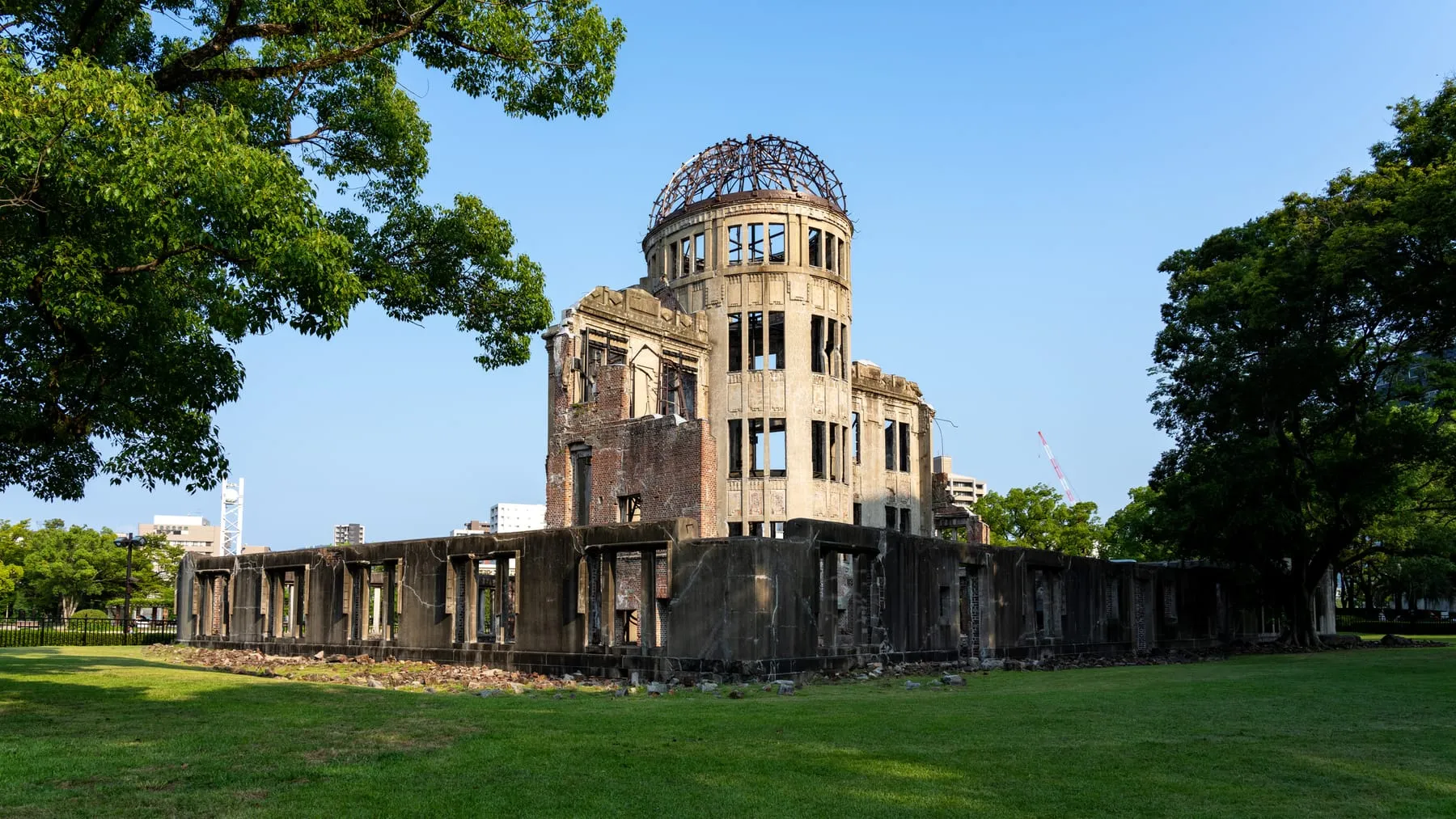
In the park. Line up the Cenotaph for the A-bomb Victims with the Peace Flame and the Atomic Bomb Dome, the ruin left standing near the hypocenter, which you view from outside its fence. The Children’s Peace Monument and the Hiroshima National Peace Memorial Hall for the Atomic Bomb Victims are a few minutes’ walk apart.
Getting there. From Hiroshima Station, take streetcar Line 2 (for Miyajima) or Line 6 (for Eba) to Genbaku Dome-mae, about 25 minutes, or bus 24 to Heiwa Kinen Koen, about 20 minutes, according to the museum.
If you’d like someone to explain the history as you walk, the private Hiroshima Peace Park tour with a licensed guide is tailored to your group and pace.
How to get from Hiroshima to Miyajima
You have two good options, and many people use one each way.
| Route | Time | Fare one way | Pass coverage |
|---|---|---|---|
| JR train to Miyajimaguchi, then JR ferry | About 25 min + 10 min ferry | ¥420 + ¥180 | Covered by the Kansai-Hiroshima Area Pass and the Japan Rail Pass |
| World Heritage Sea Route boat from the Peace Park | 45 min | ¥2,400 ($15), ¥4,400 round trip | Not covered |
| Streetcar Line 2 to Hiroden-Miyajimaguchi, then ferry | Slower than the train | ¥240 + ferry | Not covered |
The train-and-ferry route is the cheapest, especially with a pass: the JR Miyajima ferry costs ¥180 for adults and accepts IC cards. The direct boat leaves from the riverbank next to the Peace Park and saves a trip back to the station. Aqua Net’s World Heritage Sea Route timetable shows 17 departures a day, from 8:30 am to 5:10 pm, with the last boat back from Miyajima at 5:30 pm.
Every visitor to Miyajima pays a ¥100 visitor tax per trip, collected when you arrive, on top of the ferry fare. Preschool children are exempt.
What to see on Miyajima in an afternoon
Miyajima, officially Itsukushima, is a short island hop with three things to plan around.
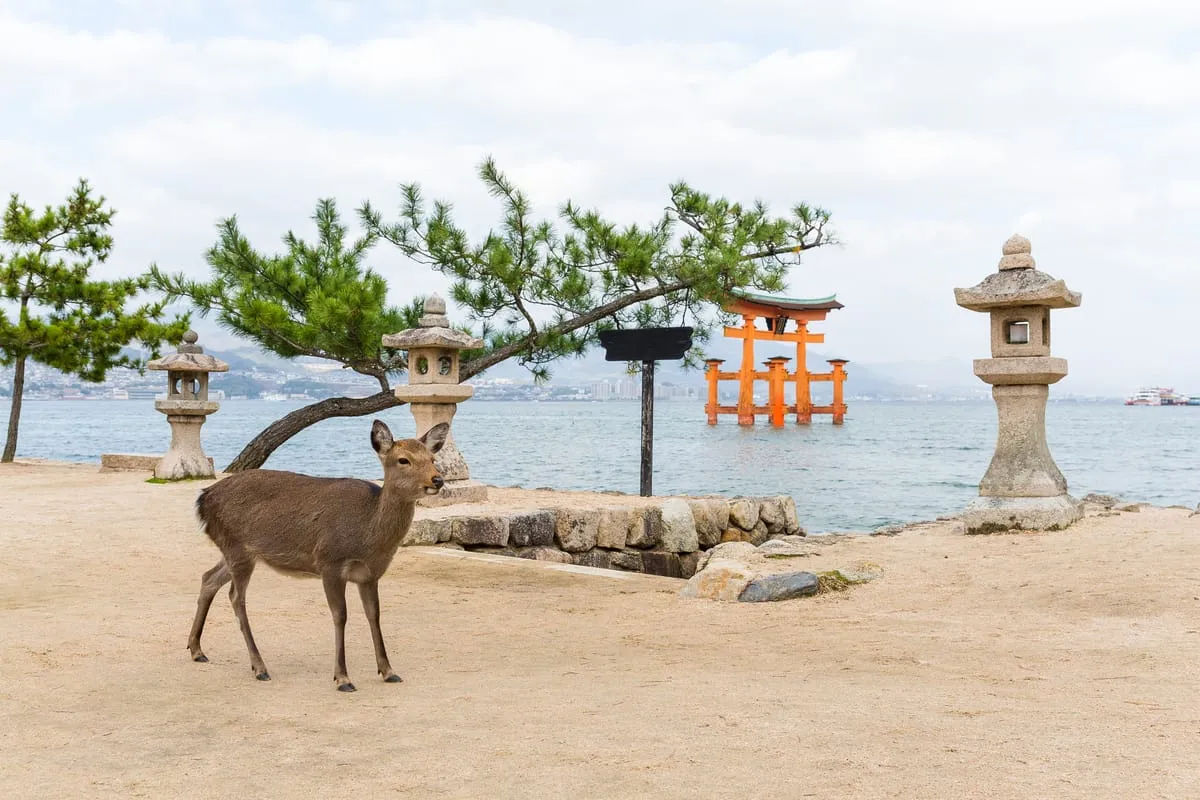
Itsukushima Shrine. The shrine is built over the water, and its vermilion torii gate stands in the sea. Admission costs ¥300 (about $2), or ¥500 with the Treasure Hall. The shrine opens at 6:30 am and closes at 6 pm from March 1 to October 14, 5:30 pm from October 15 to November 30, 5 pm in December and 5:30 pm in January and February, according to its admission page.
The tide. The gate looks like it’s floating only at high tide. At low tide the water pulls back and you can walk out on the sand to its base. Check a tide table for your date and, if one view matters more to you, swap the order of your day.
The deer and Omotesando. Deer wander freely near the ferry pier and the shrine. Omotesando, the covered shopping street, is the place for grilled oysters and momiji manju, maple-leaf cakes with a sweet filling.
Should you take a tour instead?
Take a tour if you want one booking to cover the trains, the guide and the timing; go on your own if you’d rather set your own pace and save money. We compared the most-booked Hiroshima and Miyajima tours on Viator in October 2026:
| Tour | Starts from | What’s handled | Best for |
|---|---|---|---|
| Bus tour with shinkansen tickets | Shin-Osaka, Kyoto, Hakata or Hiroshima | Round-trip bullet train, bus, guide, Miyajima ferry | A hands-off day from Osaka or Kyoto |
| 1-day bus tour with lunch | Hiroshima | Bus and lunch | Travelers sleeping in Hiroshima |
| Private tour with a licensed guide | Hiroshima | A guide for your group only | Families and history-focused visits |
| Hiroshima and Miyajima by bike and boat | Hiroshima | Bike, boat, small group | Active travelers |
Which to book
- Best from Osaka or Kyoto: the Hiroshima and Miyajima tour with round-trip shinkansen tickets. Staff hand you your train tickets at Shin-Osaka or Kyoto Station, and a guide takes over in Hiroshima, so you never touch a ticket machine. It costs more than doing it yourself with the pass, and you follow the group’s schedule.
- Best if you’re staying in Hiroshima: the Hiroshima and Miyajima bus tour with lunch, from the same operator, without the train.
- Best for a family or a slower pace: the private Hiroshima and Miyajima tour with a licensed guide. The listing notes additional fees, so check whether transport and admissions are included in your option.
- Best for something different: the bike and boat tour pairs a bike ride with a boat trip in a small group.
Should you stay overnight instead?
Stay a night if you can. It turns a rushed day into an easy one: Peace Park in the afternoon, an evening in the city, and Miyajima first thing the next morning before the day-trippers arrive. The Sheraton Grand Hiroshima Hotel is connected to Hiroshima Station, which makes a one-night stop with luggage simple, and it earns Marriott Bonvoy points. If you book and collect rewards on Expedia, the Hotel Granvia Hiroshima is about a 3-minute walk from Hiroshima Station, according to its Expedia listing. Our 2-week Japan itinerary builds Hiroshima in as exactly that kind of one-night stop between Kyoto and Osaka.
Practical tips for the day
- Stay connected. You’ll want maps, train times and the tide table on your phone, and US carriers’ international day passes add up over a week in Japan. A Japan eSIM from Airalo is installed before you fly; use code GUIDEZ15 at checkout if you’re new to Airalo, or GUIDEZ10 if you’ve bought from them before. Our Japan eSIM vs pocket WiFi comparison runs the numbers.
- Public Wi-Fi. Stations and hotels have free Wi-Fi; if you book trains or check your bank on it, a VPN such as Surfshark keeps the connection private; our Surfshark guide for travelers shows how to test it at home first.
- Pay with an IC card. A rechargeable IC card such as ICOCA works on JR local trains and the JR Miyajima ferry. US credit cards work at JR ticket offices and most shops, but carry some yen for small food stalls.
- No tipping. Tipping isn’t customary in Japan, in restaurants or on tours.
- Leave luggage at the station. If you’re moving on after the trip, lockers at Hiroshima Station save hauling bags around the park, where large bags aren’t allowed in the museum.
Basing yourself in Kansai? Our 3-day Kyoto itinerary and 2 days in Osaka guide show where a Hiroshima day fits, and the Nara day trip guide is a good use of a second day on the pass. To find restaurants and places to stay along the way, browse creator-made travel maps on Guidez. Then lock in the ride: the Kansai-Hiroshima Area Pass if you’re going on your own, or the Hiroshima and Miyajima tour with bullet train tickets if you’d like it all arranged.