A Nara day trip from Kyoto takes about 45 minutes each way on the JR Miyakoji Rapid (¥720, about $5), and from Osaka-Namba about 40 minutes on Kintetsu (¥680, about $4). Half a day covers Kofuku-ji, the deer of Nara Park, Todai-ji’s Great Buddha (¥800) and Kasuga Taisha if you arrive by 9 am, or book the Nara early morning tour from Kyoto or Osaka.
Kintetsu also runs from Kyoto in 35 to 45 minutes. Timing matters more than the train: tour groups pour in from mid-morning. The early morning tour meets you at the station, includes your one-way train ride to Nara and reaches the park ahead of the crowds.
How do I get from Kyoto to Nara?
Take the train from Kyoto Station: the JR Miyakoji Rapid (about 45 minutes, ¥720) if you hold a Japan Rail Pass, or Kintetsu (35 to 45 minutes, from ¥760), which stops closer to the sights, if you don’t. Times and fares below are from japan-guide.com’s Nara access page, checked October 2026; fares change, so treat them as a guide.
| Train | Time | One-way fare | Arrives at | Japan Rail Pass |
|---|---|---|---|---|
| JR Miyakoji Rapid | about 45 min, every 30 min | ¥720 (about $5) | JR Nara Station, about 20 min walk to the park | Covered |
| JR local train | about 75 min | ¥720 (about $5) | JR Nara Station | Covered |
| Kintetsu express | about 45 min | ¥760 (about $5) | Kintetsu-Nara Station, about 8 min walk to the park | Not covered |
| Kintetsu limited express | about 35 min | ¥1,280 (about $8), reserved seat | Kintetsu-Nara Station | Not covered |
Which to take: without a rail pass, take Kintetsu. It costs about the same as JR and drops you underground on the edge of Nara Park, a few minutes from Kofuku-ji, while JR Nara Station is a 15 to 20 minute walk or a loop-bus ride from the sights. With a Japan Rail Pass, take the JR Miyakoji Rapid and the ride is free. Some Kintetsu express connections need a change at Yamato-Saidaiji, so check the departure board.
The JR Nara Line also stops at Uji, home of the Byodo-in temple and Kyoto’s matcha shops, so you can break the return trip there. Our 3 days in Kyoto itinerary shows where Nara fits if you’re swapping out a Kyoto day.
How do I get from Osaka to Nara?
From Osaka, the station you start at decides the train:
- From Namba (Dotonbori side): Kintetsu. The Kintetsu rapid express runs from Osaka-Namba to Kintetsu-Nara in about 40 minutes for ¥680 (about $4), according to several 2025 and 2026 route guides. Limited express trains are a few minutes faster but add a seat charge.
- From Umeda or Osaka Station: JR. The JR Yamatoji Rapid runs from Osaka Station to JR Nara in about 50 minutes for about ¥820 (about $5), and the Japan Rail Pass covers it.
If you’re based in Osaka, our 2 days in Osaka itinerary has a version of day 2 that swaps in a morning in Nara. Saving another Osaka day for the theme park? Our Universal Studios Japan tickets guide explains dated prices and Super Nintendo World entry.
Paying for the train
Suica and ICOCA cards work on trains and buses in Nara, so you can tap in at Kyoto or Osaka and tap out at Nara. Kintetsu also lists contactless payment cards as a valid basic fare, so a tap-to-pay US card can work at its gates; limited express trains need a separate seat ticket either way.
Is the Kintetsu Rail Pass worth it? Usually not for a simple day trip. The 1-day pass costs ¥1,900 (about $12), covers Kintetsu trains between Osaka, Kyoto and Nara plus Nara Kotsu buses out to Horyu-ji, and excludes limited express charges, per Kintetsu. A round trip from Kyoto on the express costs ¥1,520 and one from Osaka-Namba ¥1,360. The pass pays off only if you add Horyu-ji or several bus rides.
A one-day Nara itinerary that beats the crowds
Nara’s main sights sit in and around Nara Park, so you can walk the whole route. Start at Kintetsu-Nara Station and finish in Naramachi for a late lunch, or reverse it if you arrive after 11 am. Prices are the official adult rates, checked October 2026.
| Time | Stop | Entry | Good to know |
|---|---|---|---|
| 8:00 am | Kofuku-ji | Grounds free; halls ¥500 each, museum ¥900, all three ¥1,600 | 5 minutes on foot from Kintetsu-Nara. Halls open 9 am to 5 pm. Cash only |
| 8:30 am | Nara Park and the deer | Free; crackers about ¥200 | The deer roam everywhere between Kofuku-ji and Todai-ji |
| 9:00 am | Todai-ji, Great Buddha Hall | ¥800 (about $5); with the museum ¥1,200 | Opens 7:30 am (Apr to Oct) or 8 am (Nov to Mar) |
| 10:30 am | Nigatsu-do | Free | Uphill behind the Great Buddha Hall, with a view over Nara |
| 11:30 am | Kasuga Taisha | Grounds free; inner main sanctuary ¥700 (about $4) | Inner sanctuary 9 am to 4 pm |
| 1:00 pm | Naramachi | Free | Old merchant streets for lunch, 10 to 15 minutes south of Kintetsu-Nara |
Kofuku-ji
Kofuku-ji is the temple you meet first, right above Kintetsu-Nara Station. Its grounds are free to walk through. Inside, the National Treasure Museum (¥900, about $6) holds the temple’s famous statues, and the rebuilt Central Golden Hall and the Eastern Golden Hall cost ¥500 each; a combined ticket for all three costs ¥1,600 (about $10), and is sold until 4 pm, per Kofuku-ji’s admission page. Don’t plan around the five-story pagoda: it’s covered for long-term repairs, and the Nara City Tourism Association says it can’t be seen from outside.
Todai-ji and the Great Buddha
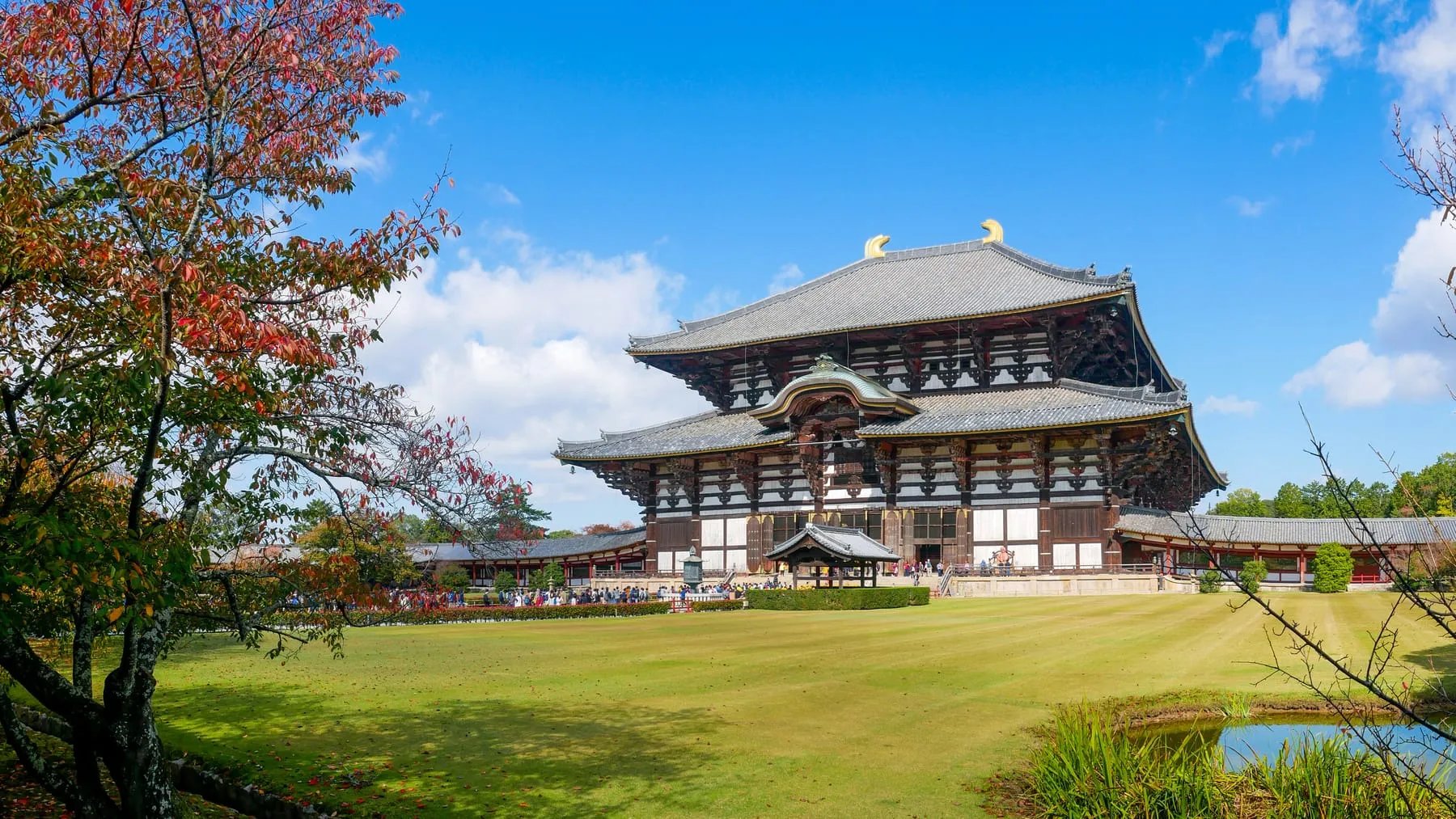
Todai-ji is the reason most people come. The Great Buddha Hall holds a seated bronze Buddha about 49 feet (15 meters) tall, and you walk in through the Nandaimon gate, guarded by two carved Nio statues. Inside, look for the wooden pillar with a hole at its base said to be the size of the Buddha’s nostril. Squeeze through it and, so the story goes, you’ll reach enlightenment in your next life, which is why there’s usually a line of children waiting.
According to Todai-ji, the Great Buddha Hall opens 7:30 am to 5:30 pm from April to October and 8 am to 5 pm from November to March. Adults pay ¥800 (about $5) and children 6 to 12 pay ¥400. A combined ticket with the Todai-ji Museum costs ¥1,200 (about $8), and an audio guide rents for ¥500 just past the gate. The Hokke-do and Kaidan-do halls charge the same ¥800 each, so most day-trippers stop at the Great Buddha. From Kintetsu-Nara it’s a 15-minute walk.
Afterward, climb the lanes to Nigatsu-do, a hillside hall of Todai-ji with a wooden veranda that looks over the city. It’s free and always open.
Kasuga Taisha
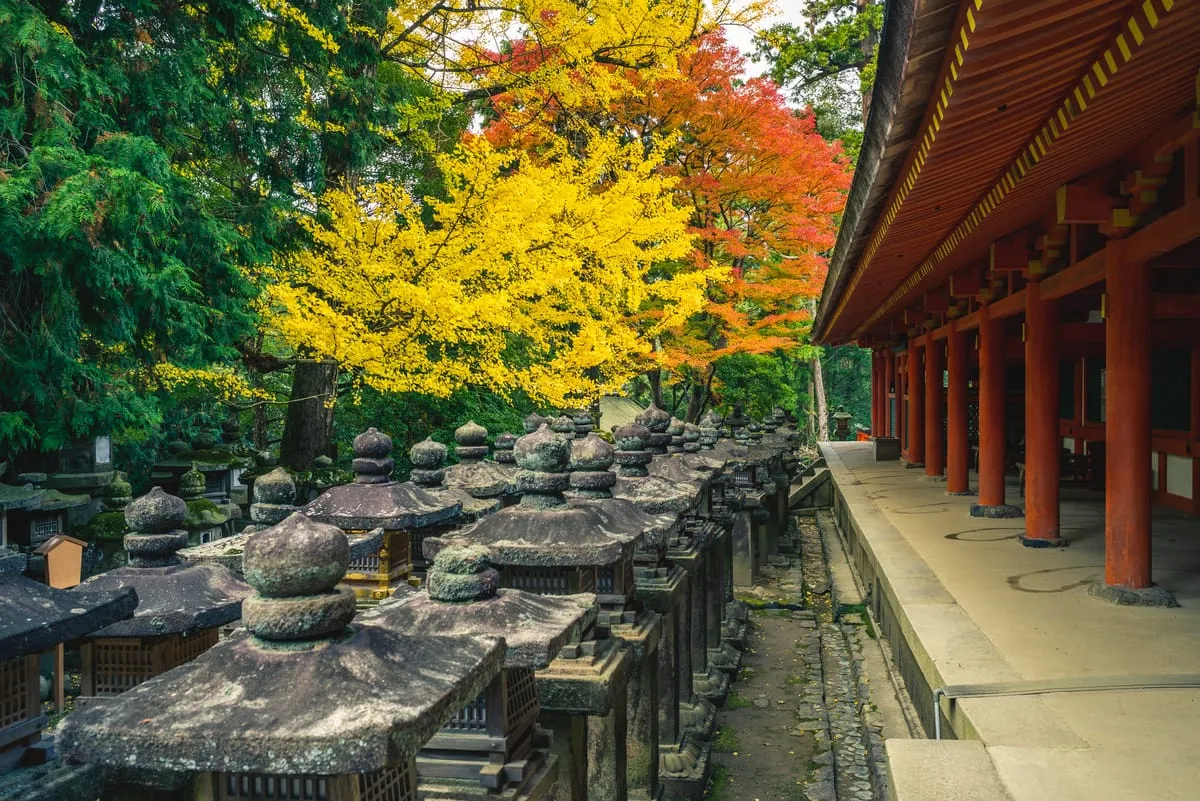
Kasuga Taisha is a shrine of vermilion halls on the forested edge of the park, reached by a path lined with moss-covered stone lanterns. The grounds open 6:30 am to 5:30 pm from March to October and 7 am to 5 pm from November to February. The inner area around the main sanctuary, where bronze lanterns hang from the corridors, costs ¥700 (about $4) and opens 9 am to 4 pm, per Kasuga Taisha. If your legs are done after Todai-ji, buses run to the Kasuga Taisha Honden stop from both stations.
How to visit the Nara deer without getting bitten
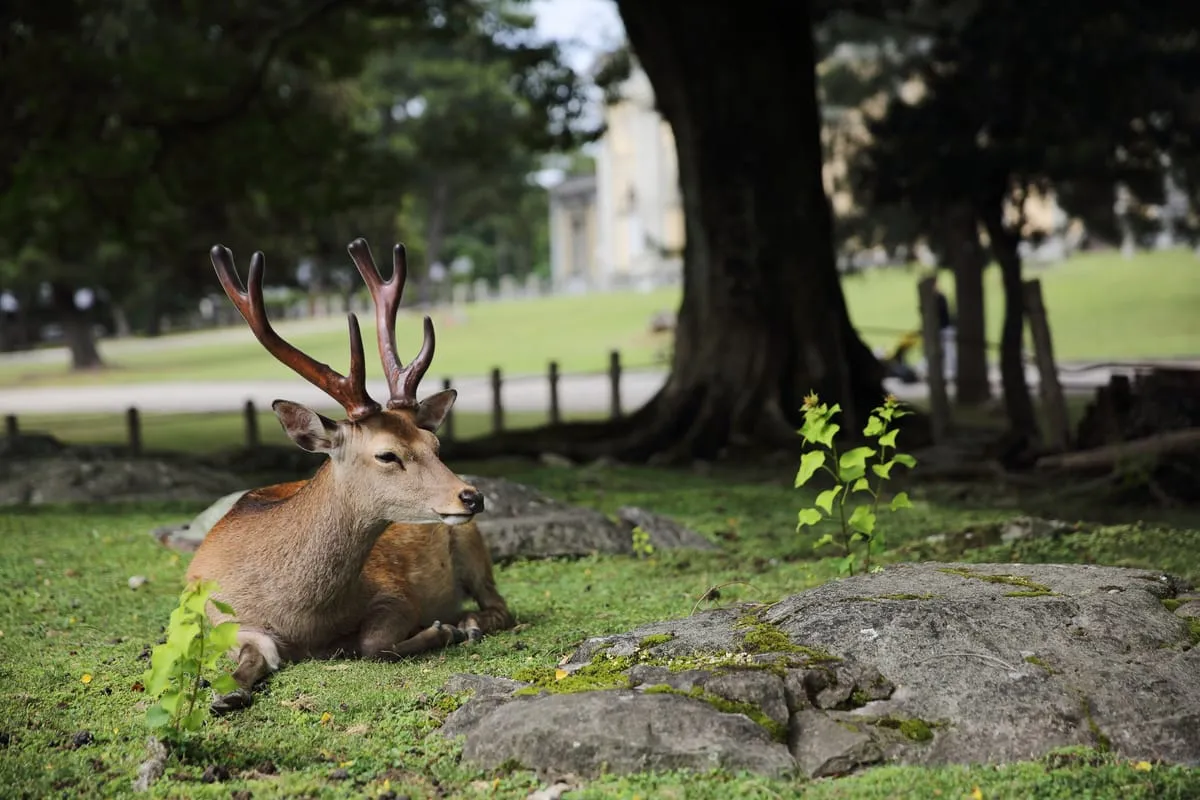
Nara Park is home to about 1,465 sika deer, the count from the July 2025 survey reported by Nippon.com, and they wander freely between the temples. They’re wild, and used to people with food. A few rules keep the visit fun:
- Feed them only deer crackers (shika senbei), sold by vendors around the park for about ¥200 a stack. Human food makes them sick, and the Nara City Tourism Association lists over-feeding and swallowed litter among the park’s problems.
- Keep crackers out of sight until you’re ready to hand them out. Deer that spot a stack will push, tug at bags and nip at hands.
- Show your empty hands when you’re done. Many deer bob their heads at visitors, and a bow back is half the fun.
- Stay away from stags in the breeding season in fall, and from mothers with young fawns.
Is a guided Nara tour worth it?
Doing Nara on your own is easy and cheap: from Kyoto on JR, a round trip, Todai-ji and Kasuga Taisha’s inner sanctuary come to about ¥2,940 (about $19) per adult. A tour costs more, so it has to give you something the DIY day doesn’t. It’s worth it if:
- You want to beat the crowds without planning it. An early-start tour gets you to Todai-ji before the coaches.
- You want the stories. Nara was Japan’s capital in the 8th century, and a guide makes the temples and statues make sense.
- You’re traveling with kids or parents and want someone else to handle trains, buses and deer.
Skip it if you’re comfortable on Japanese trains and happy reading signs: the route above is simple to follow on your own.
Nara tours compared
We compared popular Nara tours on Viator in October 2026. Check each listing for what’s included, since temple entry is sometimes extra.
| Tour | Starts from | Length | What’s included | Best for |
|---|---|---|---|---|
| Nara early morning tour | Kyoto Station, JR Osaka Station or Kintetsu-Nara | About 4.5 hours (3.5 from Nara) | Guide, one-way train fare to Nara from Kyoto or Osaka | Beating the crowds |
| Nara half-day walking tour (Magical Trip) | Kintetsu-Nara Station | About 5 hours | Guide, Kofuku-ji, Todai-ji, Kasuga Taisha and lunch | A full guided loop with lunch |
| Customized private Nara day trip | Kyoto or Osaka | Full day | Licensed private guide | Families and custom routes |
| Kyoto and Nara day trip | Osaka or Kyoto | Full day | Coach, guide, optional lunch | Seeing both cities in one day |
Which tour to book
- Best overall: the Nara early morning tour from Kyoto or Osaka meets you at Kyoto Station or JR Osaka Station, includes the one-way train fare and starts early. One listing excludes Todai-ji’s ¥800 entry, so bring yen for the gate.
- Best with lunch: the Nara half-day walking tour starts at Kintetsu-Nara Station and walks Kofuku-ji, Todai-ji and Kasuga Taisha with a stop for lunch. Choose the private option if you want your own guide.
- Best for families: the customized private Nara day trip with a licensed guide is built around your group’s pace, so you can spend longer with the deer and skip the halls the kids won’t sit through.
- Best if you only have one day for Kyoto too: the Kyoto and Nara day trip from Osaka or Kyoto covers highlights of both cities by coach. It’s a long, fast day, so expect less time in Nara.
- Best for comparing everything else: the full list of Nara tours on Viator lets you filter by length, start point and price.
Should you stay overnight in Nara?
Most people don’t, but a night in Nara gives you the park at dawn and an empty Todai-ji approach in the evening, after the day-trippers have caught their trains. If you collect Marriott Bonvoy points, the JW Marriott Hotel Nara sits near JR Nara Station, has an indoor pool and spa, and puts you on the JR line for Kyoto and Osaka the next morning. It also works as a stop between Kyoto and Osaka if you move cities on the same day.
Tips for your Nara day trip
- Bring cash. Kofuku-ji takes cash only, and the deer-cracker vendors want coins. Convenience-store ATMs usually accept US debit cards.
- Wear walking shoes. The loop from Kofuku-ji to Todai-ji, Nigatsu-do and Kasuga Taisha covers a few miles, partly uphill on gravel paths.
- Keep your phone online. You’ll use maps, train apps and translation all day, and US carriers’ day passes add up: Verizon’s TravelPass and AT&T’s International Day Pass cost $12 a day per line. An Airalo eSIM for Japan is set up before you fly; use code GUIDEZ15 at checkout if you’re new to Airalo, or GUIDEZ10 if you’ve bought from them before. Our Japan eSIM vs pocket Wi-Fi comparison runs the numbers.
- Check your rail pass math. A Kyoto to Nara round trip is only ¥1,440, so it won’t make a Japan Rail Pass pay off by itself. If you’re riding the shinkansen too, our Japan Rail Pass break-even guide shows when the pass wins, and you can buy the 7, 14 or 21-day Japan Rail Pass on GetYourGuide.
- Visit on a weekday. Weekends and Japanese school holidays bring the biggest crowds.
If you’re booking one thing for Nara, make it the Nara early morning tour: a guide, your train ride from Kyoto or Osaka and an early start in one booking. Fitting Nara into a longer trip? Our 2-week Japan itinerary places it on day 10, between Kyoto and Hiroshima (our Hiroshima and Miyajima day trip guide covers that next stop), and if your trip starts in Tokyo, our guide to where to stay in Tokyo picks the right neighborhood. For restaurants, cafés and hotels around Kyoto and Osaka, browse creator-made travel maps on Guidez.