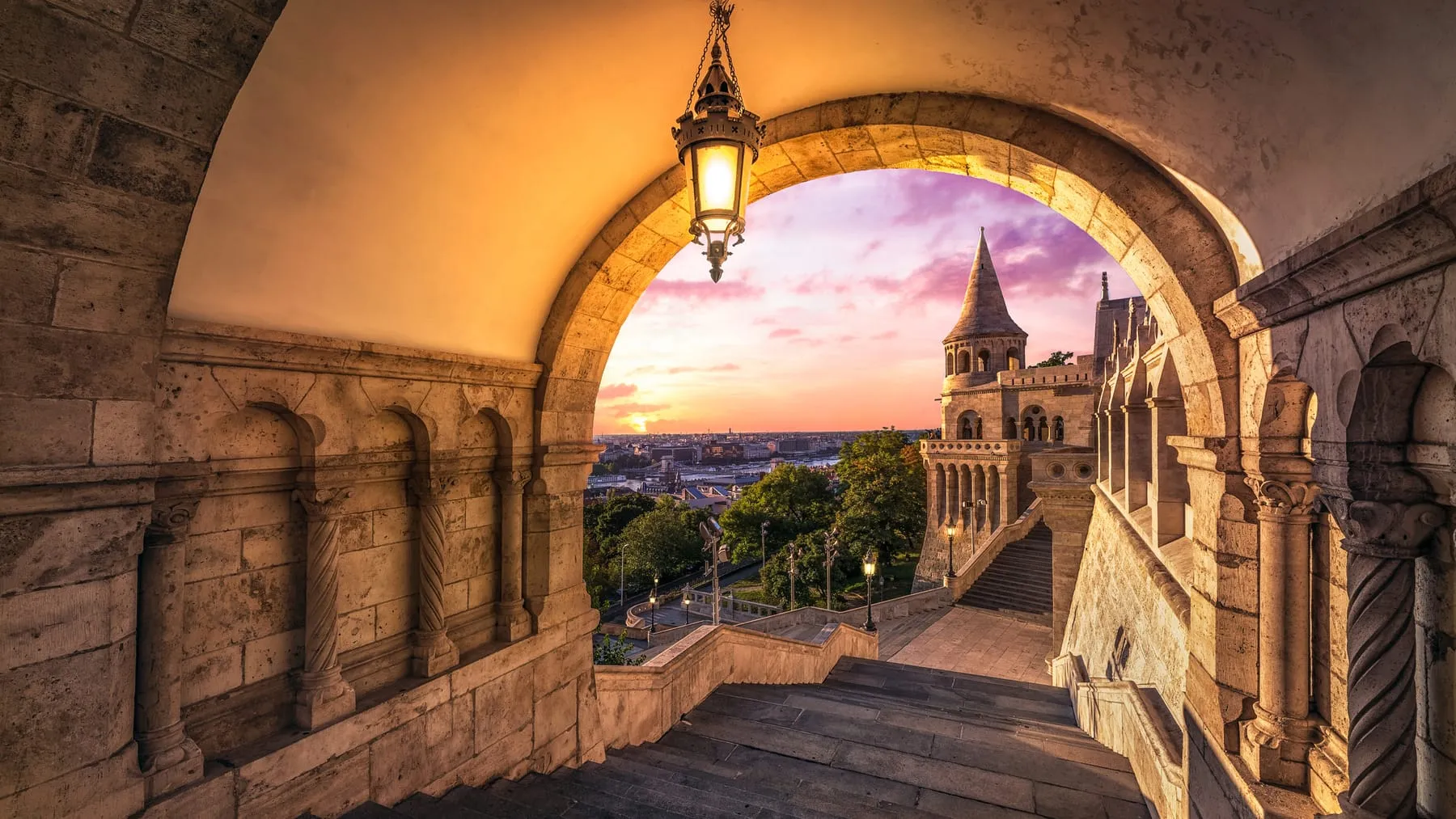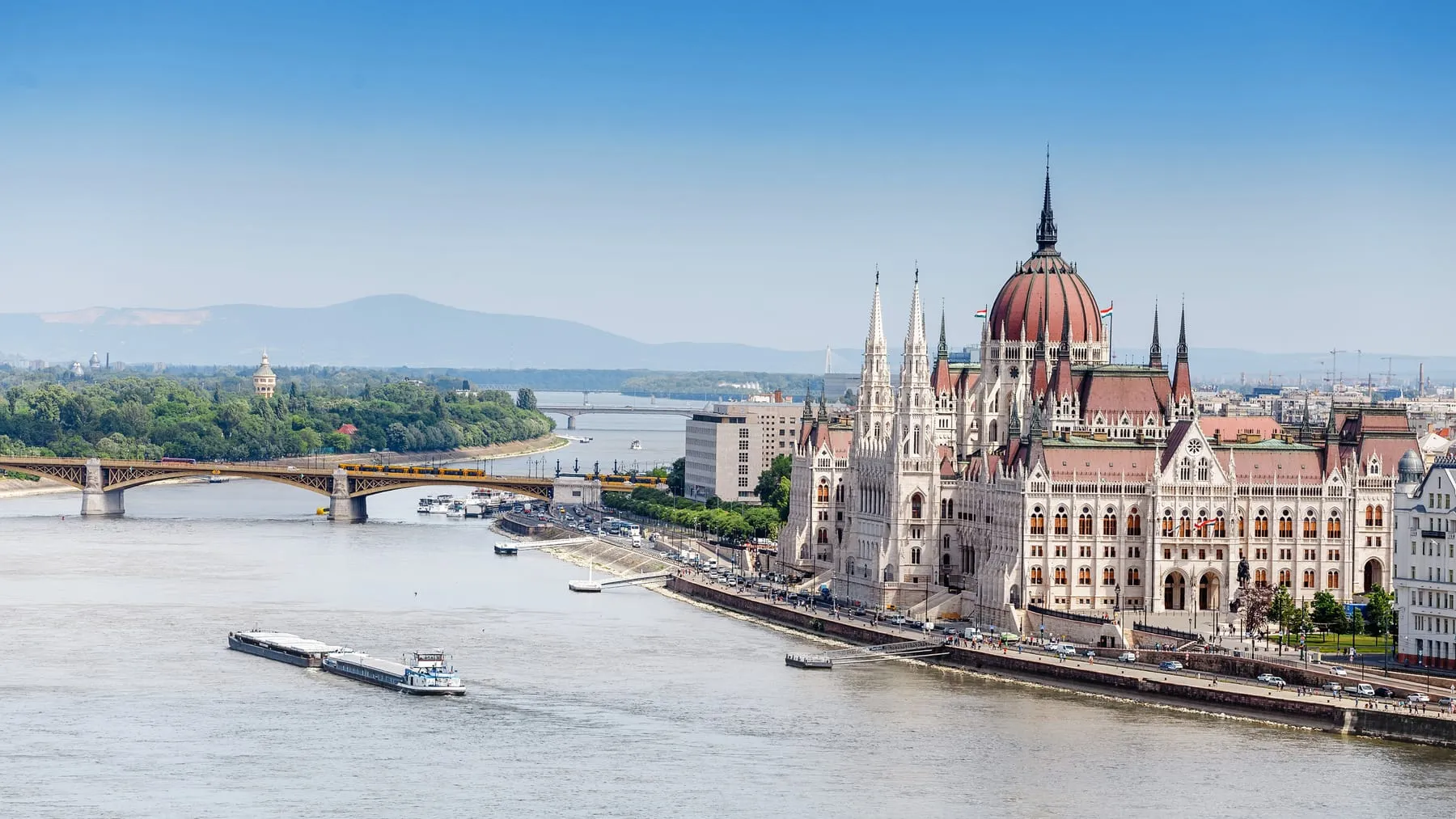
The classic Prague, Vienna and Budapest itinerary takes 8 days: 3 nights in Prague, 2 in Vienna and 3 in Budapest, linked by two direct trains that cost about €28 (about $31) together when booked early. Book the first leg as soon as your dates are set, because the cheap advance fares go first: compare Prague to Vienna trains on Omio.
Prague to Vienna takes just over 4 hours and Vienna to Budapest about 2 hours 40 minutes. Omio lists the Railjet, Czech Railways and RegioJet departures side by side. We checked fares, timetables and ticket prices in October 2026. Dollar figures use the European Central Bank’s October 30, 2026 rates: €1 = $1.11, $1 = 21.8 Czech koruna (CZK) and $1 = 328 Hungarian forint (HUF).
The Prague, Vienna and Budapest itinerary at a glance
The 8-day version below gives each city enough time for its big sights plus one slow evening. The 7-day and 10-day versions trim or add a day at the edges.
| Days | 7-day trip | 8-day trip (our pick) | 10-day trip |
|---|---|---|---|
| Prague | Days 1-2 (2 nights) | Days 1-3 (3 nights) | Days 1-4 (4 nights, incl. a day trip) |
| Train to Vienna | Day 3 morning | Day 4 morning | Day 5 morning |
| Vienna | Days 3-4 (2 nights) | Days 4-5 (2 nights) | Days 5-7 (3 nights) |
| Train to Budapest | Day 5 morning | Day 6 morning | Day 8 morning |
| Budapest | Days 5-6 (2 nights, fly home day 7) | Days 6-8 (3 nights, fly home day 9) | Days 8-10 (3 nights, fly home day 11) |
Count nights rather than days when you book hotels: the 8-day plan is 8 nights on the ground, and each train day still leaves you most of an afternoon in the new city. The 7-day plan drops a night in Prague and one in Budapest, which is tight but works if you skip the day-3 extras.
Which order: start in Prague or Budapest?
Start in Prague and finish in Budapest. The route works in either direction, but this way the longer 4-hour train ride comes first, while you’re fresh, and the trip ends with Budapest’s thermal baths, which is the best possible cure for a week of cobblestones.
Whichever way you go, book an open-jaw flight: into Prague, home from Budapest (or the reverse). Search it as a “multi-city” trip on any airline site. It saves you a long backtrack at the end. Prague and Budapest are about 610 km (379 miles) apart by rail, and the direct trains between them run every two hours via Bratislava.
How do you get from Prague to Vienna and Budapest by train?
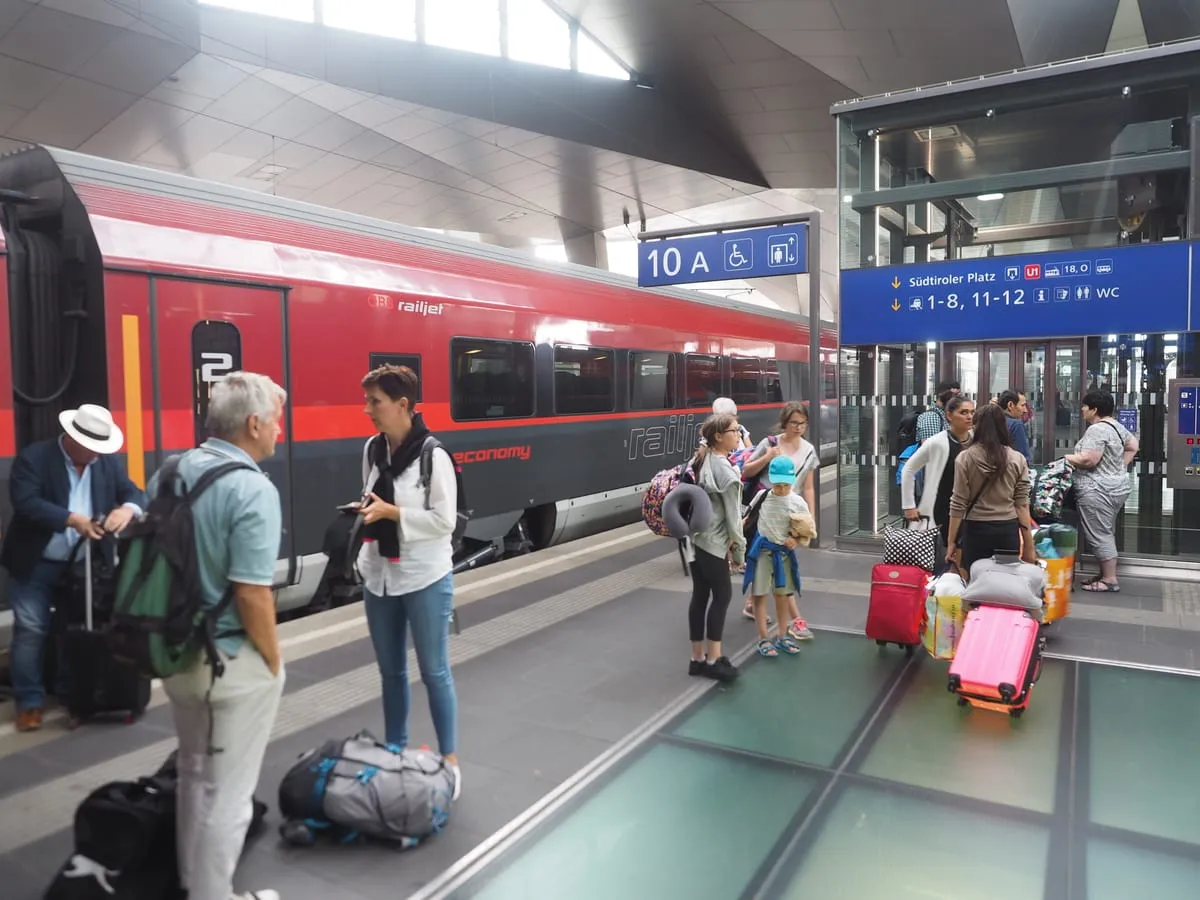
Take two direct trains: just over 4 hours from Prague to Vienna, then about 2 hours 40 minutes on to Budapest. Both legs are fast and cheap if you book ahead. These are the options we compared in October 2026, from ÖBB’s route pages and the Man in Seat 61’s guides to Prague-Vienna and Vienna-Budapest.
| Route | Time | Trains | Stations | Cheapest advance fare | Flexible fare |
|---|---|---|---|---|---|
| Prague to Vienna (Railjet/ComfortJet, ÖBB and Czech Railways) | Just over 4 hours | 9 a day, about every 2 hours | Praha hlavní nádraží (some from Holešovice) to Wien Hauptbahnhof | €14.90 (about $17) | €59 to €88.40 (about $65 to $98) |
| Prague to Vienna (RegioJet) | About 4h20 | 4 a day | Praha hlavní nádraží to Wien Hauptbahnhof | €14.90 (about $17) | All fares refundable; Standard class from €19.90 (about $22) |
| Vienna to Budapest (Railjet/EuroCity, ÖBB and MÁV) | About 2h40 | About 20 a day, hourly | Wien Hauptbahnhof to Budapest Keleti | €13 (about $14) | €52.70 (about $58) |
| Vienna to Budapest (RegioJet) | Similar | 4 a day | Wien Hauptbahnhof to Budapest Déli | €9 (about $10) | All fares refundable; Standard class from €11.90 (about $13) |
Fares change daily and the cheapest ones sell out first, so treat these as the floor. To see live prices for your date, search Vienna to Budapest trains on Omio alongside the Prague leg.
Which train ticket should you book?
- Best value: the earliest Railjet or RegioJet advance fare you can get, booked weeks ahead. ÖBB sells its Sparschiene saver fares up to 6 months before travel, with a fixed number per train.
- Best if your plans might change: RegioJet. Its tickets can be changed or canceled in the app up to 15 minutes before departure, and every ticket includes a reserved seat. ÖBB’s Sparschiene fares are valid only on the train you booked and can’t be refunded.
- Best for comfort: Railjet first or business class, from €29.90 and €44.90 on the Prague leg. The 4-hour ride is long enough to make the bigger seat worth it.
On Railjets a seat reservation is optional and costs about €3. Add it in summer and on Friday and Sunday afternoons, when trains between the capitals fill up and standing for 4 hours is no fun.
Our verdict: book both legs together, as soon as your hotel dates are fixed. You can compare every operator for both legs on Omio and keep the tickets in one app on your phone. For more ways to cut rail costs, see our cheap train tickets in Europe hacks.
Is a rail pass worth it for this trip?
No. With only two train legs, point-to-point tickets win easily: about €28 (about $31) for both if booked early, and €112 to €141 (about $124 to $157) even if you buy fully flexible tickets on the day. A multi-country rail pass costs more than that before you’ve reserved a single seat. A pass only starts to make sense if you’re adding several more countries, as in our 2-week Europe itinerary by train.
Days 1-3: Prague
Prague rewards early starts: the Charles Bridge and Prague Castle are at their calmest before 9 am, and packed by midday.
- Day 1: Old Town and the Charles Bridge. Old Town Square and the Astronomical Clock, the lanes of the Jewish Quarter (Josefov), then cross the Charles Bridge at sunset to Malá Strana for dinner.
- Day 2: Prague Castle and Malá Strana. Spend the morning in the castle complex: St. Vitus Cathedral, the Old Royal Palace, St. George’s Basilica and Golden Lane. Walk down through Malá Strana in the afternoon.
- Day 3: Your choice. Vyšehrad and the riverside, Petřín Hill, or a beer hall lunch and the National Museum. Our Prague on a budget guide lists the free sights and cheap eats.
Prague Castle tickets: the main circuit (cathedral, Old Royal Palace, St. George’s Basilica and Golden Lane) costs CZK 450 (about $21) for adults and CZK 300 (about $14) reduced, according to the castle’s official price list. Tickets are valid for two days, but each building can be entered only once, and tickets can’t be refunded.
The castle complex is big and its history is the point, so a guide earns their fee here. The 2.5-hour Prague Castle tour with admission included covers the main circuit with a guide and has won Viator’s Experience Award three years running. If you’d rather go at your own pace with just your group, this 3-hour private Prague Castle walking tour is the alternative.
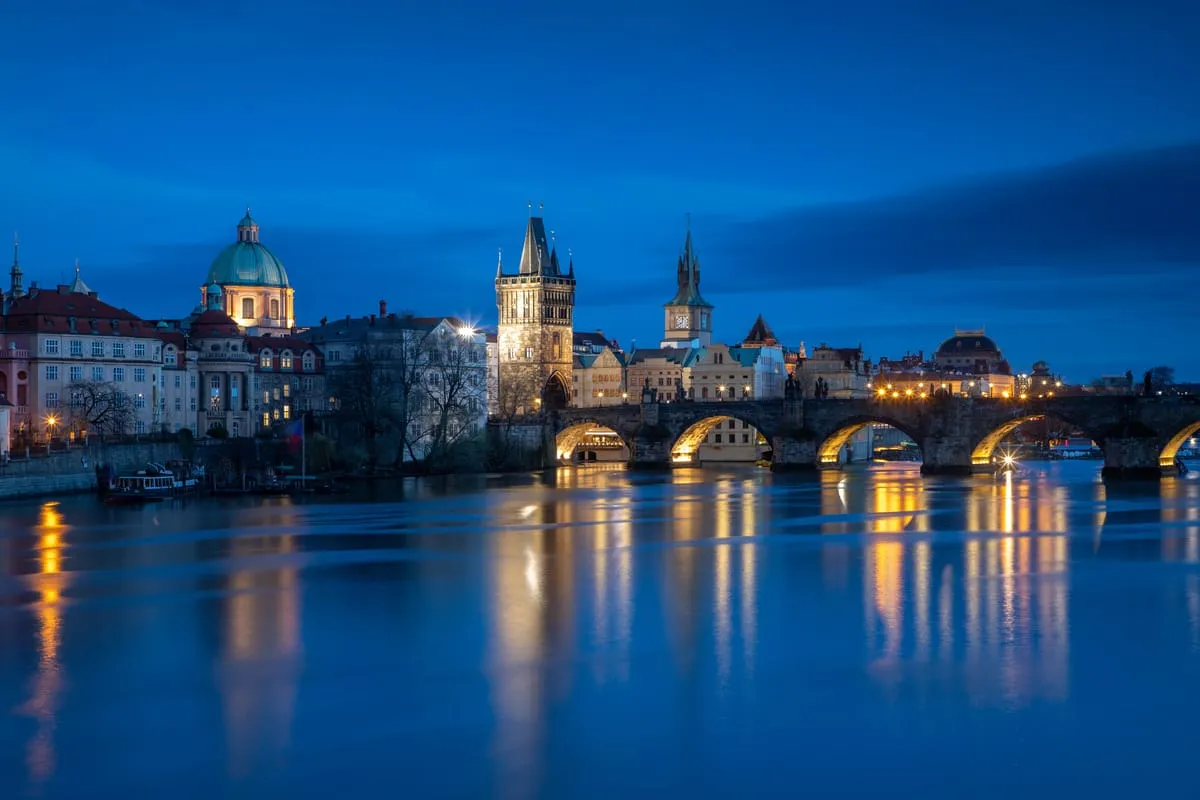
Where to stay in Prague: the Old Town or the edge of the New Town, so you can walk to the sights and take a short taxi or tram to the main station on train day. For Hilton Honors members, Hilton Prague Old Town is about a 10-minute walk from Old Town Square and has an indoor pool. Arriving by air? Our Prague airport to city center guide compares the bus, the airport express and a transfer.
Days 4-5: Vienna
Take a morning train from Prague and you’ll reach Wien Hauptbahnhof around lunchtime, with the afternoon free for the old town.
- Day 4: The old town (Innere Stadt). St. Stephen’s Cathedral, the Graben and the Hofburg, the Habsburgs’ winter palace. End with coffee and cake in a classic coffee house.
- Day 5: Schönbrunn and the Belvedere. Schönbrunn Palace in the morning, then Klimt’s The Kiss at the Upper Belvedere in the afternoon. In the evening, catch a concert or a standing-room ticket at the opera.
Schönbrunn tickets: the self-guided Palace Ticket, the longer of the two routes, costs €42 (about $47) for adults with an audio guide, and the shorter State Apartments ticket costs €30 (about $33), per Schönbrunn’s ticket page. Entry is by timed slot, so book before you arrive. For context and a guide, the skip-the-line Schönbrunn Palace and gardens guided tour includes palace entry and was the most-reviewed Schönbrunn tour we found on Viator. Our Schönbrunn Palace tickets guide compares every option.
Two days covers the highlights. Our 3-day Vienna itinerary has the full day-by-day plan, with prices for every sight, if you take the 10-day version of this trip.
Where to stay in Vienna: near the main station makes train days painless. Andaz Vienna Am Belvedere, a Hyatt hotel, is a few minutes’ walk from Wien Hauptbahnhof, where the Prague trains arrive and the Budapest trains leave, and the Belvedere’s gardens are next door. From the station, the U1 subway runs straight to St. Stephen’s.
Days 6-8: Budapest
The Vienna to Budapest train is short enough that a 9 am departure puts you at Budapest Keleti before noon.
- Day 6: Pest. St. Stephen’s Basilica, a walk along the Danube to the Shoes on the Danube Bank memorial and the Parliament, then a river cruise after dark.
- Day 7: Buda. The Castle District: Matthias Church, the Fisherman’s Bastion and the views over the river. Cross back to the Great Market Hall for lunch, and finish with a drink in the ruin bars of the old Jewish Quarter.
- Day 8: Thermal baths. Spend the morning at the Széchenyi Thermal Bath in City Park, then a slow last afternoon on Andrássy Avenue.
Parliament tickets: the Hungarian Parliament is visited on a guided tour of about 45 minutes, and from January 1, 2026, the ticket costs HUF 14,000 (about $43) for visitors from outside the European Economic Area, Americans included, per the Parliament’s price page. Several Parliament-only tours on Viator weren’t bookable when we checked in October 2026, so the easiest bookable way in is the Budapest half-day grand city tour with a Parliament visit, a 4-hour guided tour that also covers Heroes’ Square and Buda Castle before the tour inside the Parliament.
Széchenyi Bath: a daily ticket with a locker costs HUF 13,200 (about $40) Monday to Thursday and HUF 14,800 (about $45) on Fridays and weekends, per the bath’s price list. If you’d like the ticket on your phone before you get there, the Széchenyi Thermal Spa ticket on Viator costs more than the door price but is sorted before you arrive. Our Budapest thermal baths comparison weighs Széchenyi against Rudas and Lukács.
The Danube by night: the Parliament, the Chain Bridge and Buda Castle are all floodlit after dark, and an hour on the water shows you all of them. The Budapest Danube night cruise with a drink is the most-reviewed evening cruise we found on Viator, with more than 4,000 reviews, and includes commentary. Our Budapest Danube cruise guide compares night, day and dinner cruises.
Where to stay in Budapest: the Pest side, between the river and Deák Ferenc tér, puts you within walking distance of most sights. The Budapest Marriott Hotel sits right on the Pest riverbank facing Buda Castle, with river-view rooms, and is a short walk from the Chain Bridge and Vörösmarty tér. For a fuller plan, with prices for every sight, see our 3 days in Budapest itinerary, and for the ride out to your flight home, our Budapest airport to city center guide.
How to stretch it to 10 days
Add the extra days where they buy the most:
- A day trip from Prague (day 4 of the 10-day plan). Kutná Hora, with its bone chapel and Gothic cathedral, is under an hour away by direct train. Český Krumlov is prettier but takes over 5 hours round-trip. Our day trips from Prague guide compares six options with travel times.
- A third night in Vienna. Use it for the Kunsthistorisches Museum and the Prater, or for a full-day trip into the Alps. Our Hallstatt day trip from Vienna comparison weighs a tour against the train.
- Christmas markets. From mid or late November until Christmas, all three cities run big markets, and the trains between them make this one of Europe’s best market routes. See our Vienna Christmas markets guide and the best Christmas markets in Europe for 2026.
What to book before you go
Most of this trip can be booked on arrival, but these sell out, run on fixed slots or get more expensive the longer you wait.
| What | Book how far ahead | Why |
|---|---|---|
| Prague to Vienna train | As soon as dates are fixed | Cheapest fares go first; same-day tickets cost about 4 to 6 times more |
| Vienna to Budapest train | As soon as dates are fixed | Same reason, plus seat reservations on busy days |
| Schönbrunn Palace | 1 to 2 weeks | Timed entry slots |
| Hungarian Parliament | 1 to 2 weeks | Guided tours only, at set times |
| Prague Castle | A few days | Optional, but a guide makes the complex make sense |
| Hotels | 1 to 3 months | Christmas-market season and summer weekends fill up |
Every one of these is linked in the city sections above.
The math for one adult: the two advance train tickets (about €28), the Prague Castle main circuit (CZK 450), Schönbrunn’s Palace Ticket (€42), the Parliament (HUF 14,000) and a weekday Széchenyi ticket (HUF 13,200) add up to about $182 at October 2026 rates. Add hotels, food and any tours on top.
Money, phones and entry rules for US travelers
Three currencies. Prague uses the Czech koruna (CZK), Vienna the euro and Budapest the Hungarian forint (HUF). Dollars aren’t accepted anywhere. Tap-to-pay cards work in shops, restaurants, transit machines and most cafés in all three cities, so use a card with no foreign transaction fee and carry a little cash for markets. When a card machine offers to charge you in dollars, decline and pay in the local currency: the conversion rate the merchant offers is usually worse.
Tipping. Round up, or add about 10% at sit-down restaurants. In Budapest, check the bill for a service charge line first; if one is included, you don’t need to add more.
Staying connected. You’ll want data for train tickets, maps and ride-hailing across three countries. Verizon’s TravelPass costs $12 a day per line in Europe, or $96 over this 8-day trip. A Europe eSIM from Airalo covers Czechia, Austria and Hungary on one plan and installs before you fly. Use code GUIDEZ15 at checkout if you’re new to Airalo, or GUIDEZ10 if you’ve bought from them before. Our Airalo vs local SIM vs roaming comparison runs the numbers, and our Europe eSIM comparison prices Airalo against eSIMx and Holafly.
Entry rules. Czechia, Austria and Hungary are all in the Schengen area, so there’s normally no passport control on the trains between them, though police sometimes run spot checks: keep your passport with you. US passport holders don’t need a visa for stays of up to 90 days in any 180-day period across the whole Schengen area. Expect your fingerprints and photo to be taken at your first Schengen airport under the EU’s Entry/Exit System. The ETIAS travel authorization hadn’t started when we checked in October 2026, and the EU Delegation to the US says the start date will be announced at least six months in advance.
Book the first train, then the rest falls into place
The Prague to Vienna train is the one booking that fixes the shape of the whole trip, so start there: check Prague to Vienna fares on Omio while the €14.90 seats are still there. Then lock in the timed-entry sights, starting with Schönbrunn and the Parliament. For cafés, baths and ruin bars picked by someone who’s been, open Maya Barkan’s Budapest map on Guidez, which is in Hebrew.