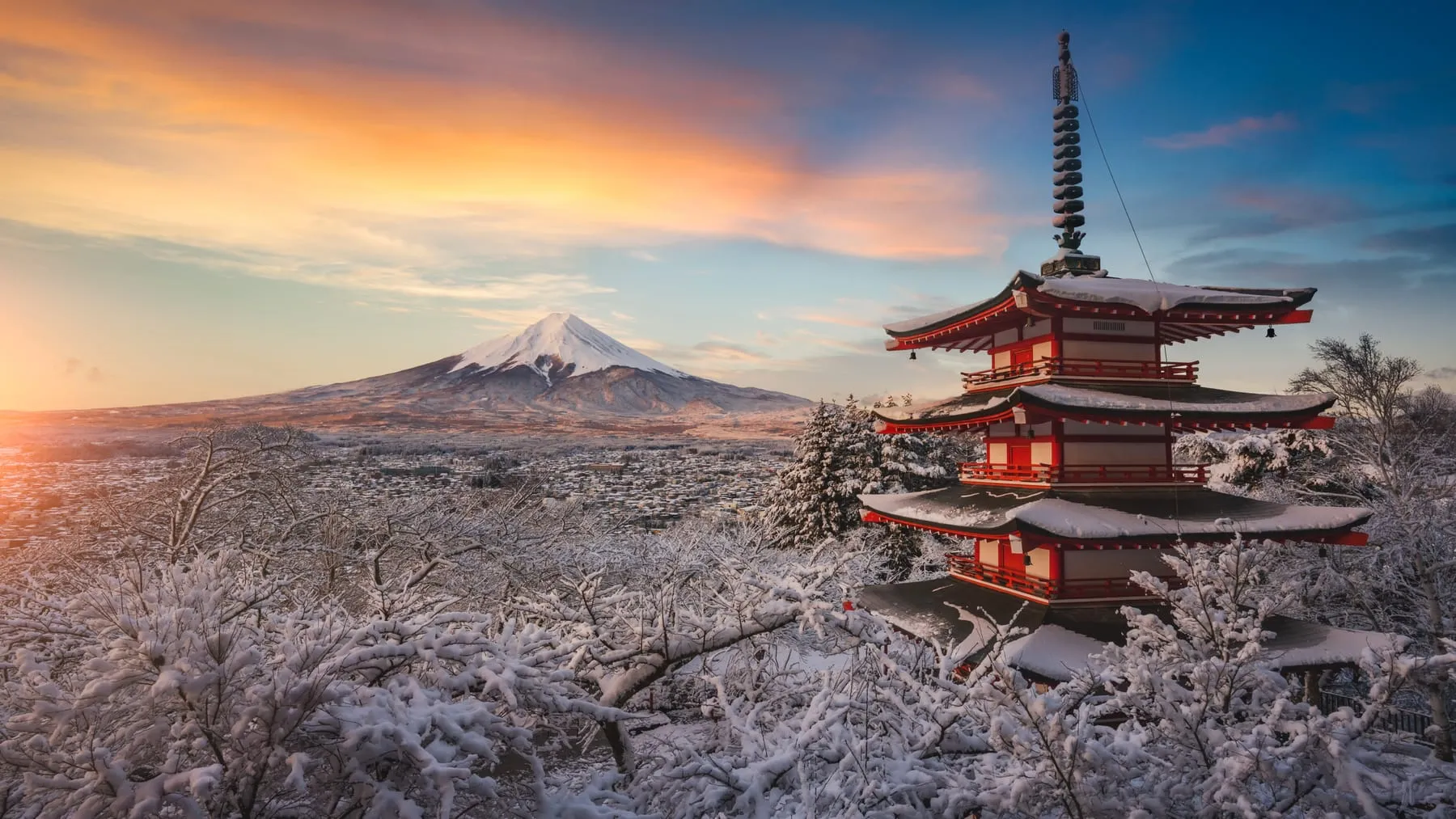
The best Mount Fuji day trip from Tokyo, for most first-timers, is a guided bus tour to Lake Kawaguchiko, which covers the Chureito Pagoda, the lakeshore and Oshino Hakkai in about 10 hours with no transfers. Our pick is the Mount Fuji full-day sightseeing tour from Shinjuku or Tokyo Station. Doing it yourself by highway bus costs about ¥6,700 (about $42) per adult (fares checked October 2026).
Kawaguchiko is the lake town at the mountain’s northern foot, and the spring-fed ponds of Oshino Hakkai sit just below it. That tour is the most-reviewed one we compared, with free cancellation up to 24 hours ahead, which matters on a trip that depends on the weather. Confident on public transport? The highway bus from Shinjuku costs ¥2,000 (about $13) each way online.
Mount Fuji day trip options compared
Here are the main ways to do the trip. The table shows the cost per adult for the transport and the main tickets, with yen converted at ¥1,000 = $6.33.
| Option | Cost per adult | Time each way | What you see | Best for |
|---|---|---|---|---|
| Guided Kawaguchiko bus tour | Varies by date, lunch extra | About 2 to 2.5 hours by coach | Chureito Pagoda, Lake Kawaguchiko, Oishi Park, Oshino Hakkai | First visit, no planning |
| DIY highway bus to Kawaguchiko | About ¥6,700 ($42) with local bus pass and ropeway | About 1 hour 45 minutes | Whatever you choose, at your pace | Budget travelers who like buses |
| DIY Fuji Excursion train | About ¥11,100 ($70) with local bus pass and ropeway | About 1 hour 54 minutes | Same as the bus, with a reserved train seat | Travelers who prefer trains to buses |
| Fuji and Hakone tour | Varies by date | About 2 to 2.5 hours by coach, some return by bullet train | Fuji 5th Station when open, Hakone ropeway, Lake Ashi cruise | Seeing Hakone and Fuji in one day |
| Private car with an English-speaking guide | Priced per group | About 2 hours | Any mix of the above | Families and groups of 4 or more |
The DIY totals assume a round trip, a one-day local bus pass for ¥1,500 (about $9) and a ¥1,200 (about $8) round trip on the Kawaguchiko ropeway. Lunch is extra on every option.
Which Mount Fuji day trip should you book?
- Best overall: the Mount Fuji full-day sightseeing tour leaves from Shinjuku or Tokyo Station and covers eight stops in about 10 hours, including Arakurayama Sengen Park for the Chureito Pagoda view, Oishi Park on the lakeshore and Oshino Hakkai. Lunch isn’t included, and the full refund up to 24 hours before departure lets you cancel if the forecast turns.
- Best with the ropeway: the Mt. Fuji tour with the Kawaguchi Lake ropeway adds the cable car up Mt. Tenjo for a view over the lake toward the mountain, plus a stop at Oshino Hakkai.
- Best with lunch sorted: the Mt. Fuji, Chureito Pagoda and Lake Kawaguchiko day tour has an optional lunch you can add when you book, so you don’t hunt for a table with a busload of other visitors.
- Best for Hakone and a bullet train: the Mt. Fuji and Hakone day trip with a bullet train option covers Hakone instead of the Kawaguchiko lakeshore, and lets you ride the shinkansen back to Tokyo instead of sitting in evening traffic.
- Best for families and groups: a private tour is priced per group, so it gets cheaper per person as your group grows. The fully customizable private Mount Fuji tour with an English guide lets you choose the stops, and the Mt. Fuji day trip with an English-speaking driver guide is the other well-reviewed private option.
Want to compare everything at once? The full list of Mount Fuji tours on Viator lets you compare them by price, length and reviews.
Book a tour with free cancellation and keep an eye on the forecast for the mountain, not for Tokyo. If clouds are due, move the trip to another day of your stay rather than paying to look at a gray sky.
Will you actually see Mount Fuji?
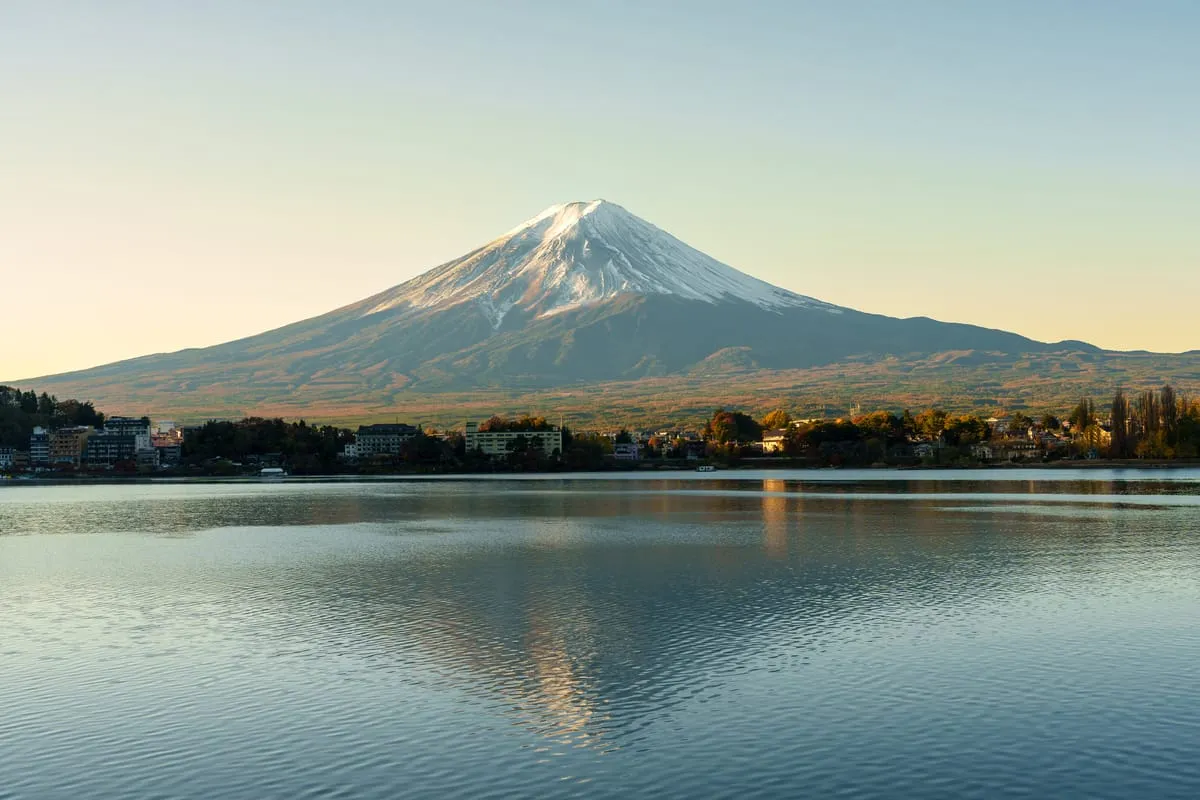
Mount Fuji hides behind clouds on many days, so the season and the time of day matter more than which tour you pick. The Japan National Tourism Organization’s Lake Kawaguchi page says “winter is the best time to see Mt. Fuji clearly,” and its guide to Fuji viewing spots warns that the mountain is often hidden during the rainy season, from early June to mid-July. The same guide says early morning and late afternoon are best for up-close views.
| Season | Your odds | What to expect |
|---|---|---|
| December to February | Best | Cold, dry air and a snow-capped peak. The Kawaguchiko ropeway closes for inspection December 7 to 18, 2026 |
| March to May | Fair to good | Cherry blossoms around the Chureito Pagoda in spring, and weekend crowds to match |
| June to mid-July | Poorest | Rainy season. Clouds often cover the mountain for days |
| Mid-July to September | Fair | Summer clouds build through the day. Climbing season on the mountain itself |
| October and November | Good | Fall color around the lakes and the first snow on the summit |
Three rules raise your odds on any date:
- Go early in your Tokyo stay. If day one is cloudy, you still have days to rebook.
- Be at the viewpoints in the morning. If you’re going on your own, take one of the first buses or trains out of Shinjuku.
- Check the forecast for the Fuji Five Lakes area the evening before. Tokyo can be sunny while Kawaguchiko sits in cloud.
How to do a Mount Fuji day trip on your own
A DIY trip to Kawaguchiko is easy if you book your seats ahead. You have two direct ways from Shinjuku.
Highway bus from Busta Shinjuku
The highway bus is the cheaper and faster choice. Buses leave from the terminal on the 4th floor of Busta Shinjuku, which connects to the south exit of Shinjuku Station, and reach Kawaguchiko Station in about 1 hour 45 minutes, traffic permitting. According to Fujikyu Bus, the adult fare is ¥2,200 (about $14), or ¥2,000 (about $13) if you book online, and children pay half.
- Seats are reserved. Reservations open one month before the travel date, and tickets must be bought at least 10 minutes before departure.
- Book early on weekends and holidays. Morning buses are the ones everyone wants, so reserve as soon as your date opens.
- Plan the return too. Book your seat back to Tokyo at the same time, especially for a late-afternoon bus.
Fuji Excursion limited express train
The Fuji Excursion runs direct from Shinjuku to Kawaguchiko in about 1 hour 54 minutes. Fujikyu Railway lists the one-way fare at ¥4,200 (about $27): a ¥2,580 basic fare plus a ¥1,620 limited express charge. Shinjuku to Shimoyoshida, the stop for the Chureito Pagoda, costs ¥4,010 (about $25).
- Four round trips a day, with an extra one on some dates. Morning departures from Shinjuku leave at 7:30, 8:30, 9:30 and 10:30 am, and the last train back leaves Kawaguchiko at 5:41 pm (timetable from March 14, 2026).
- There are no unreserved cars, so get a seat before the day.
- The Japan Rail Pass only covers the JR section to Otsuki. The rest of the line belongs to Fujikyu, and the national tourism board’s Kawaguchi page notes that the JR Pass isn’t accepted on it. Our Japan Rail Pass breakdown shows why this trip alone won’t make the pass pay off.
Getting around Kawaguchiko
Once you arrive, Fujikyu’s sightseeing buses do the work. The Red Line loops around Lake Kawaguchi, and the Green and Blue lines continue to Lake Saiko and Lake Motosu. Fujikyu’s mobile bus passes cost ¥1,500 (about $9) for one day in the north Fuji area and ¥2,000 (about $13) for two days on the Red, Green and Blue lines.
The Mt. Fuji Panoramic Ropeway costs ¥1,200 (about $8) round trip for adults and ¥600 for children, the fares in force since November 1, 2026. It closes for its annual inspection from December 7 to 18, 2026, and stops in strong wind or lightning.
A DIY day that works
- Early bus or train to Shimoyoshida for the Chureito Pagoda. The five-story pagoda stands in Arakurayama Sengen Park, and the viewing deck is a climb of 398 steps, according to Fujiyoshida’s tourism site. The park is a walk of around 10 to 15 minutes from the station.
- Fujikyu train on to Kawaguchiko Station, the hub for the lake buses and the ropeway.
- Panoramic Ropeway for the lake view, then lunch near the station.
- Red Line bus to Oishi Park on the north shore, where the mountain rises straight across the water.
- Afternoon at Oshino Hakkai, a village of spring-fed ponds below the mountain, on the way back if you have time, or keep it for a tour day.
- Bus back to Shinjuku, booked in advance.
The Chureito Pagoda area is a residential neighborhood with narrow one-way streets. Fujiyoshida City warns that traffic and parking there become very congested on weekends and in the cherry blossom and fall color seasons, so don’t plan to drive.
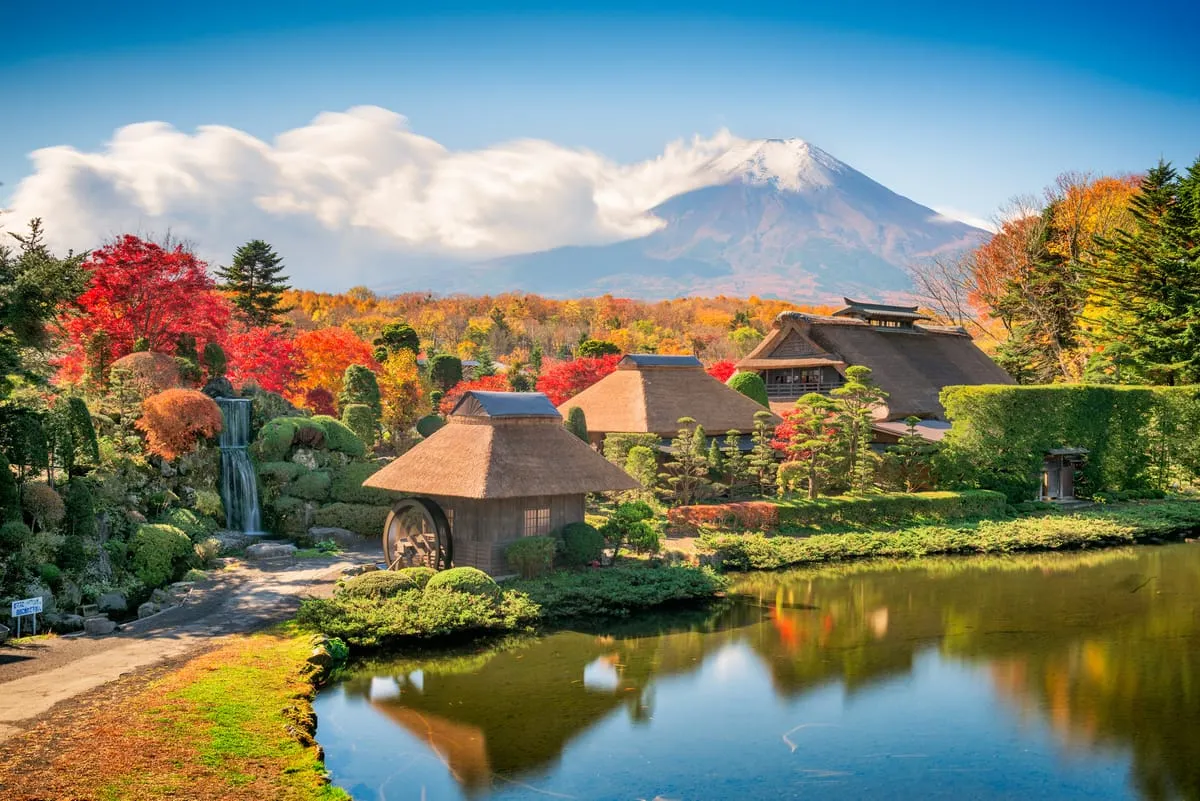
Tour or DIY: what a Mount Fuji day costs
Here’s the math for one adult on a DIY day, at October 2026 fares:
| Item | By highway bus | By Fuji Excursion train |
|---|---|---|
| Round trip from Shinjuku | ¥4,000 (online fare) | ¥8,400 |
| One-day sightseeing bus pass | ¥1,500 | ¥1,500 |
| Panoramic Ropeway, round trip | ¥1,200 | ¥1,200 |
| Total | ¥6,700 (about $42) | ¥11,100 (about $70) |
The cheapest group tours we compared cost less than the DIY train day and include the guide and the timing. Our rule:
- Take a tour if it’s your first trip to Japan, you have one shot at the day, or you want to see the Chureito Pagoda, the lake and Oshino Hakkai in a single day without studying bus timetables.
- Go DIY by bus if you’re comfortable with Japanese transport, want to linger at one or two viewpoints, or plan to stay overnight.
- Go private if you’re four or more: the per-person cost falls with each seat you fill, and you set the schedule.
Kawaguchiko or Hakone?
Kawaguchiko gives you the closer, bigger view of Fuji; Hakone gives you a day out with hot springs, a ropeway and a lake cruise, with the mountain farther away. On a cloudy day Hakone has more to fill the hours, while a Kawaguchiko day leans on the view.
| Kawaguchiko | Hakone | |
|---|---|---|
| Fuji view | Close, across the lake and from the pagoda | Farther, across Lake Ashi and from the ropeway |
| From Shinjuku | Bus about 1 hour 45 minutes, or Fuji Excursion train | Odakyu Romancecar about 80 minutes |
| Getting around | Fujikyu sightseeing buses | Hakone loop of train, cable car, ropeway and boat |
| DIY transport pass | One-day bus pass ¥1,500 | 2-day Hakone Freepass ¥7,100 (about $45) plus ¥1,200 Romancecar each way |
| Cloudy-day backup | Kimono museum, lake cruise, hot springs | Owakudani steam vents, museums, hot springs |
| Best for | Seeing Fuji | An overnight onsen stay |
The Hakone Freepass covers the Odakyu train from Shinjuku plus Hakone’s trains, cable car, ropeway, buses and Lake Ashi boat. It’s priced for two or three days, so Hakone makes the most sense as an overnight stop. Our 2-week Japan itinerary builds in a ryokan night there on the way to Kyoto.
For Hakone as a day trip, a tour is simpler than the Freepass. Hakone-route tours such as the Mt. Fuji and Hakone 1-day bus tour, which returns to Tokyo by bus, typically pair a stop on the mountain’s slopes at the Fuji 5th Station with the Hakone ropeway and Lake Ashi. Snow can close the road to the 5th Station, and tours then swap in another stop, so read the itinerary notes when you book.
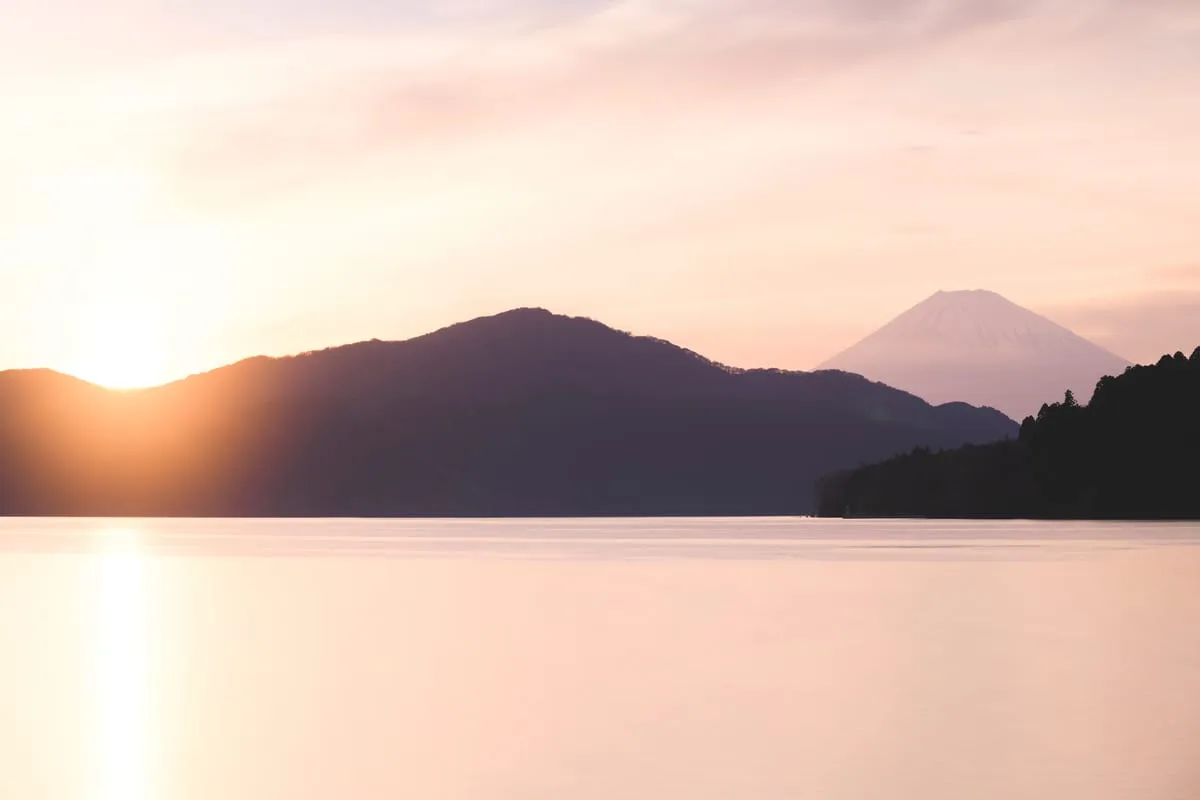
Should you stay overnight at Lake Kawaguchiko?
Stay a night if seeing the mountain is the reason you’re going. Day-trippers arrive mid-morning; overnight guests are already at the lake for sunrise, the best time for clear views, and get a second chance the next morning if day one is cloudy.
The Fuji View Hotel sits on the shore of Lake Kawaguchi, has Fuji-facing rooms and hot-spring baths, and makes an easy one-night stop with the bus back to Tokyo the next afternoon. Once you’re there, the Lake Kawaguchi tours and tickets on Viator list local activities around the lake.
Can you climb Mount Fuji on a day trip?
A sightseeing day trip doesn’t climb the mountain. The summit trails open only in the summer climbing season, and a climb takes far more time, gear and planning than a day out from Tokyo allows. Day tours that stop at the 5th Station get you onto the mountain’s slopes by road, without the climb.
Tips for the day
- Bring layers. The lakes sit much higher than Tokyo, and the 5th Station higher still, so expect it to feel colder than the city.
- Carry some yen for small shops, snacks and lunch, even if your tour and bus seats are paid for online.
- Keep your phone online. Bus QR codes, the Fujikyu bus pass, maps and weather checks all live on your phone, and US carriers’ day passes add up: Verizon TravelPass and AT&T’s International Day Pass cost $12 a day per line. An Airalo Japan eSIM is set up before you fly; use code GUIDEZ15 at checkout if you’re new to Airalo, or GUIDEZ10 if you’ve bought from them before. Our Japan eSIM vs pocket WiFi comparison has the plan sizes.
Plan the rest of your Tokyo days
If you only book one thing, make it the Mount Fuji full-day tour from Shinjuku on the first clear-looking day of your stay, while free cancellation still gives you room to move it. Then fit it around the city: our 3-day Tokyo itinerary leaves room for a Fuji day, and if you’re adding teamLab, our teamLab Planets and Borderless ticket guide explains which one to book. After a long day on the bus, our Tokyo food tours roundup picks evening tours where a guide does the ordering. Heading west later in the trip? Our Hiroshima and Miyajima day trip guide is the other big day out by bullet train, from Osaka or Kyoto. For restaurants and neighborhoods between day trips, open Omer in Japan’s Tokyo recommendations map on Guidez, which is in Hebrew.